No argument. Tarpon are the ultimate inshore catch for any angler. The big silver fish is hard to fool, impossible to hook and a bear to fight.

Hobie team member Brandon Barton guides clients to epic tarpon catches around Pensacola, Florida. “Tarpon will test your gear and find every weakness,” he says.

The Sunshine State is tarpon central, but anglers from Texas to Virginia could learn from Barton’s experience. Here are a few trade secrets to even the odds of beating the ultimate sportfish.

11 Expert Tips For Catching Tarpon From A Kayak

1. Target tarpon May to September, when the fish are migrating along the Gulf Coast.
2. Calm winds and flat seas are best. Overcast sky helps reduce glare making it easier to spot tarpon rolling with their backs out of the water. Troll parallel to the beach, just past the second bar, looking for fish.
3. A seven-foot, heavy rod, like Bull Bay’s Brute Force, is light for long casts with a heavy backbone. Choose a rod with a rounded gimble to dig the rod butt into your stomach for more leverage. Keep the fight short, 20 minutes or less, to preserve the fish’s energy.
4. A Penn Slammer 5000 to 6000 reel can produce 40 pounds of drag to hold a lunging tarpon. Spool with 65-pound braided line. Use an FG knot to add a six-foot leader of 80-pound fluorocarbon.

5. Hook choice is critical. A 6/0 to 8/0 Owner Multi Light hook will find its way into the corner of a tarpon’s bony mouth.

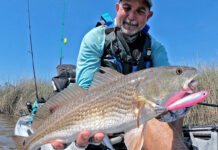
Photo: brandon barton
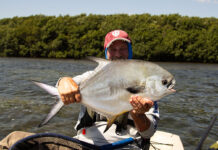
Priceless. | Photo: Brandon Barton
6. Top baits are live menhaden, thread-fin herring, mullet, cigar minnows or Atlantic bumpers. Hook the bait through the nose or the top of the head.
7. Slow troll fast enough to stay ahead of the swimming baits. When I see a tarpon roll, I cast a live bait in front of the swirl. If I don’t get a bite, I pedal ahead of the school and cast again.
8. When you feel the tarpon coming to the surface to jump, lower the rod tip to put slack in the line to keep the fish from throwing the hook.
9. Cast large swimbaits like Hogy Protail or the Live Target Spanish Sardine at rolling tarpon. Attach the lure with a Kreh loop knot to improve the lure’s action.
10. Fight the fish with the rod tip low to keep the tarpon from coming to the surface to gulp air. Each gulp prolongs the fight.
11. When the fish gets tired, grab the line with one hand and the tarpon’s lower jaw with the other. Wear fishing gloves to protect against the tarpon’s rough mouth. Do not remove the tarpon from the water. In Florida, tarpon over 40 inches long must remain in the water.
Previous articleTips For Catching Sea Bass, Flounder & Ling Cod In The Winter
Next articleBluewater Beginnings: A Kayak Bass Angler Goes To Guam
Kayak Angler editor Ric Burnley has been kayak fishing since the dawn of the sport. In 2007, Burnley wrote The Complete Kayak Fisherman, with chapters on how-to make a PVC rod holder and glue a fish finder transducer to the hull. In 2013, he landed his dream job as editor of Kayak Angler magazine. Burnley is a regular contributor to Salt Water Sportsman, Sport Fishing, Outdoor Life, In the Bite and other print and online publications. Burnley lives in Virginia Beach with his wife, adult daughter, daughter’s boyfriend and daughter’s two cats. Experience In 2004, Ric Burnley stole his first milk crate from behind a 7-Eleven and fashioned it into a gear crate for his Ocean Kayak Prowler 15. Many years and many milk crates later, Burnley has witnessed the rise of kayak fishing from a bastardized fringe element to a legitimate industry with millions of devotees. The journey to becoming an angler started early in Burnley’s life. His father, Eric Burnley, is a renowned outdoor writer and former fishing guide, so the boy grew up in the cockpit of a charter boat and in the pages of national magazines. After college, Burnley lost easy access to his father’s boat, but not his passion for fishing. Once he had exhausted the limits of land-based angling, Burnley decided to try out a new thing called kayak fishing. About the same time, Burnley was looking for extra work to pay for his expensive addiction. His father, editor of the Mid-Atlantic Fisherman Magazine, offered him freelance assignments for the weekly publication. That led to a position as regional editor at Salt Water Sportsman, publication of The Complete Kayak Fisherman and editorship of Kayak Angler. Meanwhile, Burnley and his partner-in-crime, “Kayak Kevin” Whitley were exploring the boundaries of kayak fishing. With the bountiful Chesapeake Bay and Atlantic Ocean as their playground, the two anglers were the first to target big red drum, cobia, trophy striped bass, monster black drum, sheepshead and many other species. Once inshore species were exhausted, Burnley loaded his kayak onto motorboats and fished for bluefin tuna, blackfin tuna, king mackerel and amberjack. All the while, Burnley shared his experiences and knowledge with anglers through print, photos, video, radio, seminars and online. Almost 20 years later, Burnley continues to fish obsessively and share the stories. His recent projects for Kayak Angler cover the latest trends in forward-facing sonar and remote-controlled electric motors. Over the past two decades, kayak fishing and Ric Burnley have come a long way from PVC rod holders and stolen milkcrates. Education ● Radford University: BA English; Virginia Teacher’s License. Highlights ● Other Interests: Mountain biking, traveling, hiking, surfing and skateboarding ● Day Job: High School English teacher at an alternative school for at-risk students Fun Fact Ric’s name is a contraction of Eric. Ric is named after his father, Eric Sr. To differentiate between the two Erics, Mrs. Burnley removed her son’s E. To this day, she writes the boy’s name ‘Ric, with an apostrophe replacing the E.

1 COMMENT

  1. Everything he said but try to use a sliding cork with some slack in your fluorocarbon for letting a pinfish run around. Stakeout a tarpon trail, or a tarpon hole. In a tarpon hole the circle around continuously. In a tarpon trail they pass by like they are going somewhere special. You might catch a few trout too. Catch one. Than the tarpon for letting you fight it and release it.

Leave a Reply