Fishing one of Florida’s best bass lakes, I only caught one 12-inch bass. Frustrated, I moved my Old Town Sportsman 106 PDL to a weed-choked cove.
Using my seven-foot, six-inch heavy flipping stick, I pitched a soft plastic creature bait into every nook and cranny of the matted vegetation.
When I tossed the lure into a small opening, the entire grass mat shook. I lifted my rod and immediately felt pressure. My sweeping hookset was answered with the surge of a big fish. Suddenly, a huge bass shot out of the weeds like a SpaceX rocket launching at the nearby Kennedy Space Center.
I fought the bucketmouth away from the weeds and slid her into my landing net. On my hand scale, the fish weighed six pounds, 15 ounces.
Pitch Bait Tactics That Work
Dissecting Cover
Pitching and flipping requires making short, quick and accurate casts to openings in the cover. Bass hiding below welcome the lure with an open mouth. It takes a lightning-fast reaction time to set the hook before the fish gets wise.
Looking at a jungle of vegetation and downed trees is intimidating. I treat a field of vegetation like a shoreline by looking for points, depressions and holes in the cover.
I like to find two different types of cover, like hyacinths blown into reeds, water lettuce together with hydrilla or a mat of grass next to a submerged tree. Fish seek these irregularities to ambush prey.
Tackle Physics
Flipping and pitching calls for a long baitcasting rod to make quick, short, precise casts to small openings in the structure. The long rod works as a pendulum to swing the lure like a wrecking ball. As the lure gains momentum, I remove my thumb from the spool and let it fly toward the target. When the lure reaches the opening, I clamp my thumb on the spool and drop the lure on a dime.
Pitching the lure to the structure requires precision and pulling a big bass out of grass and wood requires power. A creature bait elicits a reaction bite from an angry bass. To set the hook before the fish spits the bait, I need a sensitive rod and braided fishing line. The rod has a stiff backbone to drive the hook point home. Once the bass is hooked, the rod has a soft tip to absorb shock and keep the fish pinned. Then, when the fish is stuck in the grass, the rod’s heavy action lifts the fish, grass, branches and anything else caught in the salad.
When I’m fishing vegetation, I spool the reel with 65-pound-test braided line, which cuts through the grass like a bandsaw. To pitch and flip in brush and trees, I switch to abrasion-resistant, 30-pound fluorocarbon line.
Sit or Stand
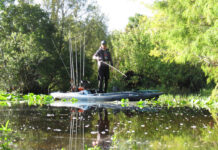
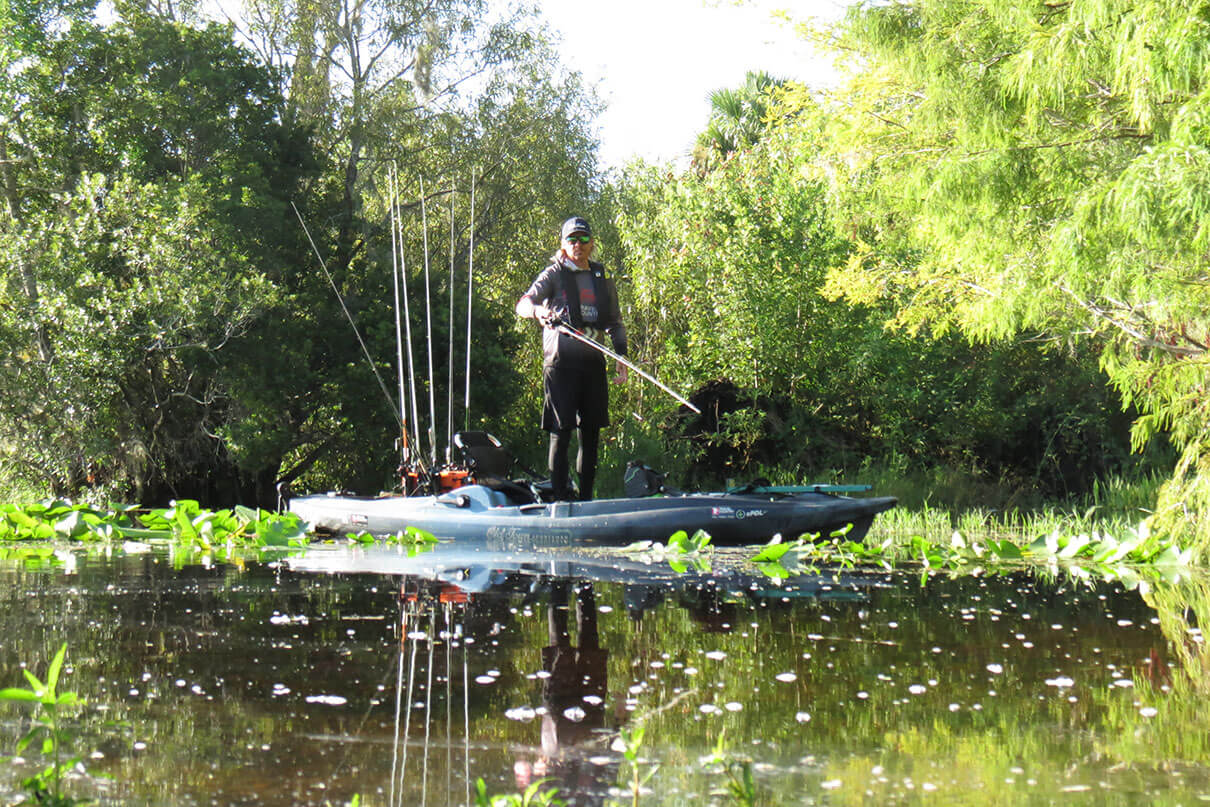
Proper flipping and pitching technique presents a challenge for kayak anglers. Lifting a big bass out of heavy cover requires a lot of leverage. The best way to get an advantage is standing in the kayak.
Standing in the kayak and holding the rod tip high makes it easier to underhand cast the lure farther with better accuracy. A wide, stable kayak allows me to stand with confidence. I can even cast behind me and the stable boat provides a solid platform for a strong hookset.
Lures
To send a lure deep into vegetation and wood, I use a Texas-rigged soft plastic creature bait, craw, beaver bait or worm. The sliding bullet sinker and weedless hook create a compact package that is less likely to snag the structure. When the lure reaches bottom, the line slides through the weight giving the trailer maximum action.
One of my favorite soft plastics is a Riot Baits Vigilante creature bait. The lure has wide, thin appendages that create enormous action. When I’m targeting thick cover, I pull some of the wiggly wings from the soft plastic to create a more streamlined lure.
Another option for heavy cover is a weedless flipping jig with a heavy weedguard. A Strike King Hack Attack flipping jig with a soft plastic trailer creates a compact lure with a narrow head profile to slip in and out of the worst snags.
Pitching and flipping is incredibly productive and a lot of fun. My kayak’s shallow draft and short waterline allow me to access the thickest structure and unpressured bass. I can spend all day shooting my lure at small targets and bracing for a big bite.
Stand and deliver, to pitch and flip lures into heavy structure. | Feature photo: Steve Wayne