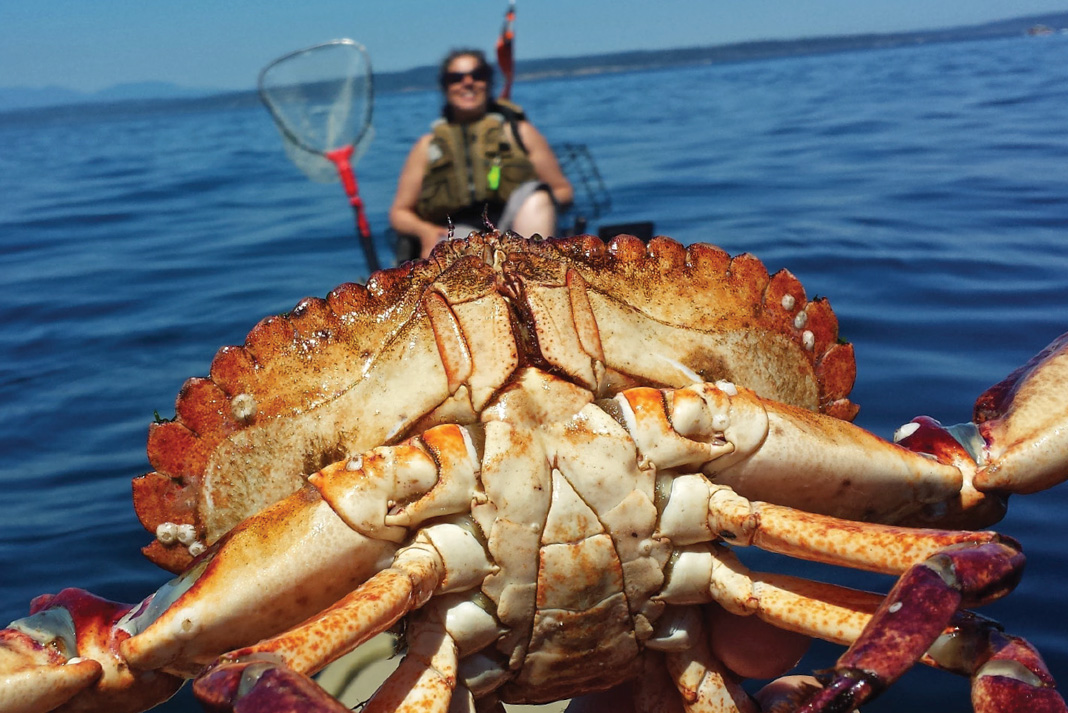
At the bottom of the Pacific Ocean, along the Northwest coast, creepy, crawly crustaceans cling to the craggy rocks and scurry over sandy spots. Kayak anglers can paddle beyond the surf zone or stick to the harbors and bays to find delicious crabs. With minimal gear and a few helpful tips on kayak crabbing, even novices will be rewarded with dinner fit for a king.
Tips from Kayak Crabbing Experts
Drop Your Pot and Go
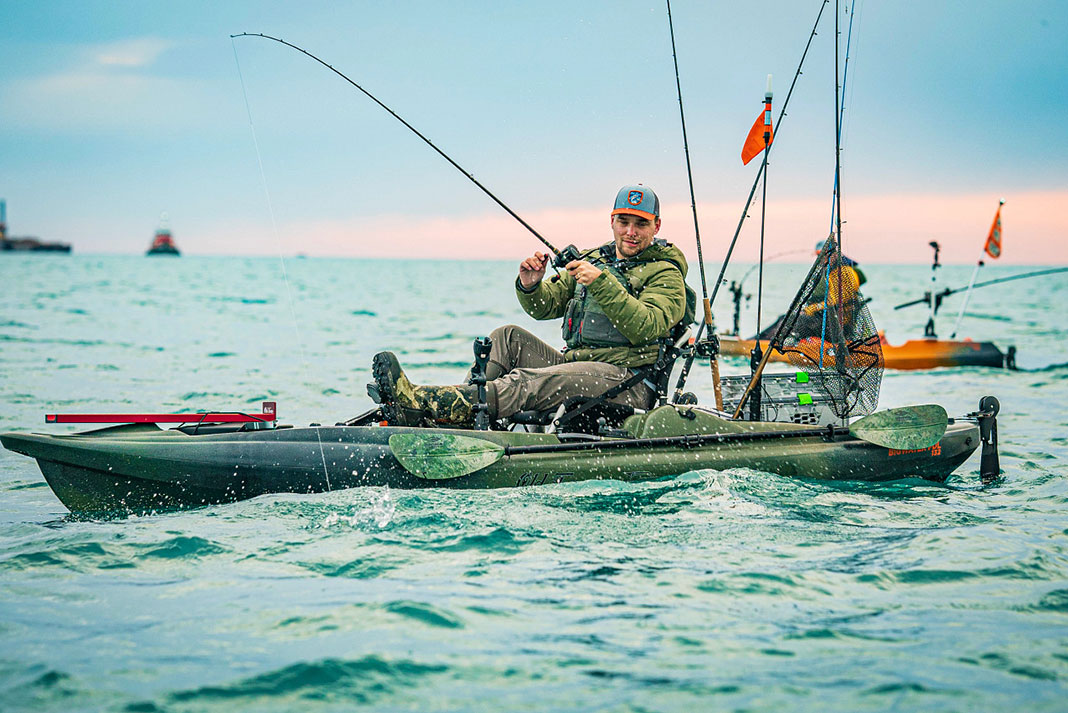
To rig up for crabbing, Hobie Fishing Pro Brad Hole packs a crab pot or crab ring, 75 feet of lead core line and a red-and-white foam crab pot buoy with his name and number. He uses salmon heads or chicken necks for bait. “I bait the pots before I launch,” he adds.
Hole drops the pots in 35 to 60 feet of water. “There’s nothing wrong with dropping pots among other crabbers,” he allows, “just make sure not to tangle the lines.” Hole lets the pots soak for 30 to 90 minutes. “I’ll drop the pots, go fishing, then return to check for crab,” he says. When retrieving the pot, Hole is careful to keep the rope from knotting or kinking.
Check Hoop Nets More Frequently
Farther down the coast, NextAdventure.com blogger Jeff Anderson prowls the Oregon coast in search of crabs. “Crabbing is pretty much the same from the Aleutians to California’s Central Coast,” says Anderson. On his home waters around Portland, Anderson targets crabs along the coast and in sheltered harbors. “The easiest place to find crab is at the mouth of a tidal estuary,” he says. He looks on a nautical chart for the deepest hole at the mouth of the bay to find the crab.
When he’s fishing inshore, Anderson prefers a hoop-style net. “They attract crab fast but I constantly have to check them,” he explains. Offshore he’ll deploy a trap that he can leave and return to every hour or so. He also uses lead core line and a crab pot buoy recycled from the beach. Try a rope that is one-and-a-half-times longer than the water depth. In other words, in 60 feet of water, use 90 feet of rope.
[ Kayak Angler Buyer’s Guide: Protect your watercraft while crabbing with the Scotty 750 Trap-Ease ]
Both crabbers recommend tracking the currents. “I do better on an incoming tide,” Anderson says. Hole adds the current can drag the crab pot some distance. “Always consider where the tide might take the pot,” he says.
When is Crab Season in the Pacific Northwest?
Crabbing is available year-round in Oregon, but Anderson says best months have an “r” in their name. “The crab tend to molt in the summer,” he explains. In Washington, crab season is best in the summer. “During prime time there will be red and white buoys everywhere,” Hole says. Crabbers should always check with local outfitters on seasons and licenses.
Kayak Crabbing Yields Tasty Rewards
“Crabbing can provide a lot of action with little effort, perfect for kids and new anglers,” Anderson crows. But Hole fights for the real prize: “Boiled, steamed, seasoned or unseasoned, let’s eat!”
 This article was first published in the Spring 2016 issue of Kayak Angler Magazine. Subscribe to Kayak Angler Magazine’s print and digital editions, or browse the archives.
These kayak crabbers are pleased with their catch. | Feature Photo: Brad Hole