
A new study in Waterloo, Ontario has found trace amounts of fentanyl in the fish of rivers that receive urban wastewater. This is the first time substances such as fentanyl, opioids and antidepressants have been documented by scientists in wild fish in Canada.
Casting for answers: downstream impacts of fentanyl in wild fish
Researchers used an extraction method that combined ultrasonic solvent extraction with solid-phase extraction applied to wild male and female darters; males were found to accumulate higher concentrations of these substances than females.
Water Institute researcher at the University of Waterloo and Professor in the Department of Biology Mark Servos told Global News that health officials had posed questions about whether or not these substances could be found in the environment leading up to the study. Officials wanted to know first if these substances were getting into the environment, followed by what risk these substances may pose to the ecosystem and to fish.
A 2022 study found that illicit drugs enter ecosystems through wastewater and bioaccumulate in fish, affecting their development and behavior. The study called for a variety of actions including education on and interventions for illicit drug use, development of new methods to treat wastewater, and continued monitoring of illicit drugs in aquatic environments and the associated impacts.
Postdoctoral fellow Diana Cárdenas-Soracá found that even though the wastewater tested was treated, substances were still being found in the water and fish of those waters. Cárdenas-Soracá went on to emphasize that treatment facilities have invested a lot of time and effort improving treatment methods; nonetheless, very small amounts of these substances are still passing into the water.
Electrofishing used to catch fish for sampling in new study to determine impacts of fentanyl and illicit drugs in wastewater on wild fish
Fish were collected using an electrofisher rather than a rod and reel.
“There’s actually a battery behind me and it’s got a controller and then the electricity is going from one end here to to the tail. So it’s circulating electrical current drawing the fish in with a goal to see how they’re being impacted by nearby wastewater plants,” Servos explained on CTV News.
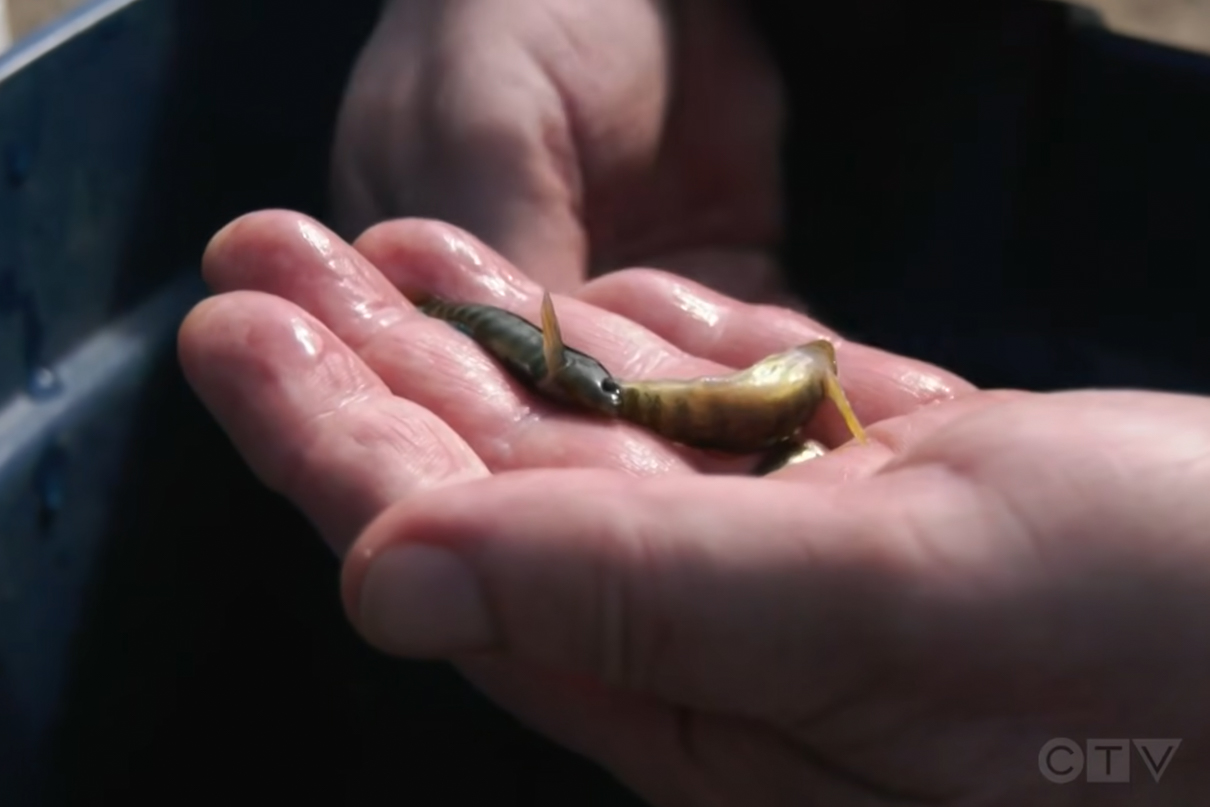
After collection, the fish are brought into a makeshift lab where they are dissected and tested.
Servos told Global News that there is no risk to humans from the trace amounts of fentanyl, methadone and other chemicals detected in fish, but explained that this does not mean there will not be downstream impacts for humans.
“We should be vigilant about what we’re putting down sewers because not all of it is going to be treatable,” Servos said.
Grand River watershed, where the sampled darters were collected, has over 30 wastewater treatment plants.