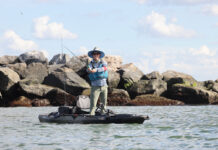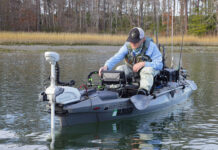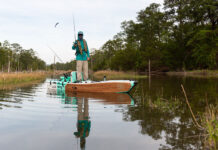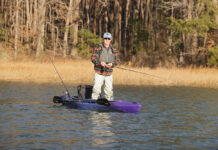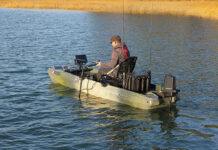
At the beginning of the sport, desperate fishermen turned existing kayaks into fishing machines. As kayak fishing gained momentum, boat designers took existing hulls and added fishing features to the topside. Today, fishing kayaks are designed from keel up for casting and catching. With a few exceptions, modern fishing kayaks are conceived more for catching than paddling.
Viking Profish 440
Length: 14’4″
Width: 30.75″
Weight: 57 lbs
Capacity: 400 lbs
Price: $1,269 vikingkayaksusa.com
When I heard that Viking was bringing the Profish 440 to America, my ears pricked up. I had slobbered over photos and videos of the boat since New Zealand anglers started using the domestic design to fish in the wild, open Pacific. Now the modern version is available on this side of the pond.
I really looked forward to dragging the Profish 440 over the dunes, punching through the waves and chasing pelagics beyond the breakers. The kayak proved perfectly suited to the job.
Loaded on my Railblaza C-Tug cart with sand wheels, the 57-pound boat was easy to bounce down the beach. A light boat performs better in the surf, too. It’s quick to jump into action and easy to navigate through the breakers. The 14-foot, 4-inch waterline keeps the boat tracking straight, while a beamy 30.75-inch width keeps it stable. A modified double concave hull further improves stability and tracking. The boat paddles like it is on rails. The keel is rockered just behind the seat to improve handling on open water and surfing back to the beach.
Above the waterline, the boat is all business. Instead of a bow hatch, the Profish 440’s most distinguishing feature is a deep bow well that drains with two large scuppers. This keeps gear at hand but out of the way. A trampoline screen covers the bow well so stuff stays in and water and sun stays out.

The cockpit of the Profish 440 hosts features not found on the original. First, a large deck well covered by a sealed hatch will hold tackle and gear making a crate superfluous and keeping gear secure in the surf. A smaller hatch in front of the seat is plumbed to install a fishfinder and transducer. The YakGear seat is low-profile and double padded for long days on open water. Behind the seat, two smaller hatches open to live-bait wells with drains in the bottom. This makes a convenient place to store live baits between drifts. The boat ends with a tank well in the stern. Viking included four carry handles, paddle strap on each side, a half-dozen flushmount rod holders, a Railblaza starmount in the stern, pre-drilled and tapped holes for anchor trolley, rod holders and electronics, even a cutting board on the cockpit well hatch. This is a streamlined boat that is packed with smart features.
Of course, the real test of a paddler’s boat is on the water. The Viking Profish 440 passes with flying colors. Long enough to track straight, with a pronounced rocker that improves maneuverability. Narrow enough to punch through the waves with enough width to provide a stable fishing platform. While the boat features the proven design aimed at open water anglers, it boasts modern amenities that make it a timeless classic.
FISH FRIENDLY FEATURES:
- Open bow well
- Cockpit storage
- YakGear seat
- Optional Chill Pod
- Bow cover
- Wood cutting board
- Six flushmount rod holders
- Railblaza Starport
 This article was first published in the Winter 2016 issue of Kayak Angler Magazine.