
If you are reading this review, and you don’t own a fishing kayak, prepare to give up your excuses. You don’t have the space, you don’t have a trailer, you’re short on money. Forget it! A pocket-sized, sit-inside kayak is lighter than a sit-on-top, performs better than an inflatable and costs less than both. If you’re looking to get on the water, but intimidated by ownership issues, let me introduce the Vibe Shaka 100.
Kayak Review: Vibe Shaka 100
Vibe Shaka 100 Specs
Length: 10’0”
Width: 31”
Weight: 53 lbs
Capacity: 380 lbs
MSRP: $799.99
vibekayaks.com
Backstory
With the trend toward bigger and heavier sit-on-top fishing kayaks, many anglers are looking for a boat that is easier to own. Pedal-powered and motorized kayaks go faster and farther, but a lightweight paddle kayak is a lot easier to own.
Vibe’s new Shaka 100 joins a line of popular recreational sit-inside kayaks designed to get more people on the water. Unlike the long, sleek and tippy touring sit-inside kayaks, these boats are short, wide and user-friendly.
Recreational sit-inside kayaks have a wide cockpit that is easier to enter and exit. The extra space provides room to move for fishing and hunting.
To improve comfort, rec sit-inside kayaks are outfitted with a comfortable seat elevated off the bottom of the boat. The seat offers more back and leg support and keeps the angler out of water puddling on the bottom of the kayak.
A sit-inside kayak sits lower and the paddler is protected from the elements, so the boats are a little more seaworthy than a similar sized sit-on-top. For similar vessels, look at the Old Town Vapor 10 Angler and Wilderness Systems’ iconic Pungo 105. At the upper end, the Bonafide EX123 and Native Watercraft Ultimate FX 12 are bigger boats with more features. Vibe’s entry into the category brings a few improvements on the theme.
Design and Layout
Vibe didn’t reinvent the wheel with the Shaka 100. The recreational sit-inside has the requisite wide cockpit, utility dashboard and elevated seat, but the Shaka has a unique take on these features.
The cockpit is extra wide, one of the widest I have tested on a 10-foot sit-inside kayak. The large cockpit accommodates a full-size frame seat. The mesh-covered seat is pretty basic, but the design provides support in all the right places for a comfortable paddling position.
Neoprene padding on the cockpit edge protects my legs when I’m paddling and, when I’m carrying the boat, the padding makes a comfortable handle or shoulder rest.
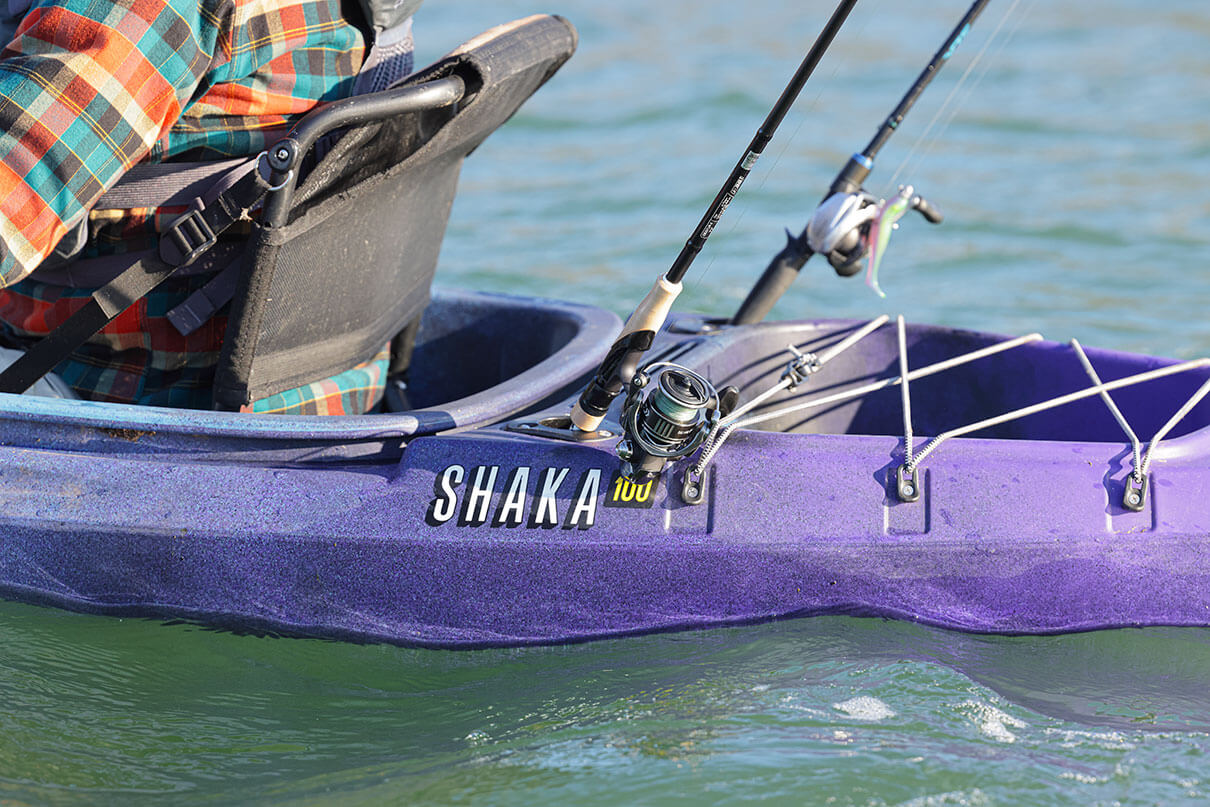
Behind the seat, a molded tankwell fits a small crate to hold gear and fishing rods. The tankwell expands my storage space, and the scuppers allow it to drain water so my stuff stays dry.
Rigging
If you’re worried about rigging a fishing kayak, the Shaka erases that excuse, too. The small sit-inside kayak isn’t designed for electronics or motors. I’m sure crafty anglers can figure out how to add both, but the Shaka is best left simple.
The Shaka is already rigged with two flushmount rod holders behind the seat. With rod storage solved, the Shaka is ready to fish off the shelf. However, I would add a small gear crate to the tankwell for tackle, gear and more fishing rods.
Gear tracks in the cockpit dashboard and behind the seat further promote accessories. I added a YakAttack Omega rod holder to the forward track. The rear track is convenient for adding a white navigation light for night fishing or a flag to increase daytime visibility.
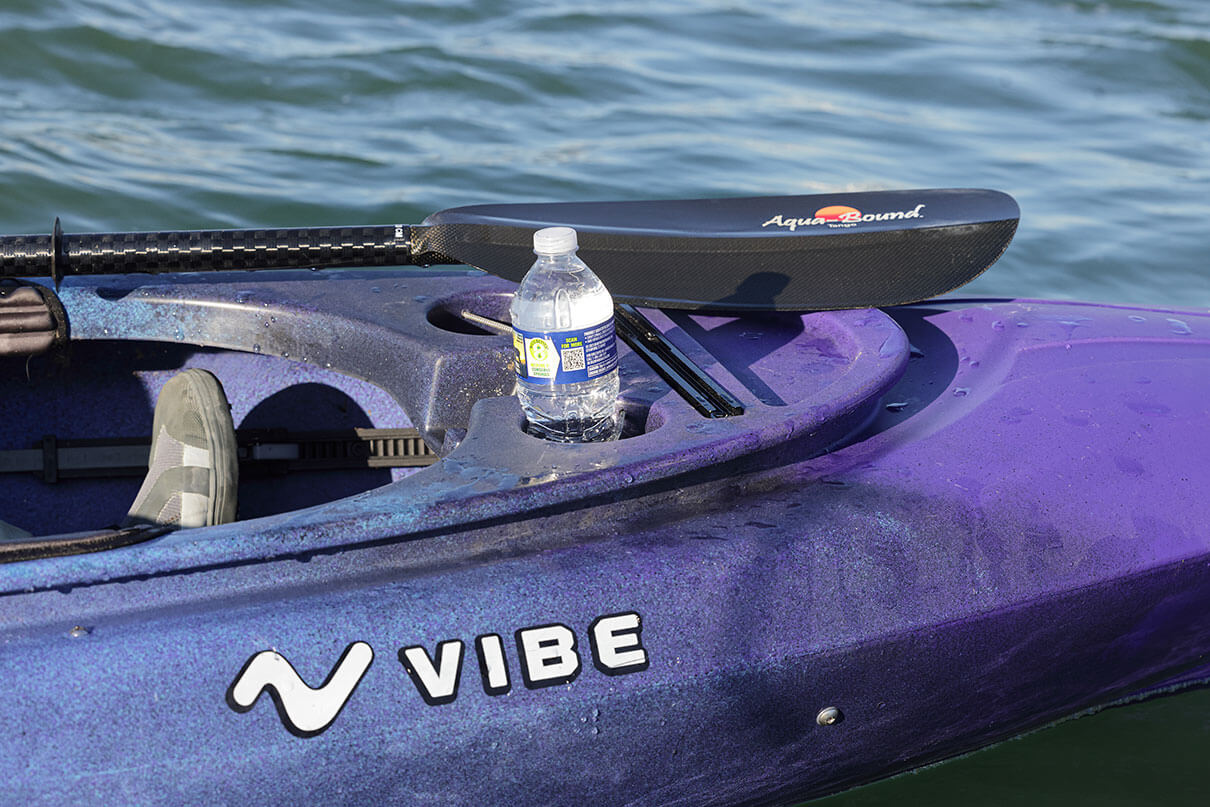
The most important rigging decision is choosing the right paddle. A sit-inside kayak sits low to the water, so a low-profile blade is more efficient for moving water with the least effort. To reduce fatigue, pick the lightest paddle with carbon fiber and fiberglass components. Paddle length is critical in a sit-inside kayak; choose an adjustable paddle shaft to dial in the reach for the best performance.
Performance
Evaluating the Shaka 100’s performance is all about easy ownership and easy operation. The boat weighs 53 pounds, so it’s easy to transport on a cartop roof rack. I can carry the boat with one hand, making it easy to move around the yard. A skid plate in the stern permits me to drag the light boat over rough ground. For longer transfers, I use a Railblaza C-Tug Cart.
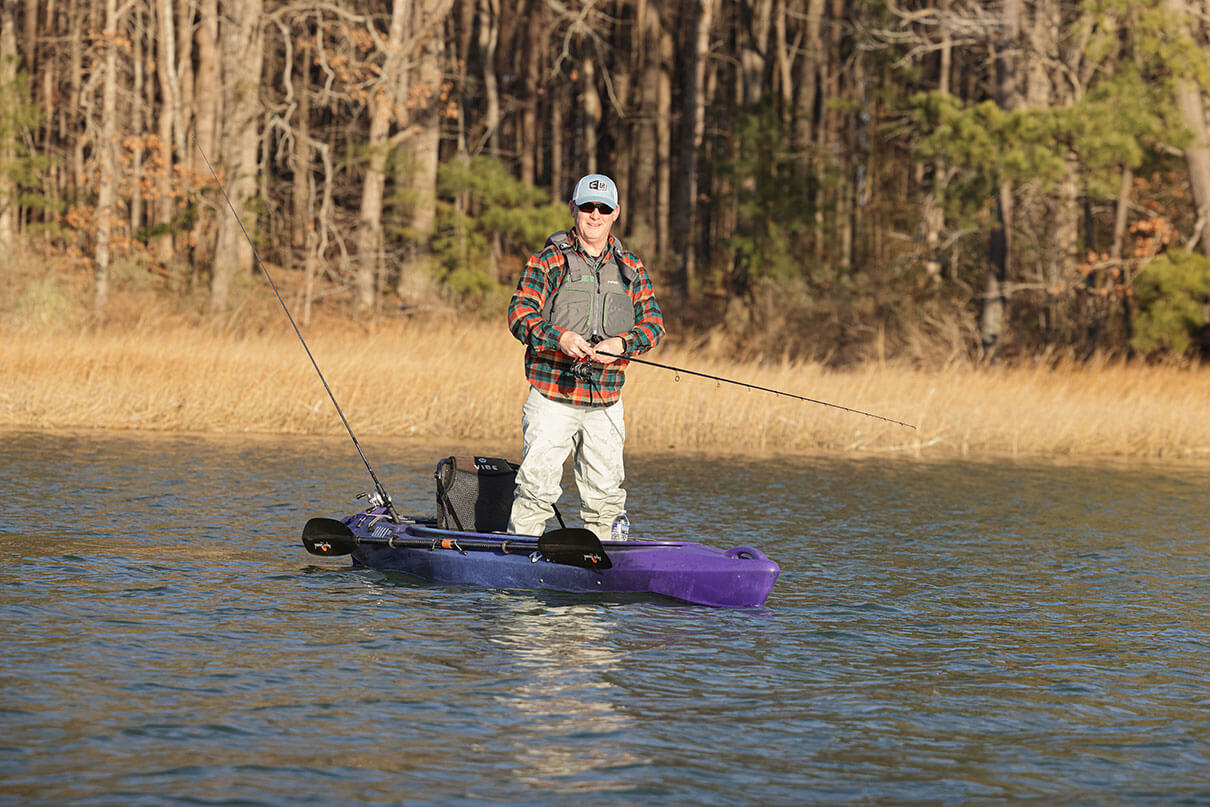
On the water, the little boat is surprisingly sporty. The low paddling position increased my paddling power and reduced wind resistance. The wide seat and expansive cockpit also contributed to comfort. The hull is so wide, I was able to stand and fish without a wobble.
The Shaka’s design inspired confidence and I found myself eagerly pushing the little boat’s limits. One trip I encountered brisk wind and accompanying washboard chop. The Shaka took the beating on the chin and I appreciated the enclosed cockpit’s extra protection from the spray and cold wind.
Fishing in the Shaka is extra fun. The little boat is pulled round by the smallest fish and swinging a fish into the cockpit is a wrestling match that ends in laughter.
Who Should Buy the Vibe Shaka 100
Anyone who is considering an inflatable kayak should take a look at a recreational sit-inside kayak. While I can’t fold the sit-inside into a carry case, the hard-body, low-profile sit-inside is easier to paddle and fish. The rotomolded boat is just as light and compact as a fishing inflatable but the tracking and stability are better. Of course, the Shaka is a great choice for casual anglers and cottagers “just looking to get on the water,” but the Shaka 100 is a formidable fishing machine for hard-to-reach honey holes and moderate river runs. Anglers in cold climates like the extra protection provided by the sit-inside cockpit. Basically, anyone sitting on the fence about kayak ownership should make the leap into the Vibe Shaka 100.

Stand up, sit inside, your choice. | Feature photo: Patrick Hayes