Casey Reed has spent years traveling across the country competing in fishing tournaments, but his journey started in the Blue Ridge Mountains. “After figuring out my local lakes, I traveled to North Carolina and Tennessee,” he says. Eventually, he fished the most famous bass lakes in the country. Reed quickly learned that understanding how to catch bass on distant bodies of water helped him take fishing to the next level on his home lake.
Next-Level Fishing: Hit the Road
Take It to the Next Level
“It took me years of traveling around the country to get comfortable fishing unfamiliar waters,” Reed admits. At first, Reed relied on the tactics he used at home to find success on new lakes and rivers. “On my local lake I worked the docks,” he says. The trick carries over to other lakes with boat docks. “But when I came to an area without boat docks, I had to change my tactics.” Learning to fish cyprus trees in Texas or grass in Florida pushed Reed to master new skills.
Level-up Kayak
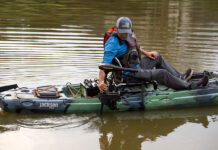
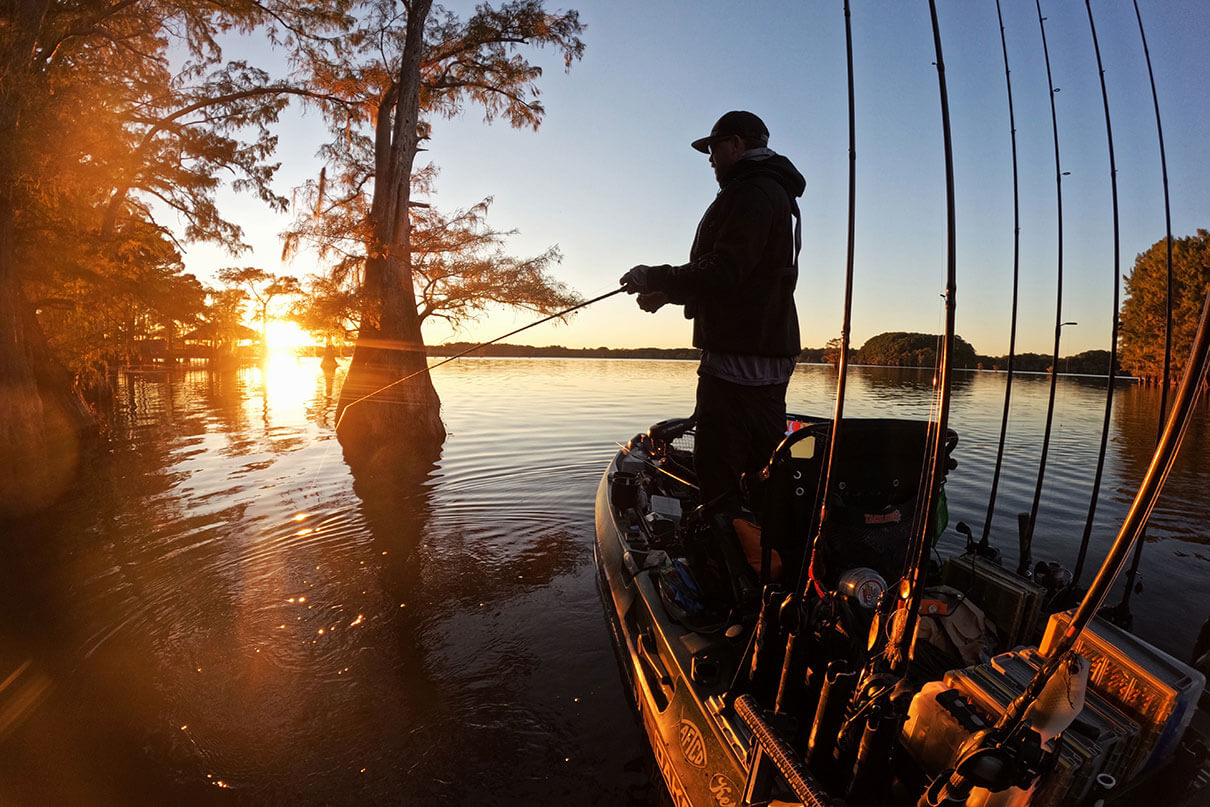
To fish a variety of settings with one kayak, Reed uses an Old Town AutoPilot 136 with an integrated trolling motor running off a single 12-volt battery. “The 12-volt battery is less expensive and easier to charge at a hotel or Airbnb,” he explains. The AutoPilot provides propulsion to the fishing grounds and maneuverability to position his kayak while he’s fishing.
How to
Travel fishing isn’t easy. “I do research, watch YouTube videos and read local fishing reports,” Reed says. He learns the top tactics for the lake. “For example, Lake Guntersvlille is a Rat-L-Trap lake so I keep several versions ready to go.” If the tactic isn’t working, he returns to the tactics that he is most comfortable. “I throw shaky head lures all around the country,” he says. He can usually find an area on the lake where the tactic works. Even with the best preparation, finding success in unfamiliar water requires time. “Returning to the same area year after year allows me to figure out the patterns,” he says.
Tip for Success
“Organization is not my strong point,” Reed laughs and continues, “I know where everything is but if something is out of place I’ll never find it.” In an attempt to improve, Reed removed the back seat of his Honda Passport. “I installed a bed and an overhead rack for my tackle,” he says.
Gear Upgrade
Skip the fancy kayak crates, Reed uses two 13×13-inch milk crates to store his gear. Reed laughs, “I have the milk crates jammed with stuff.” Forget the fancy rod holders. “PVC pipe rod holders zip-tied to the crate allow me to store up to 10 rods,” he explains.
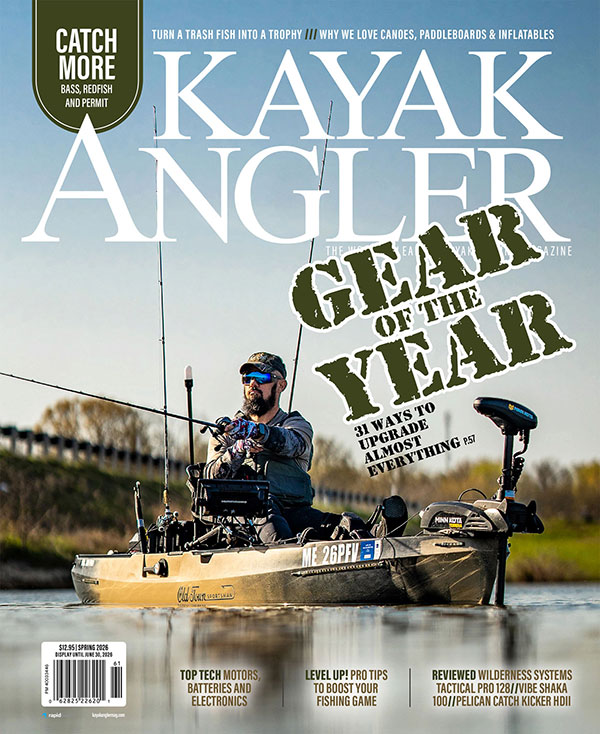
Explore new water to learn how to fish at home. | Feature photo: Casey Reed