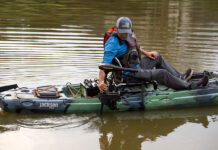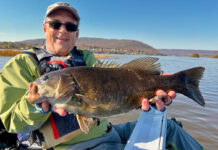
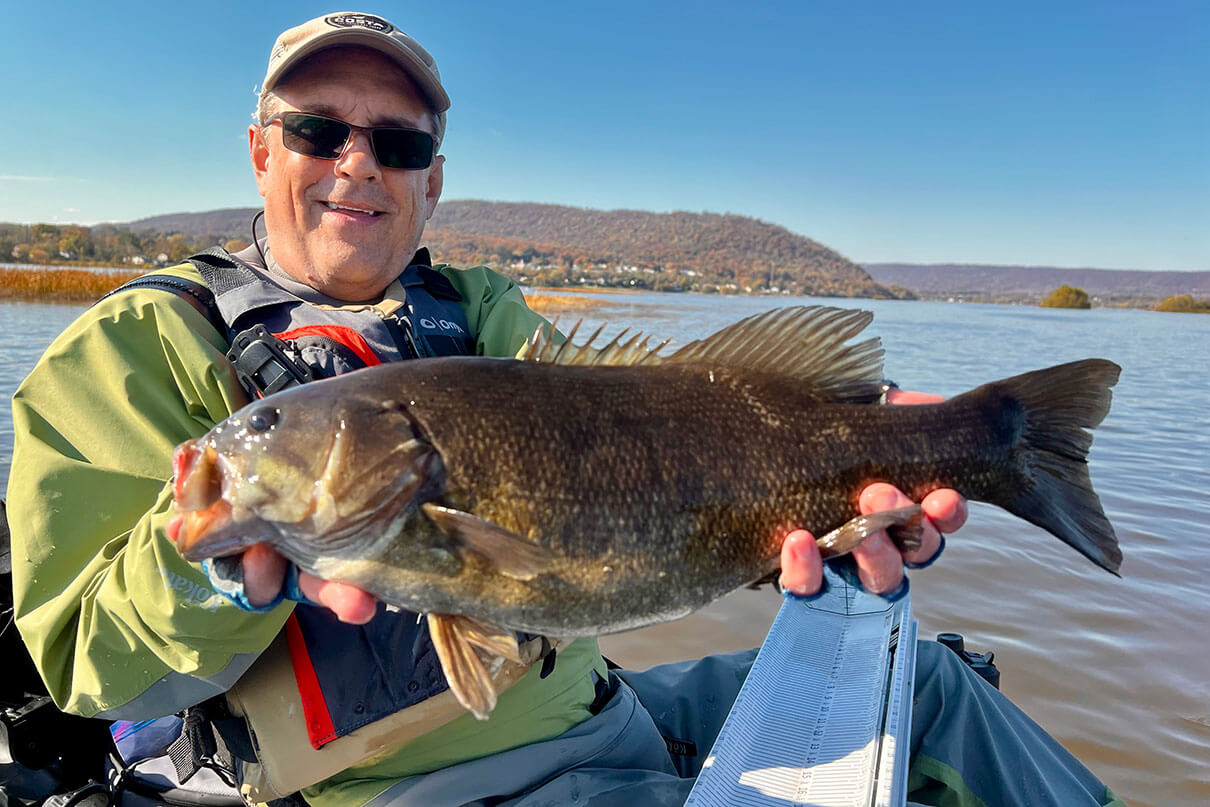
Kayak fishing instructor Jeff Little is synonymous with smallmouth bass—even his last name is small. Starting as a river fishing guide over 20 years ago, the Susquehanna-based angler has worked as an instructor, product development specialist and outdoor communicator but his passion always comes back to river smallmouth. Little is also an American Canoe Association (ACA) Level 3 instructor who helped develop the organization’s kayak fishing courses.
Take Your River Fishing to the Next Level
“Anglers see paddling skills as separate from fishing skills,” Little starts. New anglers don’t understand boat positioning is the number one skill of a great river angler. Drifting downriver, casting a spinnerbait at every laydown and ledge eddy produces smallmouth bass. “But master the sweep stroke to turn the bow into the current followed by a couple hard strokes to break downstream momentum before making the cast and you’ll catch more bass.” Little recommends anglers complete a paddling course. “Learning to pick apart push water and back ferry all starts with paddle work,” he says.
How To
Another way to take river fishing to the next level is fishing through the winter. Little points out, “Moving water stays open and the fish are there year-round.” He teaches a course on winter river fishing. Little’s students have the goals of learning cold-water safety and the nuances of lure presentation. “What they walk away with is a level of mental mastery of how we handle hours without a bite,” Little says. Fishing is patience; making cast after cast in the freezing cold is the best way to develop the quality. “Winter fishing develops a mental toughness and persistence that pays off all year,” Little says.
Tip for Success
Little’s most audacious next-level skill goes against common sense. “I call it crash and learn,” Little says. In low, clear water conditions, he paddles quickly downriver. “I intentionally spook the fish,” he says. When he sees a fish scoot off leaving a puff of mud, he marks the location on his GPS. “A library of waypoints pays off later in the day or on the next trip,” he explains. Noting the locations also helps Little understand the ledges, trenches, current features and grass lines where the fish are holding.
Level-up Gear
“For years, I avoided anchoring my kayak,” Little admits. Instead, he used paddle skills to maintain boat position. “I would wedge the boat in rocks or grass or use one-hand paddle technique to position the boat in slack current,” he explains. Recently, Little experimented with anchoring his kayak in the river. “The first experiences changed my mind,” Little says. Now he has Anchor Wizard winches controlling bow and stern anchors. Anchoring in strong current is dangerous, so Little carries a safety knife on his life vest in case the anchor gets stuck. “I cut away a couple wedged anchors each year,” he admits.
Tackle Upgrade
Little’s tackle is presentation specific, but his rods and reels fall into two categories: finesse and power fishing. His finesse and jig rods are fast-action spinning rods and reels spooled with 22-pound Sunline Almight sinking braided line connected with a double uni knot to 10-pound Gamma fluorocarbon leader. “For better strike detection, the sinking braid slices through the water and stays taut through the fall,” he explains.
For power fishing, Little uses a moderate to moderate-fast rod and 20-pound Gamma fluorocarbon line. “I use it to throw everything from crankbaits to chatterbaits,” he says. Little builds his own rods using Rainshadow Judge blank. “I rarely lose a fish on the Judge,” he says.
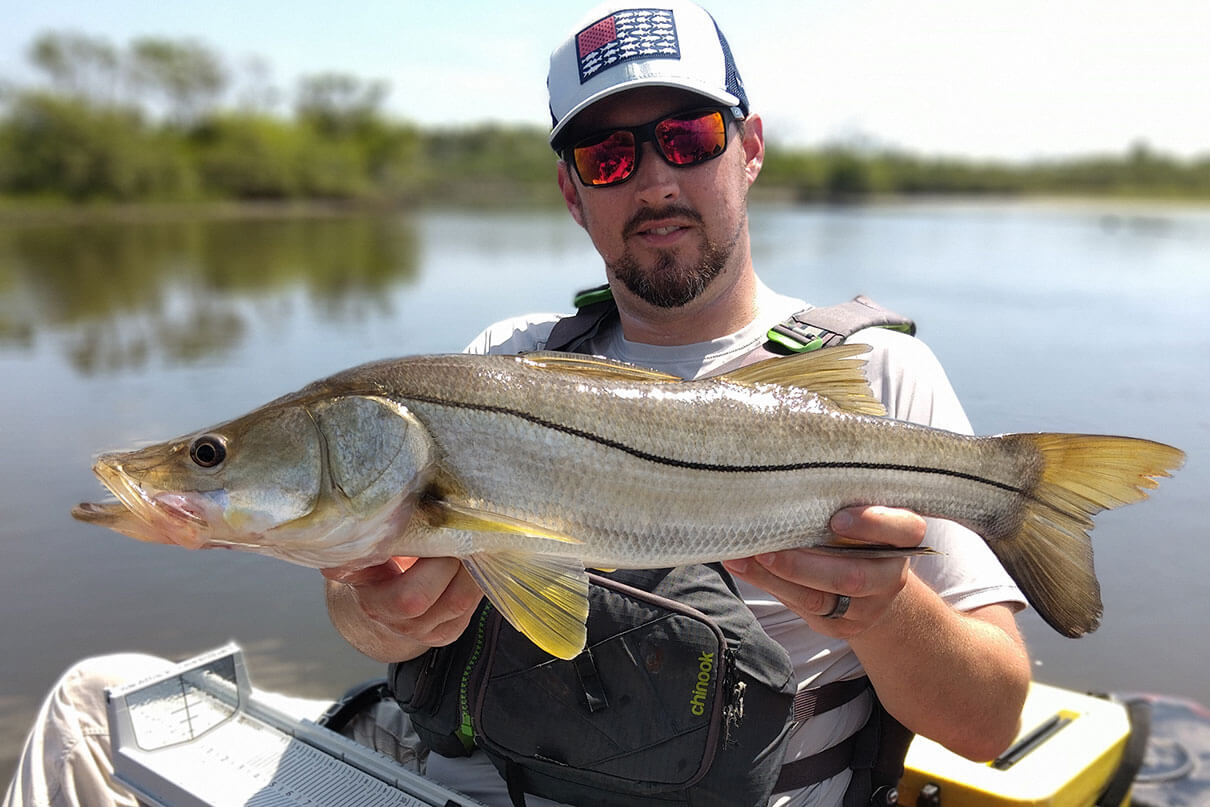
Extend the season to get in more fishing. | Feature photo: Jeff Little