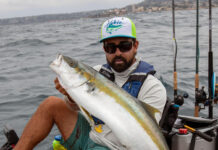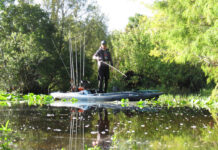
Moving from New York to Connecticut forced Matt Stone to learn new ways to catch striped bass. “I had to learn the Long Island Sound fishery, the species, tactics, spots and patterns,” he says. Luckily, Stone manages one of the area’s largest tackle shops, so he has access to the best intel and gear and has plenty of time to go fishing. “I completely immersed myself in local fishing, spending thousands of hours on the water,” he says. Stone’s effort paid off when he won the On the Water Striper Cup Kayak Division tournament with a 10-fish release stringer measuring 484 inches.

Next-Level Night Fishing Tactics

Take it to the next level

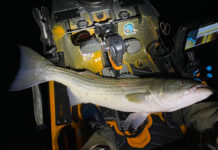
Chasing striped bass in New England requires Stone to fish inlets, passes and the open ocean under threat of strong current, big waves and dangerous weather. “I take it one step further by fishing at night,” he says.
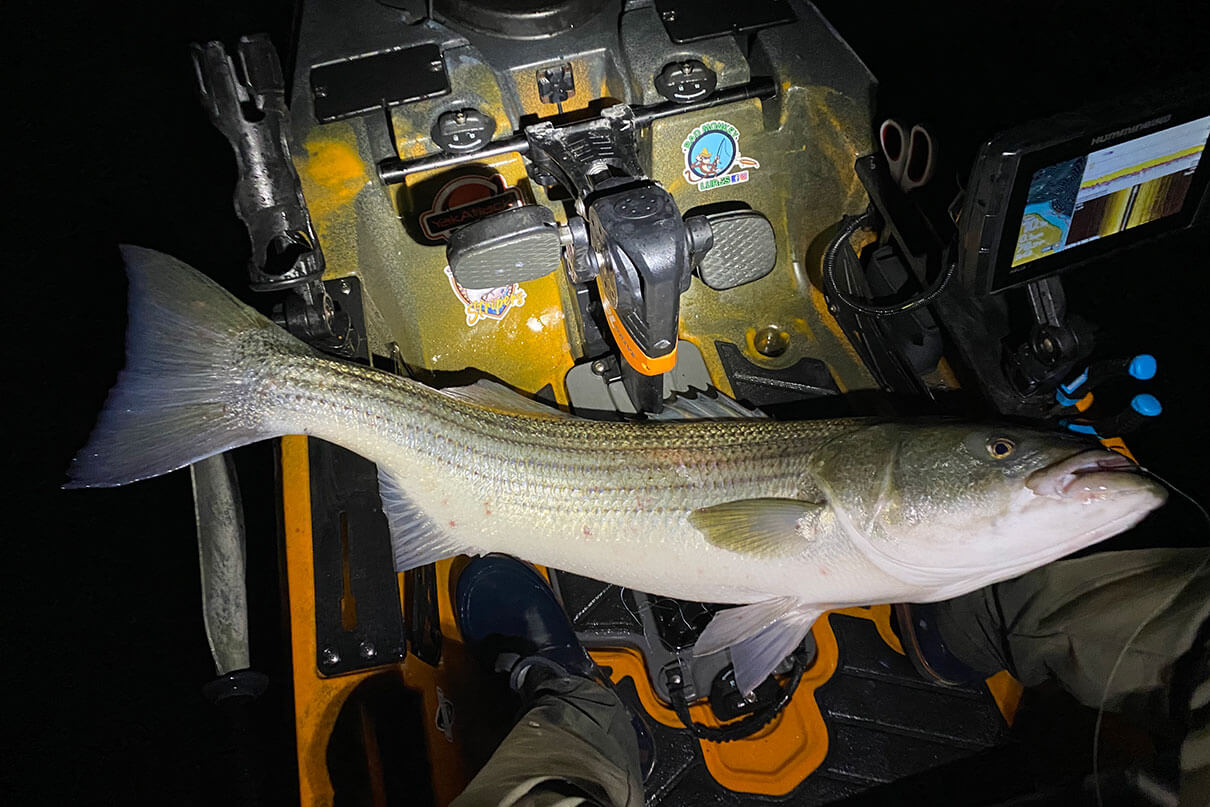
a striped bass caught while night fishing laid on the deck of a fishing kayak
The only difference between day and night is the light. | Feature photo: Matt Stone

Striped bass are nocturnal feeders, but facing coastal fishing hazards in the dark is no joke. Stone admits, “Conquering this tactic was 100 percent scary as hell.” The challenge forces Stone to prioritize safety. “If I don’t feel safe, I can’t fish well,” he explains.

Stone has raised his comfort level to become accustomed to fishing at night. “I do most of my striper fishing at night,” he says, “The ocean is beautiful in the dark and I have it all to myself.”

Tip for Success

“I know it seems counterintuitive, but I minimize the lights on my kayak,” Stone says. He only uses the legally required white safety light and a waterproof headlamp for illumination. “Less light improves my night vision so I can see current seams and structure,” he explains.

Tackle Upgrade

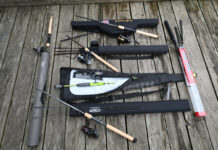
Rod: 7’6″ Medium-heavy spinning

Reel: 5000 size spinning reels

Line: 40-lb braided line, 50-lb leader

Leader: 15-feet, 40-pound fluorocarbon

Lures and Rig: Live eel: 6/0 BKK circle hook, Osprey Custom Lures 24″ unweighted red tube, Gravity Tackle 13.5″ GT Eel

Fish Tale

It did not take long for Stone to realize night fishing’s big payoff. “The first time I felt a big fish thump my lure, I was addicted to night fishing.” He often fishes alone, so most of his best catches have no witnesses. “Despite the fish I post on my social media, there are many trips when I don’t catch anything,” he admits. The experience chasing big bass in pitch black keeps him coming back. “I love the stars, quiet and the slowly rising sun melting away the dark. I feel like the whole ocean belongs to me.” Stone says night fishing is worth feeling like a zombie the next day, “especially when the bite is good.”

How-to

Before attempting night fishing for striped bass, Stone recommends hours of daytime fishing. “During the day, I learn every boulder, current rip, danger zone and fishy location,” he says. After he’s mapped the area during day, he pushes his launch time earlier and earlier in the morning. “I feel more confident when I fish before sunrise,” he explains.

“I put safety first,” Stone adds. He prefers to fish with calm winds and seas. “Unlike during the day, striped bass feed in calm conditions after dark,” he explains. He leaves a float plan and carries a long list of safety equipment.

Stone claims, “There’s no magic button for finding fish at night, just get out there and learn a ton.” He looks for structure and current seams to find striped bass. “The fish move into shallow water in the dark,” he adds.

“I use big lures and baits at night,” he says. Fish look for a large target in the dark, so Stone makes it easy.

Cover of Kayak Angler Magazine Issue 56This article was first published in Issue 56 of Kayak Angler Magazine. Subscribe to Kayak Angler Magazine’s print and digital editions, or browse the archives.


The only difference between day and night is the light. | Feature photo: Matt Stone
 

Previous articleBest Fishing Backpacks For 2026
Next articleYou Should Be Fishing From An Inflatable Kayak
Kayak Angler editor Ric Burnley has been kayak fishing since the dawn of the sport. In 2007, Burnley wrote The Complete Kayak Fisherman, with chapters on how-to make a PVC rod holder and glue a fish finder transducer to the hull. In 2013, he landed his dream job as editor of Kayak Angler magazine. Burnley is a regular contributor to Salt Water Sportsman, Sport Fishing, Outdoor Life, In the Bite and other print and online publications. Burnley lives in Virginia Beach with his wife, adult daughter, daughter’s boyfriend and daughter’s two cats. Experience In 2004, Ric Burnley stole his first milk crate from behind a 7-Eleven and fashioned it into a gear crate for his Ocean Kayak Prowler 15. Many years and many milk crates later, Burnley has witnessed the rise of kayak fishing from a bastardized fringe element to a legitimate industry with millions of devotees. The journey to becoming an angler started early in Burnley’s life. His father, Eric Burnley, is a renowned outdoor writer and former fishing guide, so the boy grew up in the cockpit of a charter boat and in the pages of national magazines. After college, Burnley lost easy access to his father’s boat, but not his passion for fishing. Once he had exhausted the limits of land-based angling, Burnley decided to try out a new thing called kayak fishing. About the same time, Burnley was looking for extra work to pay for his expensive addiction. His father, editor of the Mid-Atlantic Fisherman Magazine, offered him freelance assignments for the weekly publication. That led to a position as regional editor at Salt Water Sportsman, publication of The Complete Kayak Fisherman and editorship of Kayak Angler. Meanwhile, Burnley and his partner-in-crime, “Kayak Kevin” Whitley were exploring the boundaries of kayak fishing. With the bountiful Chesapeake Bay and Atlantic Ocean as their playground, the two anglers were the first to target big red drum, cobia, trophy striped bass, monster black drum, sheepshead and many other species. Once inshore species were exhausted, Burnley loaded his kayak onto motorboats and fished for bluefin tuna, blackfin tuna, king mackerel and amberjack. All the while, Burnley shared his experiences and knowledge with anglers through print, photos, video, radio, seminars and online. Almost 20 years later, Burnley continues to fish obsessively and share the stories. His recent projects for Kayak Angler cover the latest trends in forward-facing sonar and remote-controlled electric motors. Over the past two decades, kayak fishing and Ric Burnley have come a long way from PVC rod holders and stolen milkcrates. Education ● Radford University: BA English; Virginia Teacher’s License. Highlights ● Other Interests: Mountain biking, traveling, hiking, surfing and skateboarding ● Day Job: High School English teacher at an alternative school for at-risk students Fun Fact Ric’s name is a contraction of Eric. Ric is named after his father, Eric Sr. To differentiate between the two Erics, Mrs. Burnley removed her son’s E. To this day, she writes the boy’s name ‘Ric, with an apostrophe replacing the E.

Leave a Reply