While most anglers look for hatches, rod holders, pods, mounts, tracks and other fishing amenities when shopping for a kayak, they should turn the boat over and look at stringers, channels, keel and waterline for a real indication of a boat’s fish-ability. Kayak designers spend hours slaving over hull features that squeeze every ounce of speed and efficiency out of their boats. Three of the best known kayak companies stepped out of their comfort zones to build a better mousetrap; here’s what they learned about balancing stability and performance.

The Hull Truth: How Kayak Design Affects Your Fishing

Backwater kayak design

New Zealand-based Feelfree Kayaks jumped into the backwater boat market with the Lure 10 and 11.5. That gave company founder Paul Lepper carte blanche on the hull.

“The two objectives were stability and weight capacity,” Lepper says. The challenge is to pack as much capacity into a boat that is small enough to maneuver while standing. To do this, his team used a channeled hull, which features two grooves running the length of the boat.

“Channeling the hull increases surface area to increase capacity and improve straight line tracking,” he says, adding that it also extends the point of balance so an angler can paddle while seated or standing.
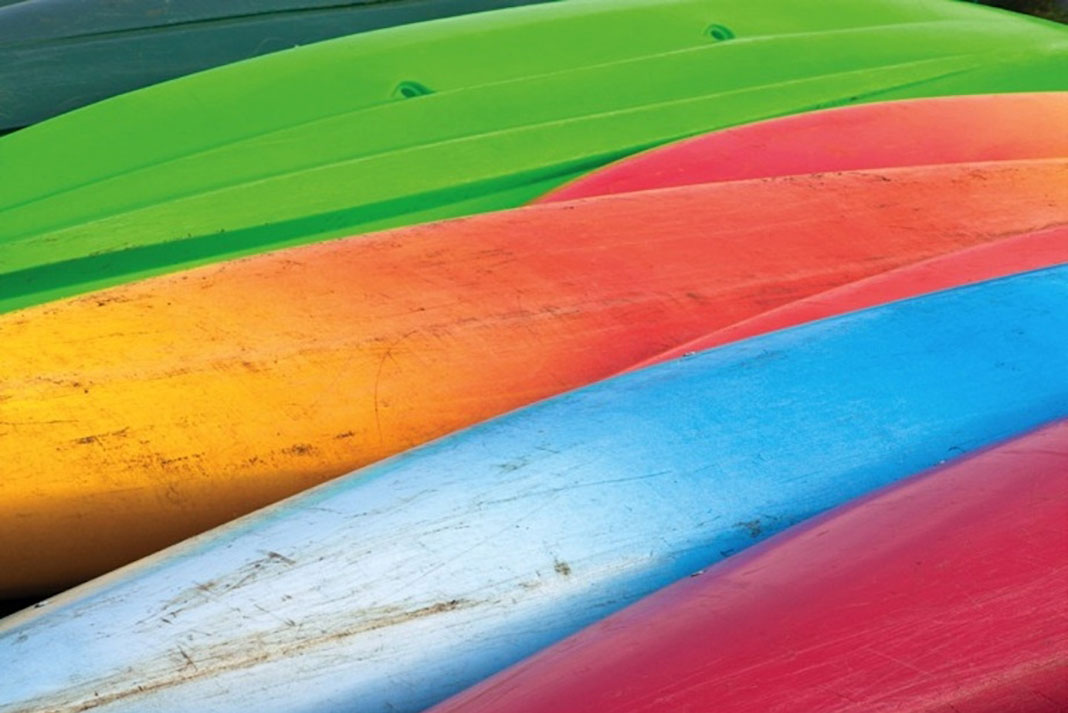
a group of flipped over fishing kayaks with different hull designs
Kayak hulls come in many shapes and sizes, so choose the best design for you. | Feature photo: Tom Kirkendall

Sit-inside fishing kayak design

The folks at Pelican International in Quebec, Canada, have plenty of experience designing sit-inside kayaks, but building a sit-inside fishing kayak was new territory.

“We had to accommodate a paddler who will be casting and fighting fish without tipping over,” marketing coordinator Jennifer Di Donato says.

Di Donato explains that a traditional sit-inside has a rounded hull that increases speed but decreases stability and maneuverability. “The Intrepid has a twin-arched hull to move more positive flotation out of the sides, giving it maximum secondary stability,” she says.

A keel and two stringers make the boat even more stable while maintaining speed and tracking.

Open-water hull design

Rough water, surf, wind and long distances require a boat that is fast, stable, agile and capable. “It’s a difficult balance,” admits lead designer David Maughan at Wilderness Systems in Greenville, South Carolina. Their Thresher open water model incorporates rocker, to improve maneuverability. A 15-foot boat with no rocker will paddle straight and be difficult to turn. Curving up the bow and stern places less of the hull in the water, making it easier to turn.
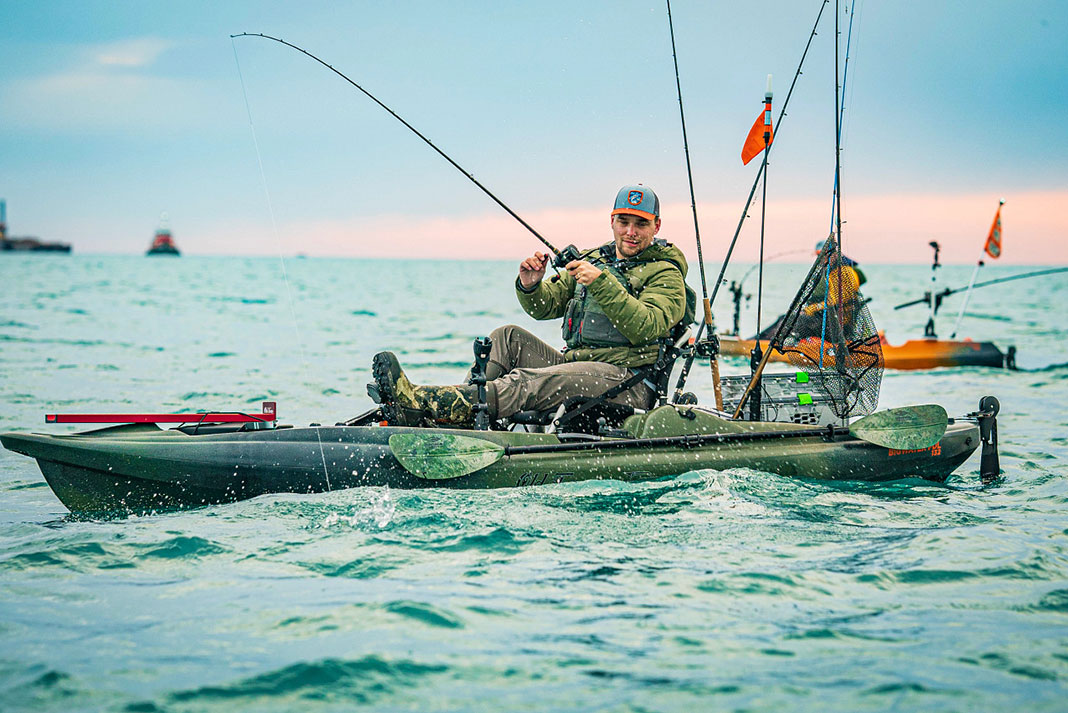
“When the boat is surfing in,” Maughan adds, “the rocker keeps the keel in the water so the boat stays straight.”

Flared sides also help the boat handle surf. Flat sides would cause the boat to broach and the paddler to catch an edge. “But flared sides help the boat rise over a wave,” says Maughan.

Flared sides also give an open-water boat a narrower, more efficient footprint in the water. As more weight is added, the footprint increases to improve stability.

What about length?

“A bigger angler carrying heavier loads will want a longer boat,” Maughan says, “while a lighter angler will get the same performance out of a smaller model.”

Cover of the Summer/Fall 2014 issue of Kayak Angler MagazineThis article was first published in the Summer/Fall 2014 issue of Kayak Angler Magazine. Subscribe to Kayak Angler Magazine’s print and digital editions, or browse the archives.


Kayak hulls come in many shapes and sizes, so choose the best design for you. | Feature photo: Tom Kirkendall
 

Previous articleVIDEO: Native’s Pint Sized Propel
Next articleBattery-Free Coastal Navigation For Dummies
Kayak Angler editor Ric Burnley has been kayak fishing since the dawn of the sport. In 2007, Burnley wrote The Complete Kayak Fisherman, with chapters on how-to make a PVC rod holder and glue a fish finder transducer to the hull. In 2013, he landed his dream job as editor of Kayak Angler magazine. Burnley is a regular contributor to Salt Water Sportsman, Sport Fishing, Outdoor Life, In the Bite and other print and online publications. Burnley lives in Virginia Beach with his wife, adult daughter, daughter’s boyfriend and daughter’s two cats. Experience In 2004, Ric Burnley stole his first milk crate from behind a 7-Eleven and fashioned it into a gear crate for his Ocean Kayak Prowler 15. Many years and many milk crates later, Burnley has witnessed the rise of kayak fishing from a bastardized fringe element to a legitimate industry with millions of devotees. The journey to becoming an angler started early in Burnley’s life. His father, Eric Burnley, is a renowned outdoor writer and former fishing guide, so the boy grew up in the cockpit of a charter boat and in the pages of national magazines. After college, Burnley lost easy access to his father’s boat, but not his passion for fishing. Once he had exhausted the limits of land-based angling, Burnley decided to try out a new thing called kayak fishing. About the same time, Burnley was looking for extra work to pay for his expensive addiction. His father, editor of the Mid-Atlantic Fisherman Magazine, offered him freelance assignments for the weekly publication. That led to a position as regional editor at Salt Water Sportsman, publication of The Complete Kayak Fisherman and editorship of Kayak Angler. Meanwhile, Burnley and his partner-in-crime, “Kayak Kevin” Whitley were exploring the boundaries of kayak fishing. With the bountiful Chesapeake Bay and Atlantic Ocean as their playground, the two anglers were the first to target big red drum, cobia, trophy striped bass, monster black drum, sheepshead and many other species. Once inshore species were exhausted, Burnley loaded his kayak onto motorboats and fished for bluefin tuna, blackfin tuna, king mackerel and amberjack. All the while, Burnley shared his experiences and knowledge with anglers through print, photos, video, radio, seminars and online. Almost 20 years later, Burnley continues to fish obsessively and share the stories. His recent projects for Kayak Angler cover the latest trends in forward-facing sonar and remote-controlled electric motors. Over the past two decades, kayak fishing and Ric Burnley have come a long way from PVC rod holders and stolen milkcrates. Education ● Radford University: BA English; Virginia Teacher’s License. Highlights ● Other Interests: Mountain biking, traveling, hiking, surfing and skateboarding ● Day Job: High School English teacher at an alternative school for at-risk students Fun Fact Ric’s name is a contraction of Eric. Ric is named after his father, Eric Sr. To differentiate between the two Erics, Mrs. Burnley removed her son’s E. To this day, she writes the boy’s name ‘Ric, with an apostrophe replacing the E.

Leave a Reply