
La Jolla truly is one of the greatest wonders of the kayak fishing world. Ocean currents carry nutrient-rich water close to shore attracting big fish. This symphony of natural wonder offers kayak anglers an opportunity to launch from the beach and catch tuna and marlin.
In 2015, a new migratory pattern for Pacific bluefin tuna developed off the Southern California Bight. Since then, schools of bluefin tuna have made their home in my home waters.
No one knows why the tuna showed up in La Jolla and how long they will stay. While the fish are around, local anglers enjoy world-class fishing close to home.
June through September is the best time to target bluefin in SoCal. However, it seems like bluefin tuna are becoming a year-round option. I can’t count the number of days when I’m laughing and high-fiving my buds, simply dumbfounded that I’m living in an epic fishing dream.
La Jolla Canyon is one of the birthplaces of modern kayak fishing. Pioneers like Jim Sammons and Morgan Promnitz took early sit-on-top kayaks through the surf for white sea bass, yellowtail and thresher sharks. Sammons famously caught a striped marlin and kicked off a nationally syndicated television show.
These anglers inspired young anglers like me to explore what was possible just behind the breakers. Today, I dream of catching a bluefin tuna out of a kayak.
Deep into the Drink: Pacific Mothership Trip Scores Bluefin Tuna
Since the influx of coastal bluefin, I’ve had my sights set on one grand accomplishment only a few anglers can imagine, and even fewer have achieved. I want to launch from the beach and land a bluefin tuna from a human-powered plastic boat.
However, between work and family life, finding time for a full-day offshore kayak fishing trip isn’t easy. To start, it takes a miracle for the weather and water conditions to come together for a beach launch.
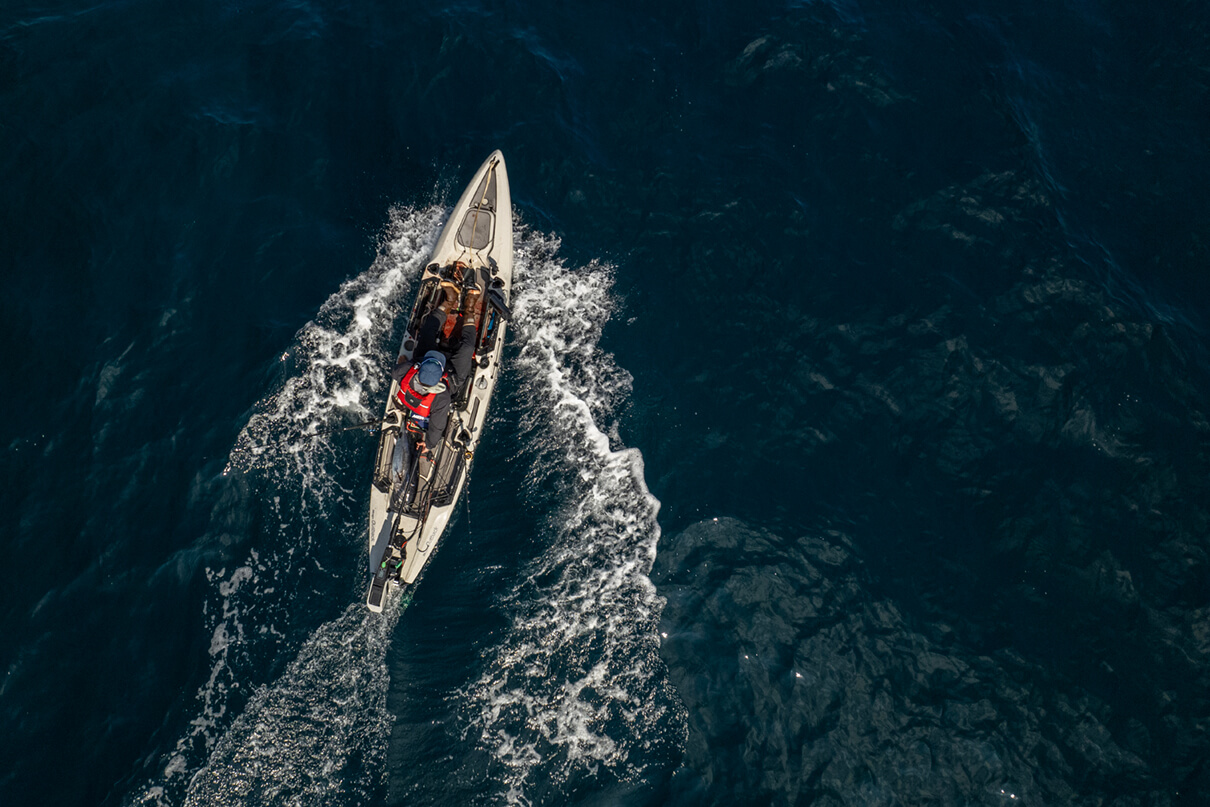
The schools of bluefin move fast. They may only come close to the coast for a day or two before moving out of kayak range. For any shot at a beach launch, pedal kayak bluefin, I would have to be ready at a moment’s notice and still face the possibility of failure.
After missing a couple of prime opportunities to accomplish my goal, I decided to move the goalposts. Instead of beach launching and pedaling after bluefin, I planned to load my kayak on my 21-foot center console and mothership to the tuna.
To further shorten the playing field, I figured out a way to power my kayak with an electric motor. As product manager for electric motor manufacturer Newport Vessels, I know the advantage of a small, silent power plant when chasing down a school of tuna moving at up to eight knots.
There’s nothing as exhilarating as being alone, out of sight of land, in pursuit of shearwater birds dipping and swirling over a school of tuna.
Initially, I doubted whether trading a beach launch and pedal system for a mothership and motor was a legit substitute for my goal. And then I remembered the years I’ve spent waiting for the perfect conditions to align with a rare free day, I decided it was time to tick the box.
The first step on my plan was a phone call to invite my friend and pro photographer Jeffrey Fortuna to document the catch. Jeffrey and I have shared many adventures and always dreamed of targeting bluefin tuna off San Diego. He was excited to make the daydream a reality.
Even with the mothership advantage, we had to wait for a bite window. A good period may only last two or three days. By the time a push of fish arrived and the weather lined up, we had one day to get it done before the fish moved out of the area.
On game day, Jeffrey and I met at 4 a.m., hitched my motorboat, loaded my Hobie Outback onto the front deck, packed a Newport NT300 and a 36-volt, 30-amp-hour lithium battery into the fish box and headed for the launch ramp at Dana Landing.
Our destination was the west end of La Jolla Canyon where the valley opens into the Pacific. Recent reports of bluefin 15 to 20 miles from the beach made the mothership an express ticket to tuna town.
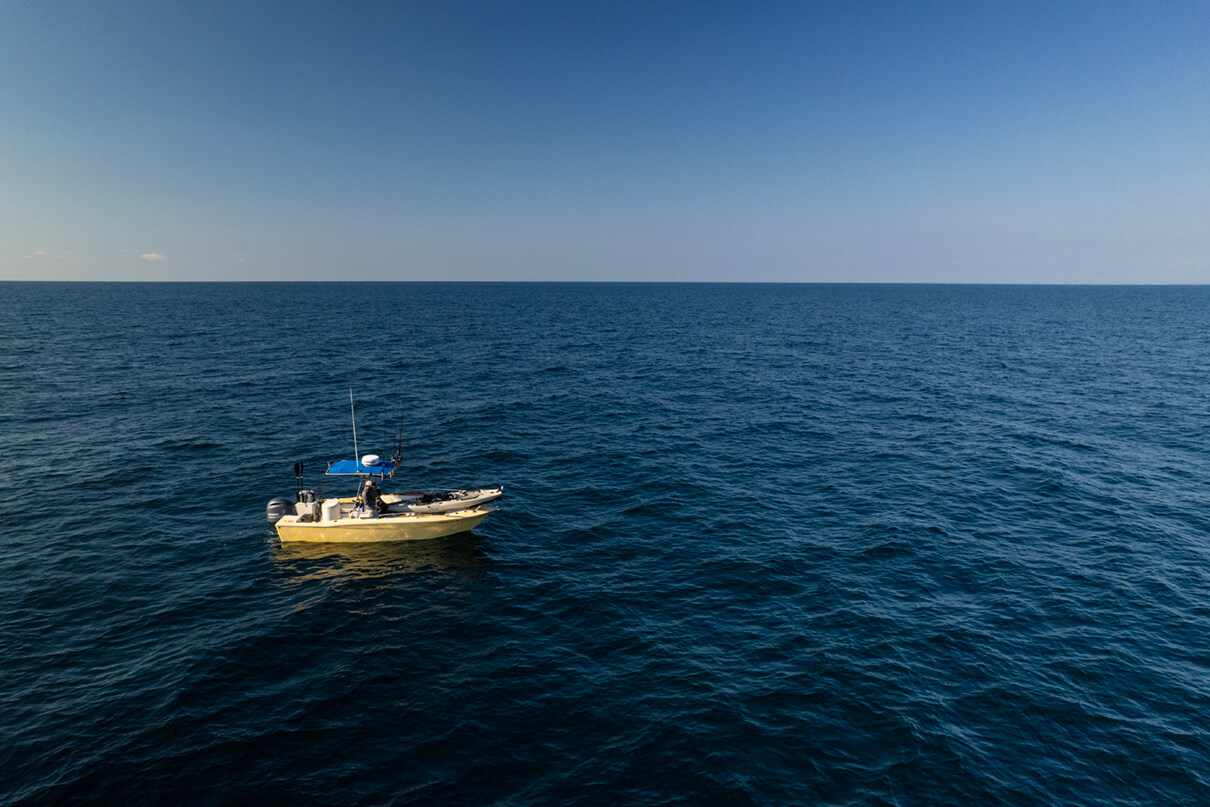
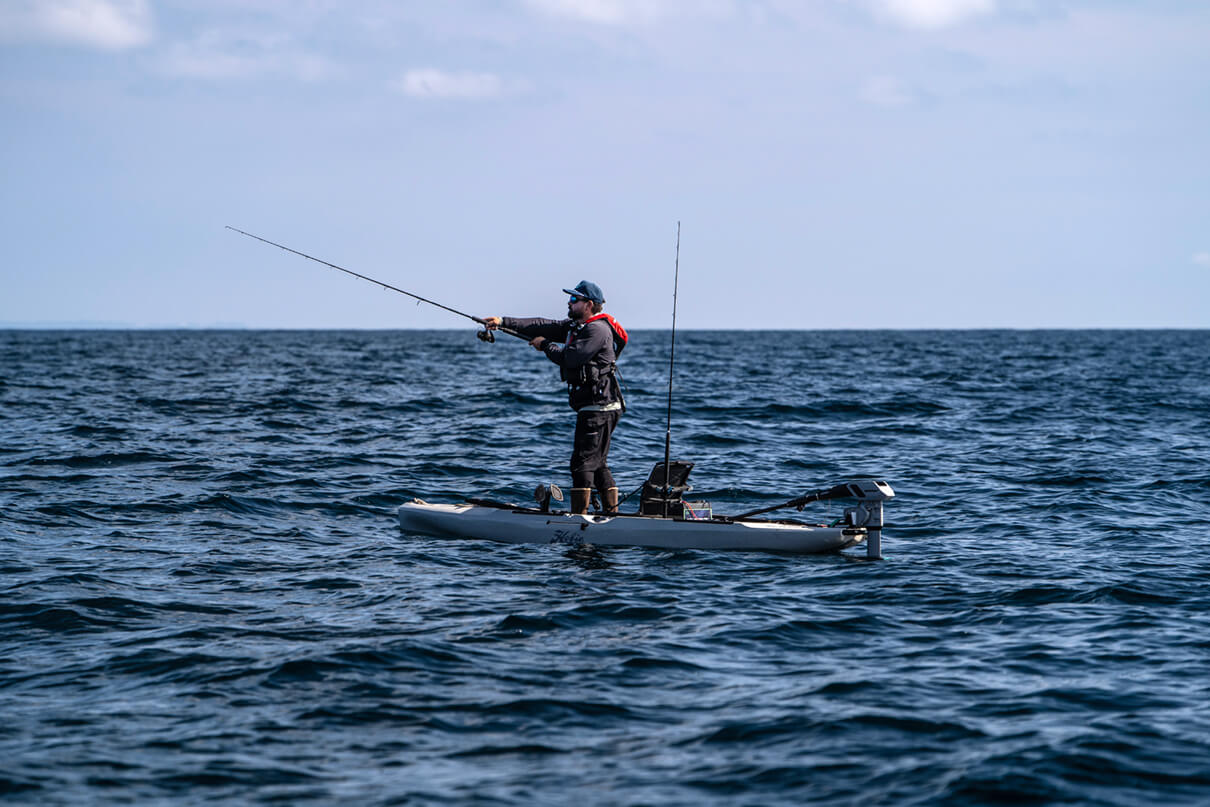
When we arrived to the fishing grounds, the plan was complicated so I tried to keep my rigging and tackle simple. When we spotted working birds and feeding fish, Jeffrey and I launched the kayak from the bow, pulled it alongside the boat, and rigged the motor and battery before I climbed aboard. After some practice, we were able to get the process down to two minutes.
With the mothership support, I could keep minimal tackle and rigging. To speed up the launch, I didn’t even take a livewell.
As I boarded the kayak, I ran through my safety checks: PFD, VHF radio, safety knife, sunglasses. Then, I secured the motor kill switch to my wrist, and asked Jeffrey to pass me a live bait from the bait well.
I pushed off the boat and motored my kayak into the vast blue sea. As soon as I was free from the safety of the mothership, I was overcome by an overwhelming sensation of exposure. There’s nothing as exhilarating as being alone, out of sight of land, in pursuit, shearwater birds dipping and swirling over a school of tuna.
As I neared the front of the school, the shearwaters began to slow down and pick at the water’s surface. When I trolled past the feeding frenzy, I presented the lead fish in the school with my bait.
I dropped back my live bait about 50 yards and slowed the motor to a subtle purr. After a few minutes slow trolling the live sardine, I picked up my rod to check my bait.
That’s when I felt a thump and the rod tip went heavy. Normally, I would let the fish eat before coming tight on a circle hook. But this bite was resolute and I knew the fish had engulfed the bait.
With the kayak motoring slowly ahead, I clicked the reel into gear and wound the line tight to pull the circle hook into the corner of the fish’s mouth.
When the tuna felt pressure, it realized it was hooked and went on a monster run. As the fish pulled my kayak, I tried to estimate its size. I had seen 40- to 80-pound tuna in the area.
I had to temper the excitement of hooking into the fish of my dreams with the reality of light leader, a small hook and a big chance the fish would break free. Feathering the drag when the fish took line and using the rod to apply pressure between runs, I slowly worked the tuna towards my kayak. In the mothership, Jeffrey hovered nearby shooting photos and shouting encouragement.
I had to temper the excitement of hooking into the fish of my dreams with the reality of light leader, a small hook and a big chance the fish would break free.
After a 15-minute fight, I caught a glimpse of the 40-pound tuna before it went on another blistering run.
The second time I worked the tuna towards the kayak, the fish gave me an opportunity for a gaff shot. I made it count. I sunk the gaff hook into the tuna’s shoulder and used my weight to counterbalance the tuna trying to pull me into the ocean.
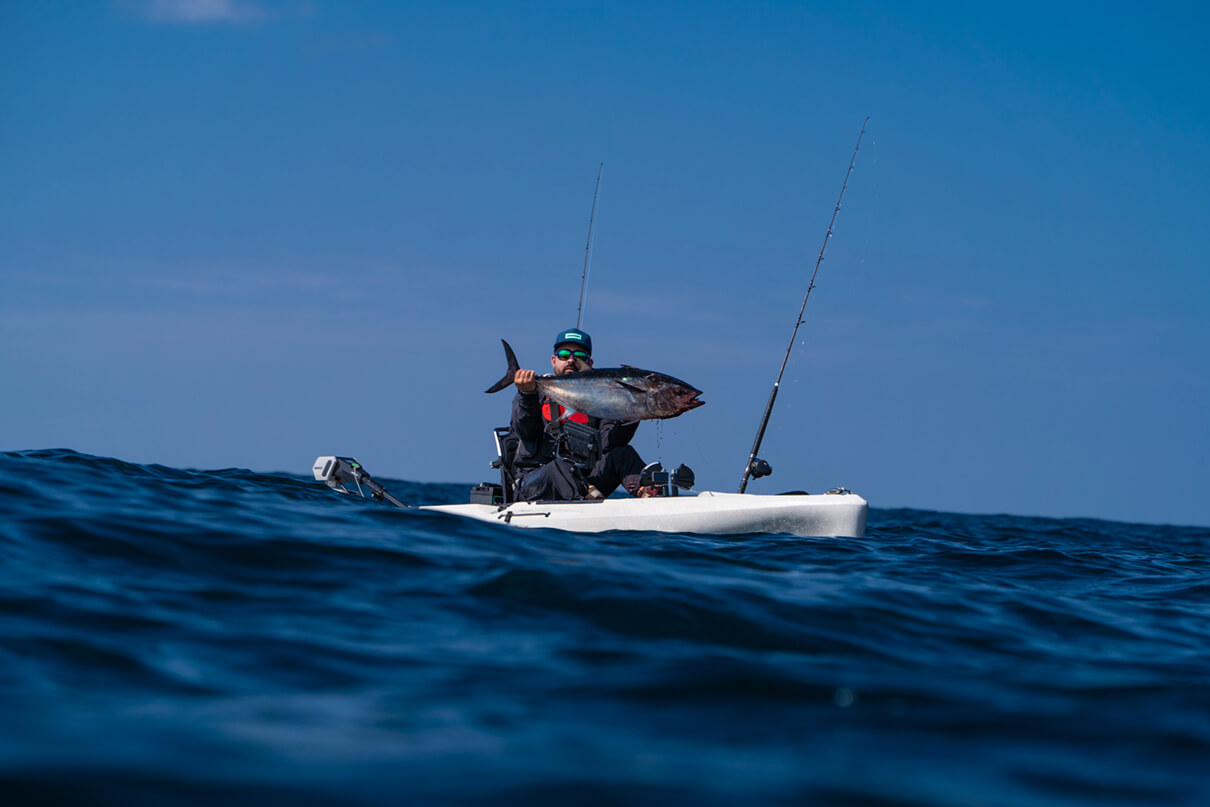
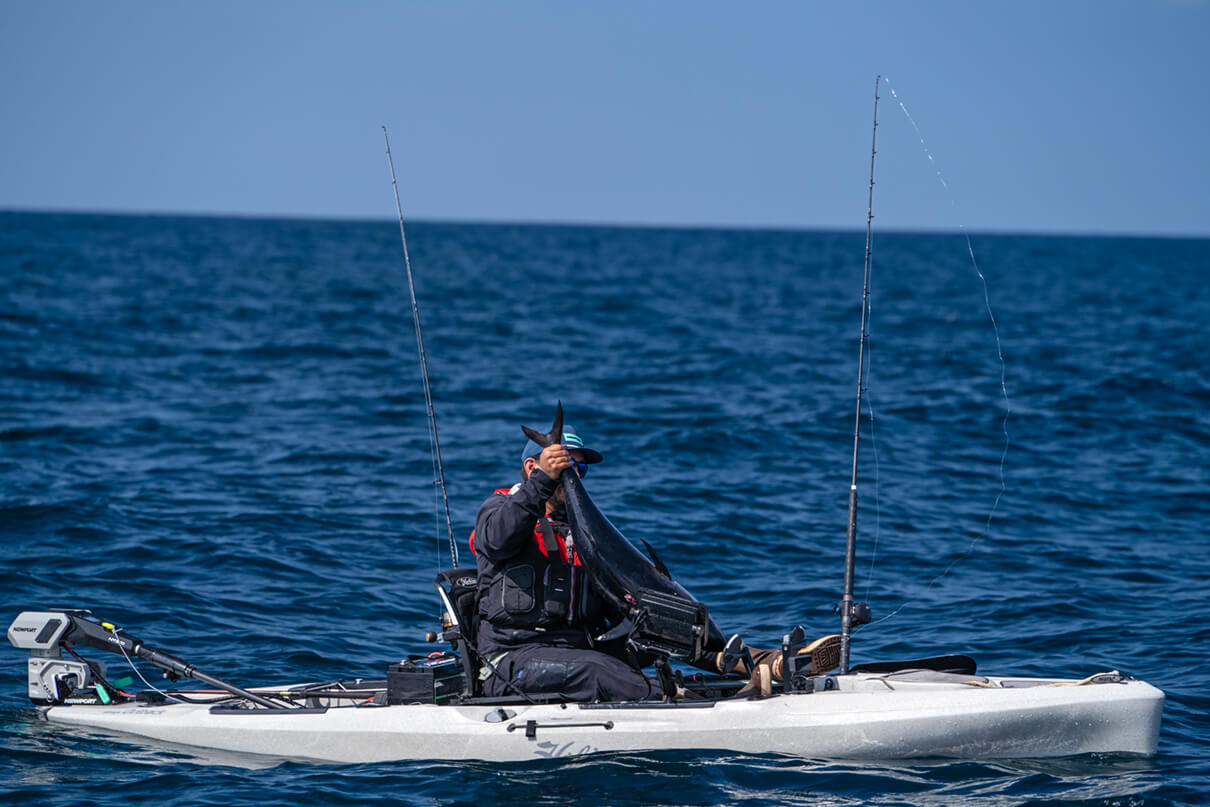
Even with these precautions, the tuna thrashing and splashing soaked me with water. Somehow in the chaos I managed to drag the tuna onto my lap. When the smoke cleared, I paused for a few photos before bleeding, removing the gills and guts and then flushing the core with sea water.

Jeffrey pulled up in the mothership and I transferred the tuna into an ice bath for the ride back to the harbor.
Regulations only allow one fish per angler, so Jeffrey helped me disassemble the kayak and load it into the mothership.
Although it wasn’t the way I pictured satisfying my dream of catching a bluefin tuna in a kayak, mothershipping to the fishing grounds and landing a tuna from my motorized kayak demonstrates the growing accessibility of bluewater fishing.
Howie Strech started as a fishing guide and worked his way to product manager at Hobie. Recently he jumped ship to Newport Vessels where he directs the future of electric motors. Strech has traveled and fished around the world, but his favorite place is at home in Southern California.

Decked, a bluefin tuna takes a ride in Howie Strech’s kayak. | Feature photo: Jeffrey Fortuna


What a fabulous thing to do , Kayak fishing is pure and raw ,well done