
Coke versus Pepsi, tastes great versus less filling, the People versus O.J.,in the history of debate there has never been a more contentious argument than kayak anglers bickering over pedal drives powered by fins versus a propeller.
Pedal Drive Performance: 4 Experts Debate Fin Versus Propeller
Pedal-powered kayaks come in two flavors: fins or props. To propel the kayak forward or backward, propeller drives, such as the Native Watercraft Propel and Old Town Canoes and Kayaks PDL, use bicycle cranks to spin a propeller.
Fin drives, like the Hobie MirageDrive, Pelican HyDryve and Vibe X-Drive, have pedals attached to vertical shafts and semi-flexible fins moving back and forth like scissor blades.

Pedal Drive Experts
To argue the pros and cons, we chose four experts, each representing a different drive. Two anglers use props and two are on a fin drive. Before they were famous, these pros chose a pedal drive. After years of hard fishing, they still defend their decisions.

Brandon Barton, Emerald Coast Kayak Fishing

Matt Charette, Vibe Kayaks
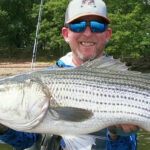
Tim Moore, Tim Moore Outdoors

Vinny Ferreri, Queen City Kayak Fishing
Fin Versus Propeller Q&A
Kayak Angler: What is your experience with pedal drives?
BB: I have been fishing the Hobie MirageDrive since 2010 when I bought my first kayak.
TM: I’ve been running the Old Town PDL drive since the Sportsman BigWater was called the Predator PDL.
MC: I switched to pedal drive when I started tournament fishing. Between the Vibe Shearwater and the Makana, I have all types of water covered.
VF: I bought my first Native Propel Drive nine years ago and I’ve been on the pro staff for eight years. I’ve fished every model and currently use a Native Slayer Max 12.5 and Titan 12.
KA: How does the pedal drive improve your fishing?
BB: Hobie’s MirageDrive feels as easy and natural as walking. I can go for hours without getting tired.
TM: To maintain my drift line, the prop drive allows me to constantly adjust my position forward or back against the current and wind.
MC: When I enter shallow water, I push one pedal forward to open the fins flat against the hull to reduce the boat’s draft. I can flutter kick to continue to propel the kayak forward.
VF: Covering water quickly is a huge advantage on large lakes. I move from place to place at three to four miles per hour.

KA: What are the drive’s strengths?
BB: The back and forth motion of the fin drive is as natural as walking. I can do it all day.
TM: Instant reverse makes positioning the kayak second nature.
MC: The fins power through vegetation without getting tangled. I see my prop drive friends constantly clearing weeds from their drives.
VF: With the prop drive, my kayak draws about 14 inches of water, so shallow water clearance isn’t really an issue.

KA: Tips for getting the most out of the drive?
BB: Go with the 360 Drive for total control.
TM: Maintenence is the key to longevity. I rinse the drive after each trip and apply grease to the shaft to prevent corrosion.
MC: I carry replacement masts and drive chains for on-the-water repairs.
VF: Every three to four months, I open the unit and lubricate moving parts. Otherwise, the unit is sealed against moisture and debris.

KA: Predict the future. What would you like to see?
BB: The future of pedal drives is 360-degree mobility. The Hobie 360 is a whole other animal. It gives me the ultimate response and control on the water.
TM: I would like to see a drive that can convert from pedal drive to motorized without changing kayaks.
MC: Future pedal drives will be more robust and weigh less. They will take a beating and keep going.
VF: More speed! I think designers will figure out a way to make pedal drives faster without expending more energy.


The great debate comes down to personal preference. | Feature photo: Aaron Black-Schmidt


What would be the best teenage friendly pedal drive kayak but also low in price
If you are fishing shallow rocky rivers like the Shenandoah and upper Potomac would you recommend pedals or paddles?
River fishing is best with a paddle. Shallow rocks can wreck a prop or pedal drive. However, many anglers use motors and pedals on the river, you just have to be super careful to raise the motor or pedal drive in shallow water.
I have a Hobie PA14 that has the MirageDrive 360. I also have a Texas Power Paddle electric prop in the rudder. Here in Hawaii all kayak fishing is offshore and on the open Pacific. Conditions can be anything from glassy to heavy swells and wild chop from brisk trade winds. Having the 360 drive is perfect in all conditions, including times when a large fish tows you onto shallow reef water. I love the 360. The electric TPP prop appends the 360 when conditions get rough or a large catch pulls me out to sea.
Readers can make well-informed judgments based on their preferences and needs thanks to the post’s fair overview of the benefits and downsides of each propulsion technology. A helpful guide for anybody looking to purchase a new kayak or learn more about various forms of propulsion.
Do the pedals completely replace the oar? Is the oar just for emergencies?
The paddle is for maneuverability in case you get stuck in a spot that is too shallow for the pedal drive. It’s also good to have a paddle in case your pedal drive malfunctions. Some people use the paddle in addition to the pedals to gain speed. I personally use it to stand on my Hobie Lynx & paddle board so I can spot wildlife. But, yes, on most occasions, I do not even use my paddle.