
The US Coast Guard requires paddlers to carry a white light, whistle and CG approved life vest. But for peace of mind, most anglers carry additional safety gear. Hopefully you will never need any of the following items, but you’ll never regret bringing them on every trip. Pack a five-liter dry bag with a safety kit and keep it on the boat. Better yet, carry these items in your life vest in the event you are separated from the kayak.
Ultimate Rigging Guide for Kayak Safety Gear
Life Vest
The biggest contributor to reducing paddler fatalities is increased use of life vests. As the media, tournament networks, manufactures and professional anglers adopt a pro-PFD message, the kayak fishing community has jumped onboard.
Advanced life vests are more comfortable and functional making them easier to wear and use. Anglers have two choices: foam or inflatable.
Foam vests have inherent floatation favored by whitewater, offshore and other angles who need a reliable PFD that will provide floatation even if the wearer is unconscious. Life vests for sit-on-top kayaks with a high seat back have foam higher on the back. The front of the vest features pockets that can be filled with tools and safety gear.

When packing a life vest, consider safety equipment that would be important if the paddler is separated from the kayak. To be ready for anything, carry a cell phone, personal locator beacon (PLB), strobe and whistle along with a safety knife.
Inflatable vests use a CO2 cartridge to inflate an air bladder. Inflatables can be manually or automatically activated. Inflatable vests are lighter, smaller and more comfortable, making them popular with anglers fishing in summer heat. Standup paddleboarders and tournament anglers also appreciate improved range of motion and ergonomics of an inflatable vest.

Extra Paddle
Don’t leave the beach without an extra paddle stashed inside the kayak. A broken or lost paddle could lead to a serious rescue situation easily avoided by carrying another set of blades.
To keep the paddle in reach, leash the paddle halves together and tie to a pad eye inside the hatch.
Sound Device
Coast Guard regulations read: “Boats under 20 meters must have aboard a means of making an efficient sound.” Shouting and yelling doesn’t count, a kayaker needs to carry a pealess whistle on his PFD. When a motorboat is speeding directly at a kayaker, a loud whistle may be the only way to get the boater’s attention.
Paddle Leash
Use a paddle leash sparingly. While keeping the paddle with the kayak is important, the risk of tangling in the leash when the kayak capsizes can make the leash hazardous. Do not use the leash in whitewater or the surf zone where there is a serious risk of capsize. Always carry a safety knife when using a paddle leash.
Personal Locator Device
In an emergency, anglers using a personal locator device can push a button and immediately alert authorities. These handheld electronic signals use GPS to send location information to rescue services.
Personal locator beacons are based on the EPIRB technology that directly connects the user to rescue services. PLB’s use an internal, non-rechargeable battery and are registered with the National Oceanographic and Atmospheric Administration (NOAA).
A new generation of signaling devices offer greater capabilities. Using the Iridium satellite network, Devices like Somewear, SPOT and Garmin InReach will alert rescue services in the event of an emergency and allow two-way communication and even navigation and tracking. In addition to the purchase price of the unit, users are required to pay a subscription fee to use the service.
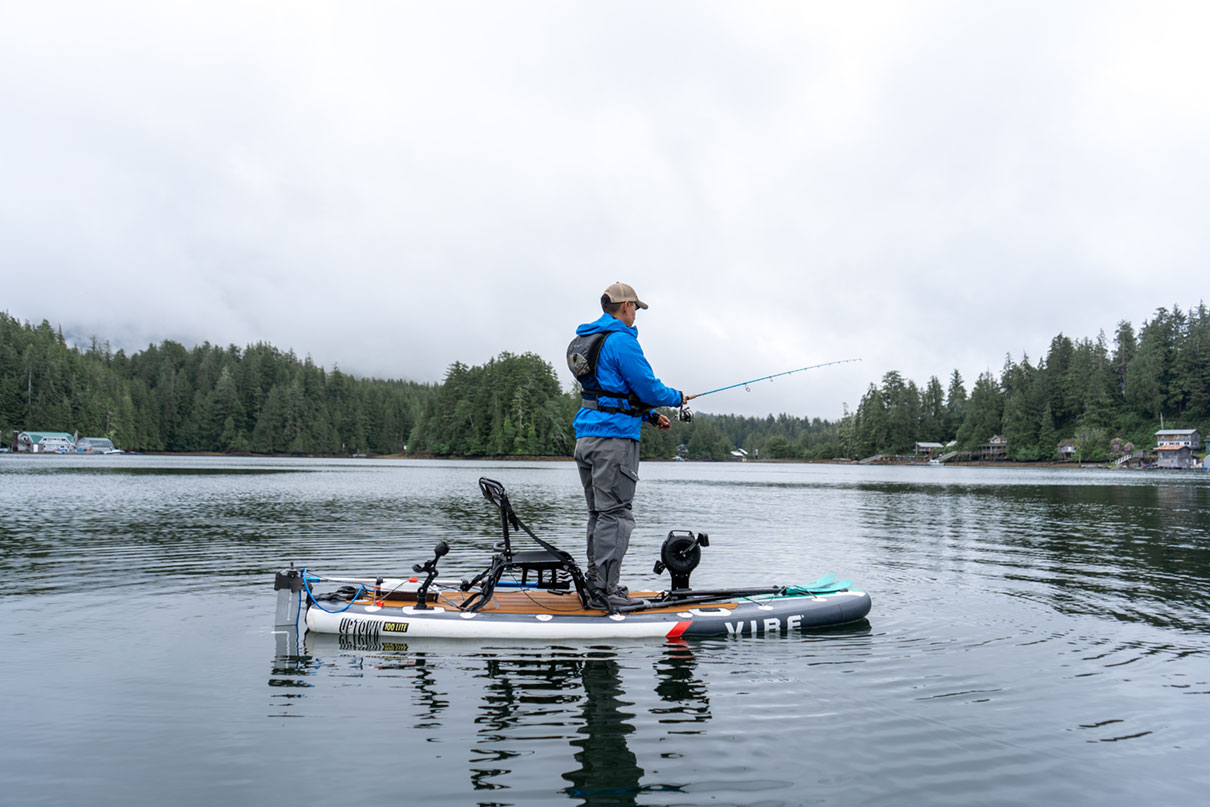
Attaching the signaling device to a life vest ensures the user will be able to indicate an emergency even if separated from the kayak.
Lights
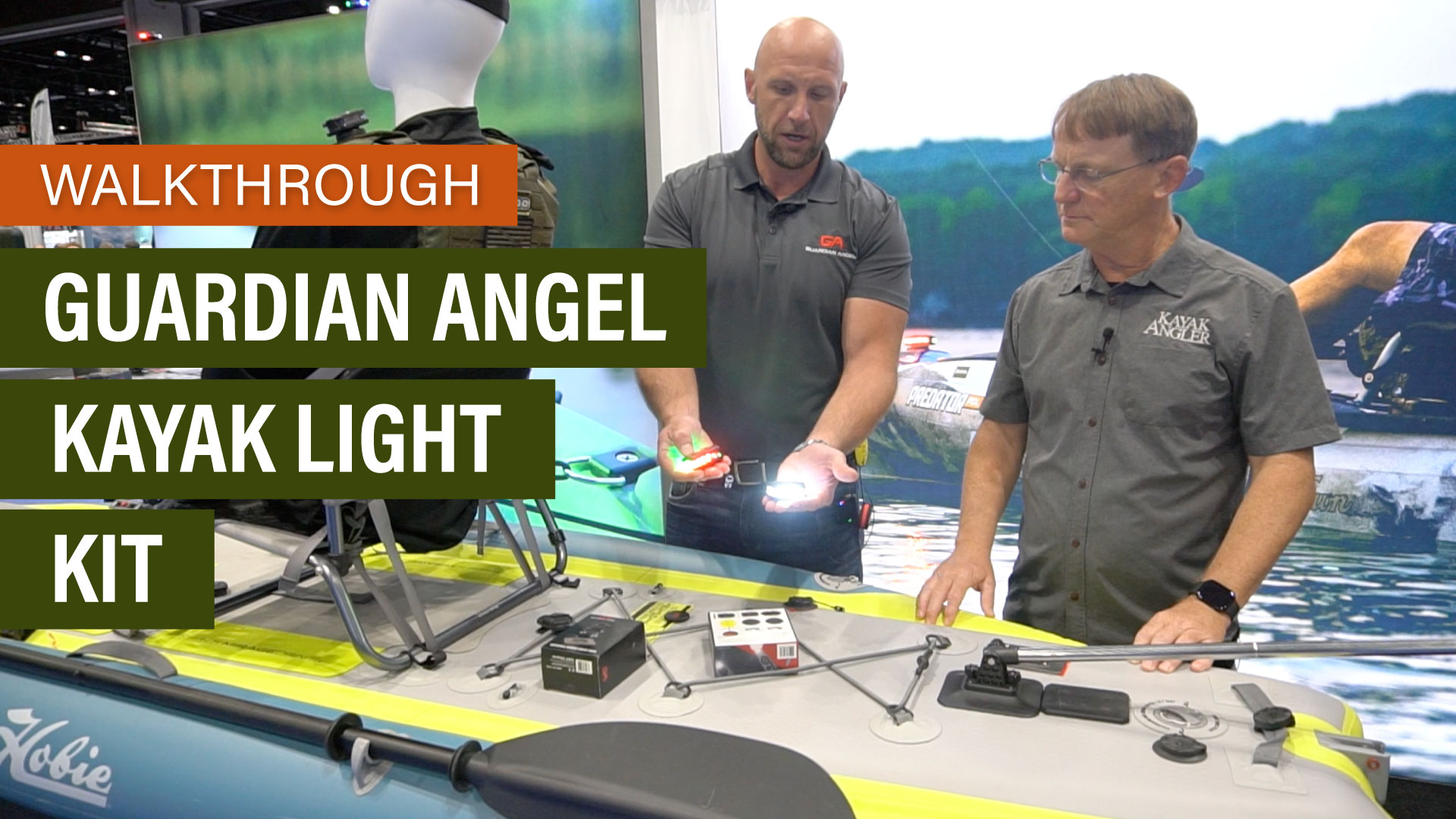
Coast Guard regulations require paddlers to use a white light between dusk and dawn. While this could include a headlamp or flashlight visible for two nautical miles, many anglers choose a white navigation light mounted on a pole.
To improve night vision and maintain visibility, the pole should be 48-inches long and the light should be directed up and to the sides. Mount the light to a gear track or stick it in a rod holder so it is easy to install after dark.
Motorized kayaks also need red and green lights on the bow to indicate the direction the boat is traveling. When the red light is visible, the boat is traveling right to left.
In case the angler becomes separated from the kayak, carry a waterproof signal strobe in a life vest pocket. Check the batteries and test the light frequently.
First Aid
A basic first aid kit in a watertight container packed with bandages, medical tape and pain reliever can save a trip. Add a three-foot length of 50-pound-test fishing line to act as a hook remover, or pack a specialized Dhukr fish hook removal tool. Store the kit in a waterproof bag stashed inside the kayak.
Helmet
River anglers need a whitewater helmet to protect against serious injury. Whitewater helmets have a hard outer shell that is vented to drain water. The chin strap should be tight enough to keep the helmet in place without strangling the paddler.
Safety Knife
Knives and tools aren’t just for fishing. Keep a river knife clipped to the outside of the PFD. In an emergency, cut fishing line, anchor rope or rod leashes. The blade is sharpened on one side and the thick metal and through-tang allow a river knife to double as a pry bar or hammer.
Rope
A 10-foot length of rope or webbing will serve as a dock line, drag rope, lashing and tie down. 550 paracord is handy, but 3/8-inch climbing rope or one-inch webbing are tougher to break and easier to handle.
Seats
Seats fall into two categories, low-profile and frame seat. Low profile seats sit directly on the kayak deck. Often made of nylon fabric and foam padding, low profile seats are less awkward if the kayak flips over. A low-profile seat also keeps the angler out of the wind. Add extra foam or gel padding and reinforce the back with lumbar support to make a low-profile seat supportive and more comfortable.
Frame seats opened kayak fishing to millions of anglers who are unwilling to sit for hours on a low, hard deck in a puddle of water. These seats resemble a lawn chair with a lightweight metal or plastic frame covered in breathable mesh. Many of these seats can be raised, lowered or removed from the kayak. Higher off the water, larger and heavier with less support, frame seats affect paddling performance. But the comfort tradeoff can be worth it. When taking a kayak for a test drive, be sure the seat is easy to adjust on the water. Add padding and lumbar support to fit the seat for maximum comfort, if necessary.

Anchor or Stakeout Pole
Anchoring systems make it possible to stop the kayak in swift current and stiff breeze. To keep the kayak from flipping over, run the anchor line to the bow or stern using an anchor trolley. Mount a deck loop or pully to the bow and another to the stern. In the center of the kayak, attach another deck loop. Run 550 paracord from the center loop to the bow and stern pulleys and back.
Tie a small carbineer in the center of the rope. Deploy the anchor, clip the rope into the carabineer then use the trolley to run the rope to the bow or stern like raising a flag on a flag pole. Anglers fishing in sandy areas use a collapsible grapple anchor. Add a short length of chain to improve the bite in heavy current. To anchor in a rocky river, 24 inches of heavy chain will wedge into a crevice.
Outriggers and stabilizers add an extra level of security. To stand and fish in heavy seas, outriggers keep the kayak from flipping over. Use an outrigger that can fold out of the way while paddling or docking.
Stakeout poles and push poles make it possible to creep through shallow water and stop on a dime. When stand-up fishing, a push pole is quieter and easier to control than a paddle. To stop and secure the kayak, stick the pole into soft sand or mud and tie off to the anchor trolley. Look for a stakeout pole that breaks into sections for easy storage. Battery-powered, remote-controlled stakeout poles are popular with anglers who need to throw on the brakes in a hurry or often.
This article was first published in Kayak Angler Issue 43. Subscribe to Kayak Angler’s print and digital editions here, or browse the archives here.
Feature photo: Roberto Westbrook




A whistle is, indeed, an essential piece of gear. You can make a louder noise for a much longer time than you can by yelling. One safety tip: do not attach your whistle to your zipper pull. If you capsize, turbulent water (whitewater) can agitate the whistle, working it down your zipper and opening your life jacket. Also, when re-entering your boat, your whistle can catch on the boat (line, attachment, etc.) and unzip your jacket as you try to climb back aboard. This could cause you to lose your PFD should you fall back in. Be Smart, Be Safe, Have Fun out there!