I don’t remember the first motorized kayak I saw, but I do remember the craziest. I was launching my kayak at a local boat ramp when a truck pulled up and a guy jumped out. He dropped his sit-on-top kayak into the water, attached a modified leaf blower behind the seat and whirled away. That’s when it hit me; some people will do anything to fish from a motorized kayak.
Where the Wildest Gear Innovations Really Start
Long before motorized kayaks and kayak motors, anglers were slapping trolling motors and leaf blowers on their kayaks. For almost two decades, anglers had to shade-tree engineer their boats to accept a motor and battery. Over the past decade, more options were available for rigging and power plants, but anglers still had to heavily modify their kayaks to add a motor. In the past couple years, kayak manufacturers started designing kayaks for motors. This year, a half dozen companies released kayak motors and more are on the way. So, it took 20 years for the industry to catch up with a guy with a leaf blower.
Kayak anglers have always dictated the direction of the sport, and manufacturers have scrambled to meet our needs. Before the first fishing kayaks were developed, anglers added rod holders and milk crates to their recreational kayaks.
As the sport moved inland, anglers redefined the kayak with high-capacity, super-stable sit-on-top boats with frame seats and pedal systems. Then kayak bass tournaments pushed the rigging envelope with competitors seeking every advantage, including motors and forward-facing sonar.
The race to build a better fishing kayak went from figurative to literal with Kayak Angler’s first annual YakOff Awards customized kayak competition (page 10). Sixteen of the top professional kayak anglers filmed short videos of their unique kayak builds. Then, they posted the videos and the Kayak Angler community voted on the best kayak build. No two kayaks were the same; each angler had a different combination of motors, electronics and accessories.
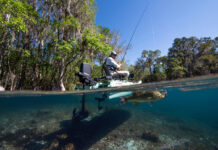
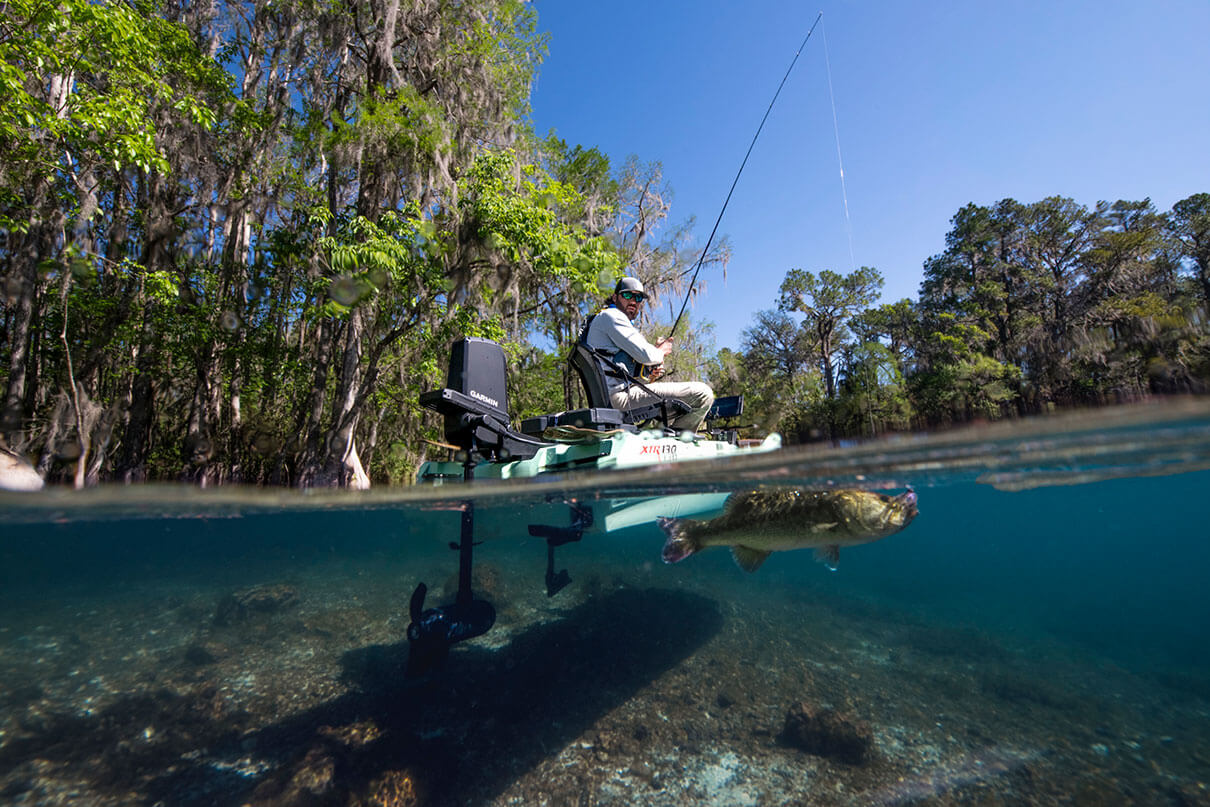
This year, a wave of new kayak motors makes it easy to power a kayak. Last year, there were only a few electric outboards and no trolling motors suitable for a fishing kayak. For 2026, anglers have two new options for GPS-connected trolling motors. And, the new Garmin Force Current kayak motor gives anglers what they’ve wanted since the beginning: a remote-controlled electric outboard with wireless foot pedals.
Motorized kayaks aren’t just for the pros. Adding a motor to a kayak opens the sport to new people. Sure, some anglers move up from paddle to pedals to motor, but I bet a good portion of the new motors will sell to anglers who have never been in a fishing kayak.
Motors and pedals add new life to inflatable kayaks, too. Inflatable boats and boards eliminate many of the barriers to entry, but an air-filled watercraft struggles to keep up with a rotomolded kayak. The recent introduction of pedal and motor-powered inflatables closes the performance gap, offering a capable kayak that packs inside a travel bag.
And the innovation continues in paddle kayaks. For the first time since the pandemic, there is a new performance paddle kayak for anglers looking for a traditional kayak experience.
Here’s the trend: more people want to go kayak fishing. It’s not about motors and forward-facing sonar; the big draw is easy access to the sport. Full-featured, motorized kayaks introduce more anglers to the sport. As do new pedal, paddle and inflatable kayaks.
Some people want a motor kayak, while others prefer a pedal or paddle kayak. Now everyone can have a kayak to meet their needs. Fishing kayaks have finally caught up with kayak anglers, but not for long. The next big thing is on the horizon. If you want to know what it is, pay attention to kayak anglers.
 This article was first published in the 2025 issue of Kayak Angler Business.
 Give the people what they want: a wireless-controlled electric outboard. | Feature photo: Courtesy Garmin