Change happens fast in kayak fishing. In just 20 years, we’ve gone from recreational kayaks with rod holders to mini-motorboats with five-figure price tags. And the rapid change extends beyond boats and gear to the kayak fishing culture. In light of the incredible development in the sport, what trends does the next decade hold? We asked seven insiders for their top picks on the biggest innovations and how they will change kayak fishing forever.
Top 7 Trends In Kayak Fishing Right Now
1 Sonar Signals
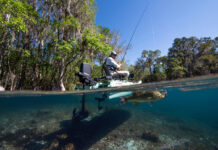
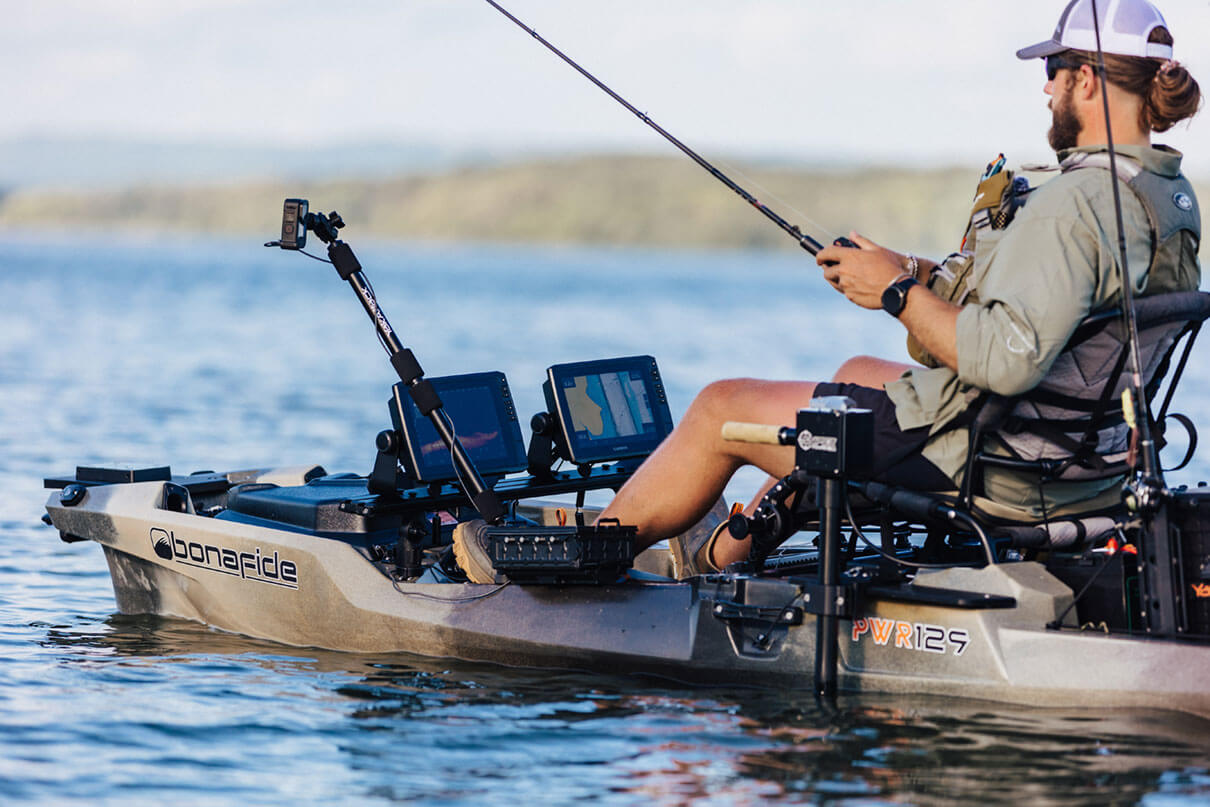
Forward-facing sonar is the number one innovation across the fishing spectrum. Everyone from inshore saltwater anglers to tournament bass anglers is discovering the power of liveview sonar to find and target fish.
Bailey Eigbrett, a tournament angler and host of the Serious Angler podcast, sees major changes on the tournament trail. “I’m not saying it’s bad or good, but forward-facing sonar changes the way tournament anglers fish,” he says.
Traditional sonar marks fish and structure below the kayak while forward-facing and 360 sonar shows real-time images over 100 feet in every direction. Proponents say the technology allows them to catch fish they would have missed. Opponents argue that the technology turns fishing into a video game, with anglers focused on their screens.
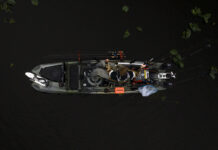
Eigbrett’s biggest concern is the effect forward-facing sonar has on the kayak industry. “Kayak companies are trying to make mini bass boats,” he says. To accommodate the battery, transducer and transducer pole, anglers need a large kayak with plenty of space and capacity, as well as an electric motor. “I don’t think it’s realistic to expect most kayak anglers to pay $5,000 for a kayak,” he adds. Eigbrett would like to see effort invested in designing and promoting user-friendly kayaks available at an entry-level price point. “When we remember that kayak fishing is anything you want it to be, we will increase participation in the sport.”
2 Saltwater Renaissance
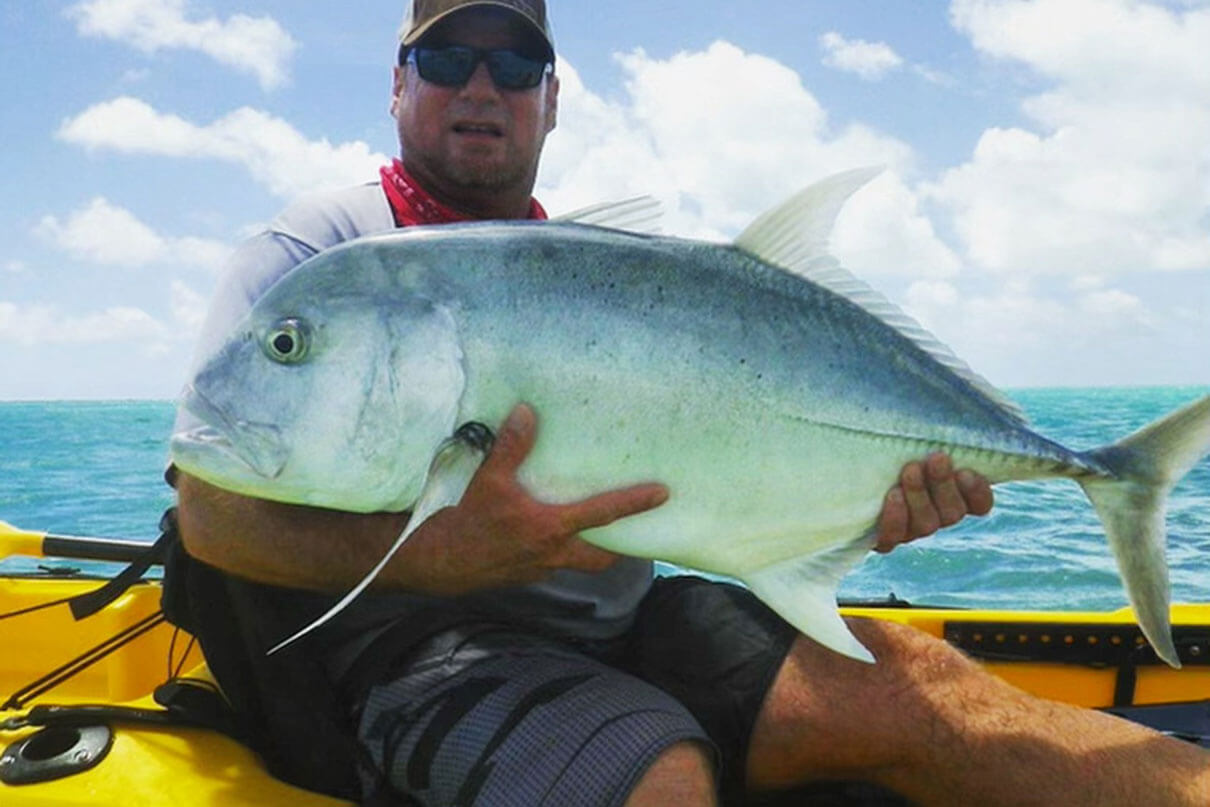
The history of kayak fishing started in saltwater with Tim Niemier developing the sit-on-top kayak in Malibu, California. For the first decade, coastal anglers dominated the sport. Then kayak fishing moved inland as bass anglers discovered the value of a small, portable fishing platform.
For Dave Elgas, the saltwater scene is making a comeback. Elgas is a Hawaii-based fishing guide and Vice President at USAngling, where he promotes and competes in international kayak fishing tournaments. Elgas points to the new international saltwater fishing tournaments as proof of the sport’s innovation.
“Saltwater tournaments go against the direction the industry has been pushing for decades,” he says. Elgas feels the saltwater kayak team will breathe new life into coastal fishing. “We’re using an existing network of tournaments to qualify anglers for the American team.”
The increased attention has led to higher attendance at these events. Elgas hopes the momentum continues with new saltwater tournaments and more anglers. The ultimate goal is to take saltwater kayak fishing to the Olympics.
“There is a love and passion for saltwater kayak fishing globally, and anglers don’t care if the industry supports it,” Elgas adds.
3 Travel Troubles
The rising costs of fuel, food and lodging make travel fishing more challenging. Marty Hughes, podcaster and fishing guide at Kayakjak.com, travels the country attending events and exploring new destinations. “I enjoy traveling and finding new water, breaking it down and figuring out the puzzle,” Hughes says.
For anglers like Hughes, fishing tourism faces a slough of challenges. “Traveling by kayak has most likely declined as seen by the drop with numbers in regional and national events,” Hughes points out.
Despite the economic issues, Hughes says anglers still find innovative ways to travel. In the absence of national tournament series, local and regional tournaments give anglers a reason to hit the road. “People are teaming up and traveling together to reduce costs,” Hughes adds. To increase grassroots participation, he points to the Adventure Kayak Series, a tournament trail with a festival feeling focused on building community. For anglers who want a bigger challenge, Hughes says remote lodges are pioneering adventure fishing trips for adrenaline junkies.
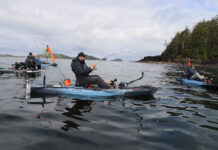
“I’ve just returned from Sea Otter Lodge on Vancouver Island, where we caught salmon, lingcod, rockfish, salmon and cabezon in huge swells. That’s as extreme as it gets.” Hughes expects more anglers to jump on board with adventure travel. “Anglers want to go beyond their comfort zone and fish waters offering a new and different challenge,” he says.
4 Forward-Facing Design
Forward-facing sonar is so popular that kayak designers are incorporating the technology into their designs. Ryan Lilly at Old Town Watercraft says, “When innovations in propulsion are paired with cutting-edge sonar technologies like forward-facing sonar, anglers can fish more efficiently with greater precision.”
While Old Town is not designing kayaks around forward-facing sonar, Lilly says they are taking the new technology into account. “For instance, on the new PDL and ePDL 120 Pro models, we’ve strategically positioned the gear tracks to allow anglers to easily mount transducers or reposition screens within arm’s reach of the seat,” Lilly says. Fishing kayaks designed for forward-facing sonar are floating sonar battle wagons with multiple screens and transducers. “Innovations in kayak propulsion are transforming how anglers approach the water, enabling them to access new fishing zones and cover more water,” he adds.
5 Hard Wired
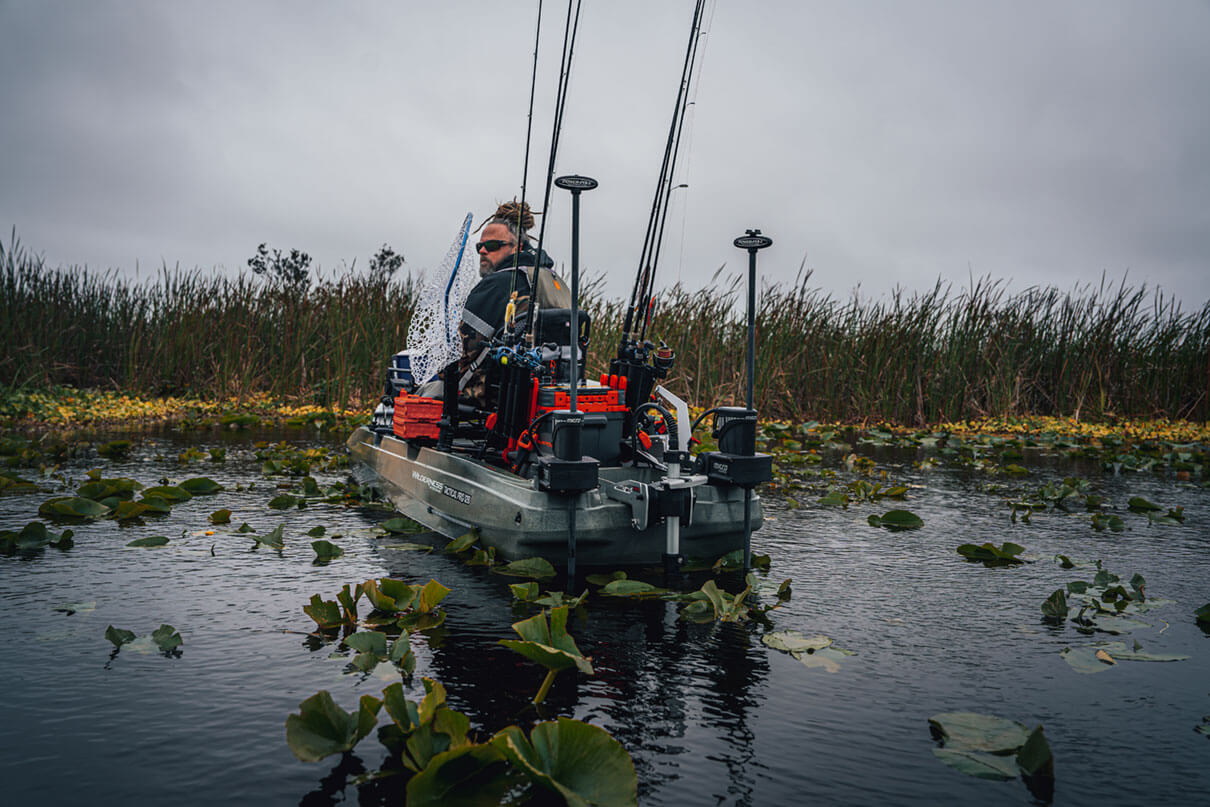
Spend some time at a popular kayak launch and it’s obvious motorized kayaks are taking over the sport. Wilderness Systems fishing team social media manager Rob English has been experimenting with motorized kayaks since the do-it-yourself days. “One of the standout features is pre-wired kayaks for a seamless setup,” he says. Pointing to the new Wilderness Systems Tactical Pro 128, he adds, “I simply drop in a battery, connect my motor, and I’m ready to hit the water. I don’t need custom mounting plates or complicated wiring installations.”
This innovation is a huge step in taking motorized kayaks from custom builds to factory-ready. English expects companies to design kayaks for more complicated rigging. “Anglers are beginning to incorporate advanced systems such as Power-Pole anchors, trim actuators for stern-mounted motors, and small gas-powered outboards,” English says. Designers are pushing the boundaries of traditional kayak design, focusing less on what a kayak has been and more on what it can become.
“The goal is to offer versatile platforms that adapt to each angler’s unique style and needs,” English says.
6 Customer Service
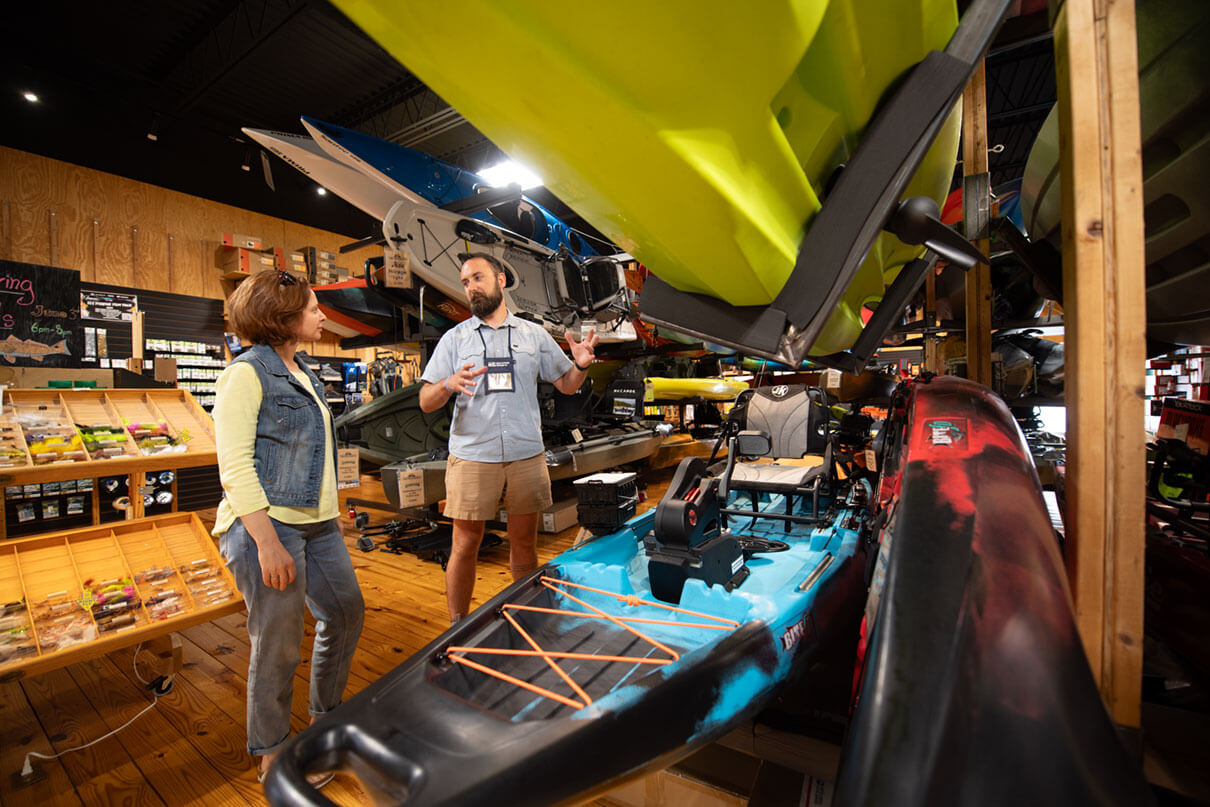
Mark Twain famously said, “The reports of my death are greatly exaggerated,” and kayak outfitters could say the same thing. With the constant barrage of challenges, including inflation, online retailers, a global pandemic and bargain boats threatening to sink the local paddleshop, brick-and-mortar outfitters continue to tread water.
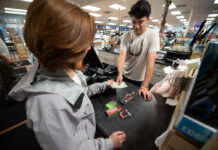
Great Outdoor Provision Company in Virginia Beach is a perfect example. Store manager Chase Christianson says, “It feels like high-quality customer service is as important as ever to our success in paddlesports sales.” Although customer service is not a new concept, retailers are elevating the practice to new heights. “There are so many options for buying a kayak; customers appreciate our expertise in finding their perfect match.” Christianson’s support doesn’t end at the sales counter, local paddleshops are the center of the fishing scene.
“Customer service creates a genuine sense of community, support and care that leads to a wealth of return customers and recommendations,” Christianson says. To keep customers coming back, Great Outdoor Provision Co. offers rigging and repair services. Christianson says, “In a world where high-quality customer service seems to be optional, it might as well be a cutting-edge innovation.”
7 Blowin’ Up!
Inflatable kayaks have always struggled to keep up with their rotomolded brothers. Inflatables are easy to transport and store, but their high freeboard and shallow draft make them subject to wind and waves. Aliex Folgueira, a YouTuber and social media influencer, claims the latest wave of inflatable fishing kayaks overcome the deficit. “Adding a motor or pedal system to an inflatable takes away the disadvantages and leaves you with a capable fishing craft,” he says.
Folgueira points to groundbreaking releases from Sea Eagle and Isle Surf and SUP paired with a lightweight electric motor to even the playing field. “Why would I buy a hardshell kayak?” he asks. Folgueira admits a plastic kayak offers more options for rigging and better performance in open water and big seas, but powering an inflatable improves the stability and increases efficiency to provide a full-featured kayak that packs into a carry case.
Folgueira was surprised at the popularity of inflatables. “My reviews of inflatable kayaks get a lot of views,” he says, reasoning that many people want to go kayak fishing but they don’t have space for a traditional kayak. “Before they would have to compromise with an inflatable,” he says. With the latest generation of motorized inflatables, these anglers have a serious fishing platform without the hassle.
 This article was first published in the 2025 issue of Kayak Angler Business.
 The future is near. | Feature photo: Courtesy Wilderness Systems