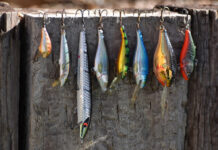
While hooking and fighting a fish may not do it any favors, the real harm can come after the fish is released. Soft plastics and lead jigs can be toxic to fish and other critters. Driven by economic changes and government bans on certain types of fishing tackle, manufacturers are investing in biodegradable lures and lead-free jigs. And anglers love them just as much as the fish do.
Moving Forward with Biodegradable Lures
Several states have already banned lead fishing tackle, while scientists and environmentalists are looking at the effect plastic lures may have on fish and the environment. There are plenty of studies and reports documenting lead and plastics ingested by fish, birds and other water animals. What is surprising is the amount of lures that end up in the water.
In one survey, researchers collected 310 discarded soft plastic lures—a total weighing over 12 pounds—from 50 tournament participants. Another survey found 10 to 20 soft plastic lures around each launch ramp in the survey area. With the writing on the wall, tackle manufacturers have been ahead of the scientists and lawmakers by producing biodegradable lures and non-toxic plastics that work just as well as the classics.
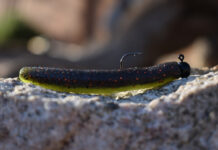
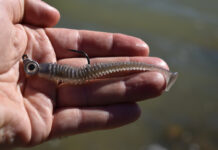
 PINGJIA Soft Lure Bait

Its back and abdomen are designed with grooves to effectively hide the hook and reduce the chance of getting trapped on the bottom. Biodegradable materials featuring soft textures. Specially mixed bait ingredient ratios to improve the chances of hooking fish while reducing environmental pollution.
Tackle Manufacturers Look to the Future
For Daniel Nussbaum at Z-Man, producing environmentally-friendly soft plastics was mandated by common sense. “ElaZtech baits are 100-percent non-toxic and contain no PVC, plastisol or phthalates,” he says. In addition, the material is considerably tougher than traditional PVC, so an angler can catch more fish before throwing the plastic away. Nussbaum brags, “One angler caught over 200 fish on one soft plastic.”
“One of the biggest problems is fish and animals eating discarded plastics.”
These new-age baits float, too. “PVC sinks and a discarded lure ends up on the bottom where another fish could eat it, or it just sits there forever,” he says. A floating bait can be retrieved by the angler, or eventually floats to the bank. “One of the biggest problems is fish and animals eating discarded plastics,” he adds. Nussbaum promises Z-Man will continue to innovate until an angler can have a full arsenal of environmentally friendly lures.


EcolureMaker makes fishing products that allow you to make your own biodegradable fishing lures. From basic bass worm lures and paddle tails, to lures that you make and design yourself. We make it easy for you to make your own lures. You can make your own mold using our Re-usable Mold Making Material, ImPRESSive Putty, or you can use one of our pre-made press molds using some of the more common lure shapes.
That would suite John Prochnow just fine. Prochnow is Director of Product Innovation at Berkley. He’s one of the guys responsible for biodegradable Gulp! and lead-free Gulp! jigs, among other Pure Fishing products. “Creating environmentally friendly tackle has been a driver at Berkley for 30 years,” he explains. In recent years, Prochnow has noticed even more motivation for going green.
“Not only because of regulations against certain types of fishing tackle, but the landfill restricts how much material the company can dispose,” says Prochnow. What started as an economic motivation for recycling and reducing waste has caught on with anglers. “As the price of plastic-free and lead-free lures comes down, anglers are more willing to make the jump from traditional tackle,” he says.

- Injection: Standard 5/8″. This size ensures compatibility with most injectors.
- Material: Engineered stone. Stone powder mixed with polymers to create a low-porous and durable material, which is a perfect fit for soft plastic lure molds.
- Smart air vents design to release air and make sure that soft plastic fills all details of the mold.
- Low cost. More than 30-40% cheaper than aluminum molds.
- Detailed bait design. Fine level of detail compared with aluminum molds and far better than silicone molds.

Add Eco-Friendly Lures to Your Fishing Game
Consumer research shows that anglers will pay more for a fishing lure that is biodegradable and works just as well. Prochnow expects this trend to continue as anglers become more aware of the effects of tackle on the environment. “After all,” he points out, “fishermen are conservationists, first.”
 This article was first published in the Spring 2016 issue of Kayak Angler Magazine.