
The first rule of saltwater fishing: Even the most advanced baitcasting reels will fail if they aren’t made for marine conditions. The precision gears, lightweight body and vulnerable materials of a freshwater reel won’t hold up. To fish in saltwater, a baitcaster needs to be engineered and built with stronger, tougher and more powerful components. Anything less will not survive the salt, sand, mud and monster fish.
When it comes to the right saltwater baitcaster for the job, these are our picks.
Best Saltwater Baitcasters: Our Picks
- Best saltwater baitcaster overall: Shimano Tranx 150
- Best braking saltwater baitcasting reel: Svivlo Genesis One
- Best bargain saltwater baitcaster: KastKing Kapstan Elite
- Smoothest casting saltwater baitcasting reel: Abu Garcia Revo Inshore
- Toughest saltwater baitcaster: PENN Fathom 200
Best Saltwater Baitcaster Overall
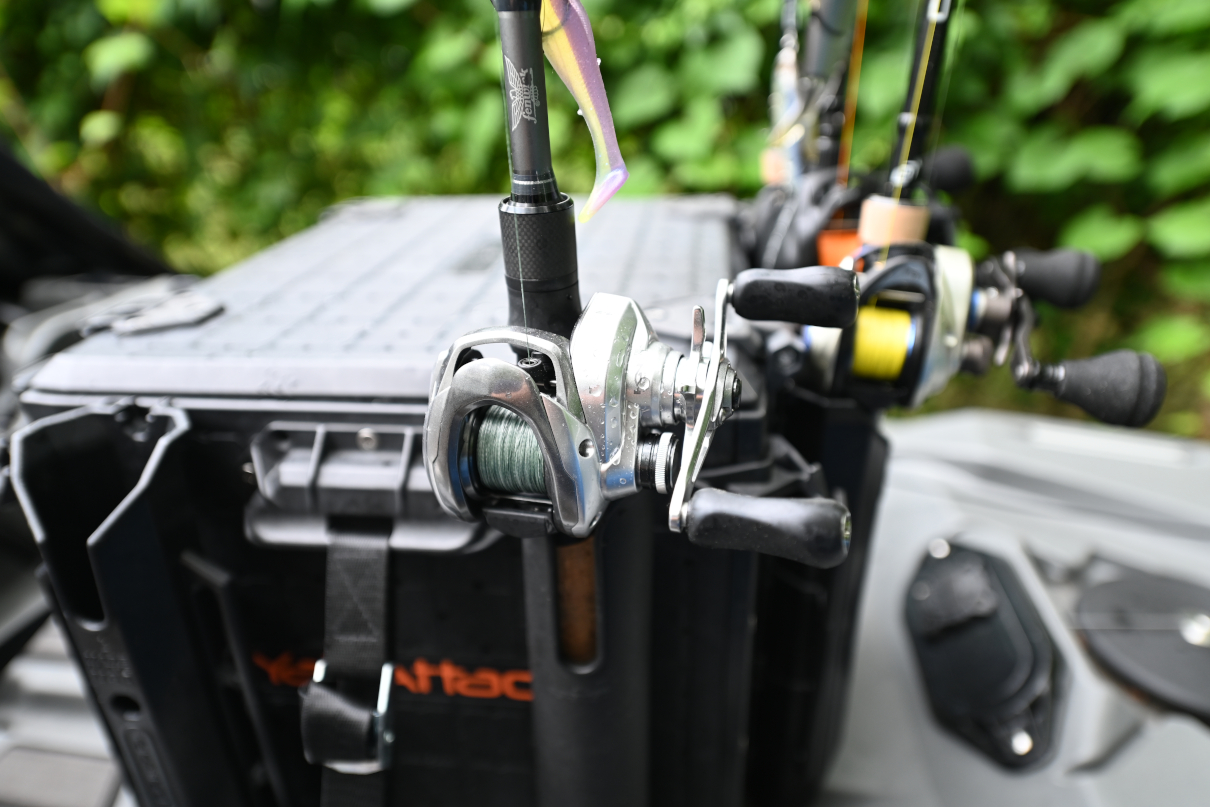
Shimano Tranx 150
MSRP: $254.99
Buy from:
Why I love it
Shimano Tranx 300, 400 and 500 reels already have a rock-solid reputation as a big-body baitcasting reel. Now the 150 adds the same bulletproof construction and power in a palm-sized reel ready for inshore action. I’ve been using the Tranx 150 for redfish, speckled trout and striped bass for the past year without a hitch. The metal body is coated with a hydrophobic material that prevents moisture from entering the reel. Meanwhile, the cross-carbon drag provides smooth power through the drag range despite heat buildup during a hard battle with a big fish.
Reasons to buy
- Compact version of a legendary reel
- The centrifugal brake is great for light lures
- Thin-wall aluminum spool
Consider another model if
- You are on a budget
- You need greater line capacity
Bottom line
The Shimano Tranx 150 is my favorite reel for speckled trout, striped bass and redfish. The reel produces smooth, consistent casts with braided line and light lures. The carbon drag slows down a slot red on a rampage while the smooth retrieve enhances a speck’s light bite. I use the Tranx as my primary reel for my confidence bait, because it is always ready for action.
Best Braking Baitcasting Reel
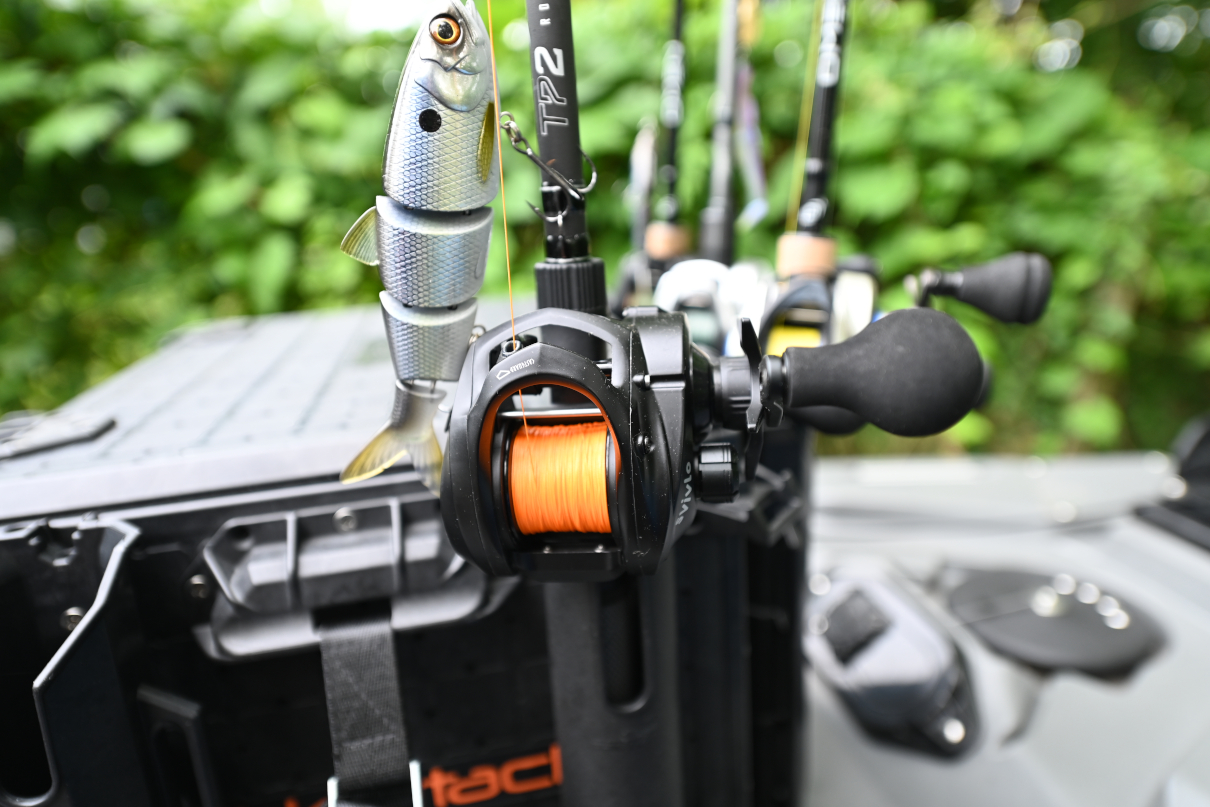
Svivlo Genesis One
MSRP: $309
Buy from:
Why I love it
The most exciting advancement in baitcasting reels comes from Sweden. For decades, baitcasting reels have used magnetic or centrifugal casting brakes; the Svivlo Genesis 1 employs a new mechanical brake system to control spool speed and prevent a backlash tangle. The outcome: without using my thumb to slow the spool, I’m able to cast a lure maximum distance in any wind condition.
The 300-size reel is available in 6.3:1 and 8.1:1 retrieve ratios. I tested the 8.1:1 for sight fishing. With the 8.1:1 ratio, if I miss on the first cast, I’m able to quickly recover the lure and recast before the fish swims out of sight.
Reasons to buy
- Unique mechanical casting brake
- Lightweight composite body
- 25-pounds drag
Consider another model if
- You need a smaller or larger reel
- You want an adjustable casting brake
Bottom line
I use the 300-size Svivlo on a medium-heavy, seven-foot, six-inch rod to cast large swimbaits for speckled trout. The deep spool has line capacity for long casts with the big lure. The cast control responds perfectly to all phases of the lure’s flight, applying more pressure on the takeoff and less pressure through the apex and descent. To retrieve the swimbait, nine ball bearings smoothly gain line, increasing sensitivity and control. I trust the reliable brake system to control my cast, so I don’t lose an expensive swimbait to a backlash tangle.
Best Bargain Saltwater Baitcasting Reel
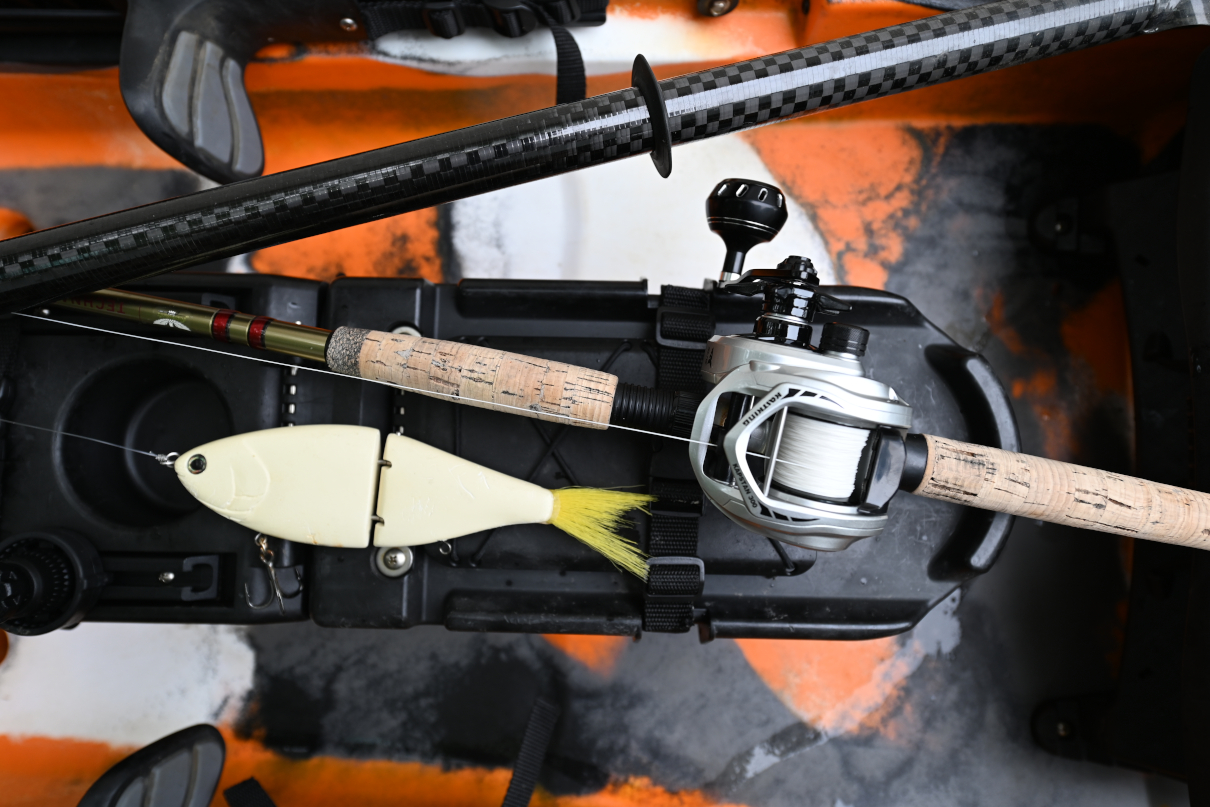
KastKing Kapstan Elite 300
MSRP: $129
Buy from:
Why I love it
Increasing durability and power usually make a saltwater baitcasting reel more expensive, but KastKing figured out how to make a salt-ready reel at a reasonable price. Like more expensive reels, the Elite 300 has a stainless steel shaft, gears and sealed ball bearings. It also has a three-disk carbon-fiber drag capable of inflicting 35 pounds of pressure. The 300-size reel also provides a large spool for greater line capacity to keep up with a big fish running for the horizon.
Reasons to buy
- Line Weight Dial
- 8+1 Ball Bearings
- Oversized Gears
Consider another model if
- You need a different size or speed reel
- You need a magnetic brake for larger lures
Bottom line
The Kapstan Elite is only available in a 300 size with a 5.4:1 gear ratio for super slow retrieves. The combination is perfect for large swimming glidebaits. With 35 pounds of drag, the reel is ready for any abuse saltwater species dole out. I don’t always use a 300-size reel, so it makes sense to buy a value reel to fill the gap in my arsenal.
Smoothest Casting Saltwater Baitcasting Reel
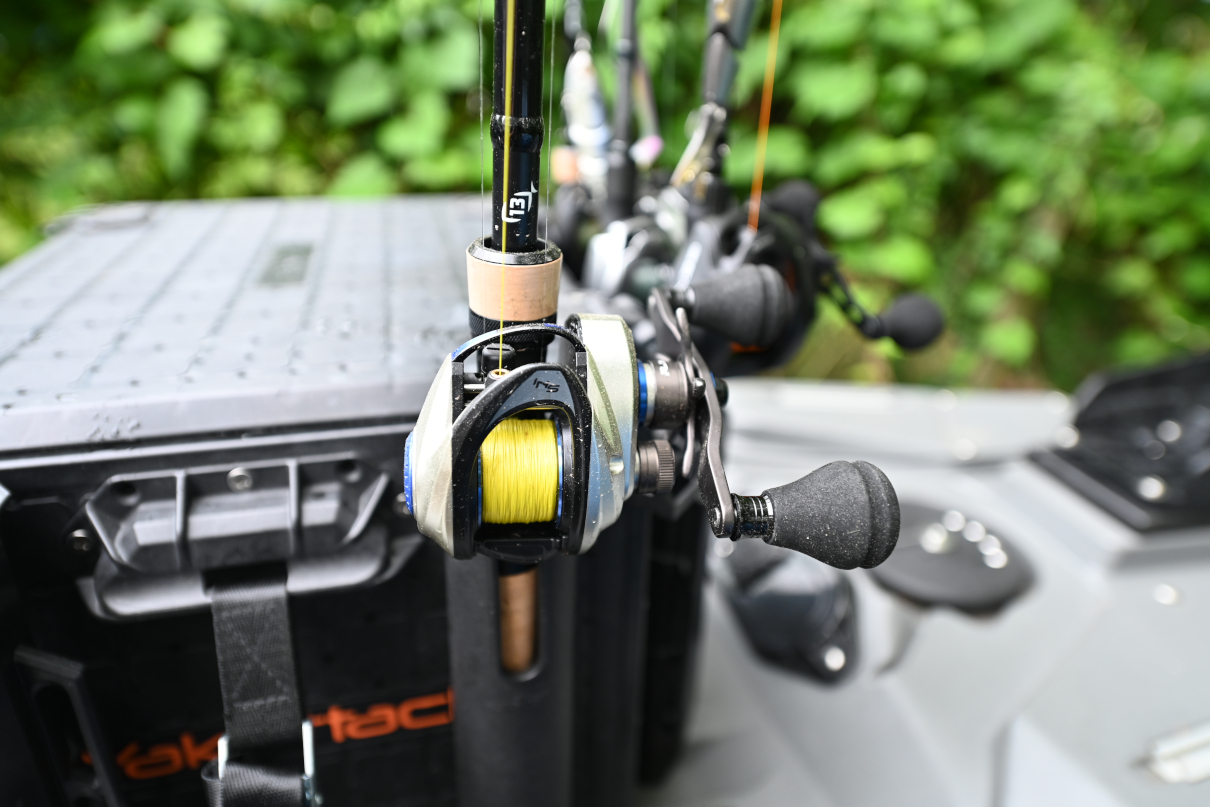
Abu Garcia Revo Inshore
MSRP: $299
Buy from:
Why I love it
I’ve been fishing the Revo Inshore for a couple of years, and the beefy baitcaster has earned a permanent place in my inshore quiver. The 200-size reel is perfect for ¼-ounce to one-ounce lures and fish over 20 inches. After thousands of casts and hundreds of fish, the Revo’s stainless steel bearings and alloy frame continue to work flawlessly. I’m most impressed with the six-pin centrifugal brake system with an external adjustment that delivers smooth casts. The long 95 mm handle with oversized knobs allows me to put the pressure on a big fish.
Reasons to buy
- An asymmetrical body fits well in hand
- Optimized line path to reduce friction
- Lightweight spool
- Six-point centrifugal brake with external adjustment
Consider another model if
- You need a different size or speed reel
- You need a left-handed reel
Bottom line
The Revo Inshore is one of my most reliable and versatile baitcasting reels. The 200-size is large enough for one-ounce lures and over slot fish, or to downsize with a ¼ ounce lure to finesse a finicky flounder or trout. Abu Garcia nailed the casting system, combining design and components for optimal performance. I hardly ever backlash the Revo, making it perfect for sight casting with quick, accurate casts.
Toughest Saltwater Baitcasting Reel
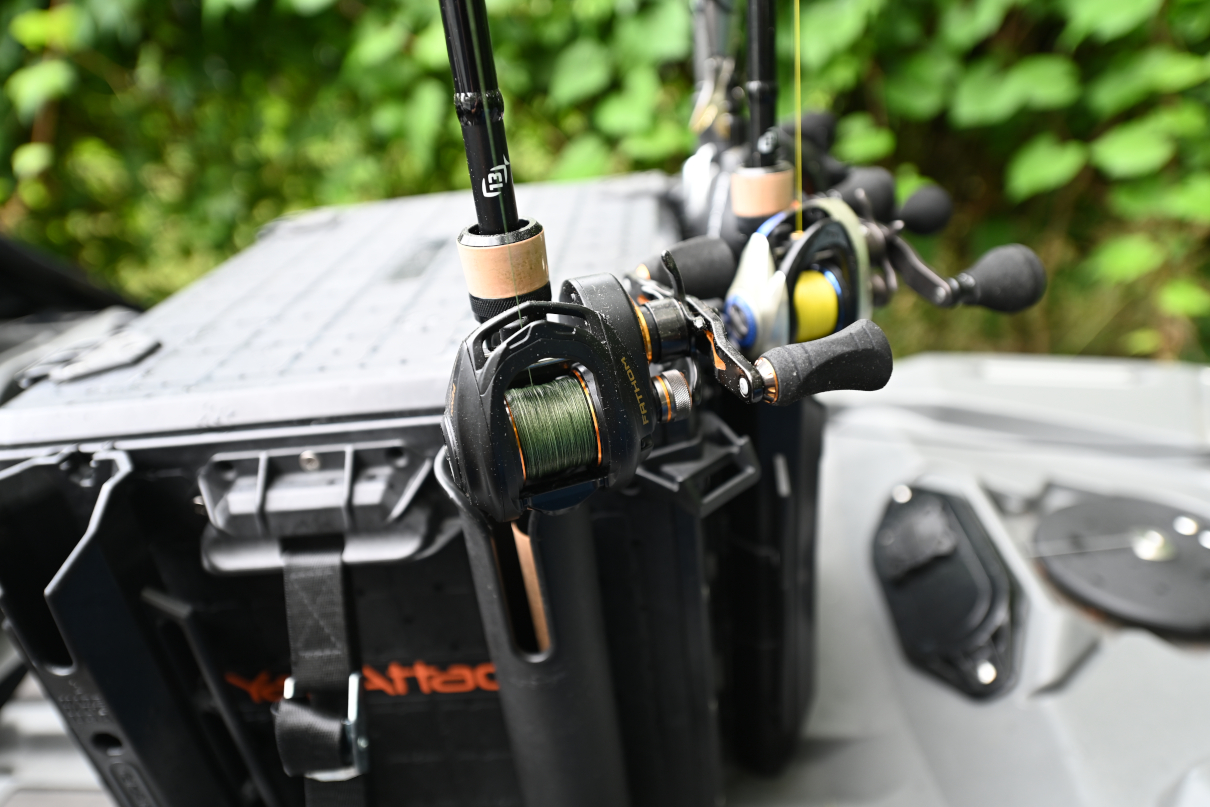
PENN Fathom 200
MSRP: $319.95
Buy from:
Why I love it
I’ve been fishing with the PENN Fathom 300 and 400 big-body baitcasters for years, but I was suspicious about the diminutive 200-size reel. Would the smaller reel have the finesse to fish lighter lures? My first outing with the 200 dispelled my concerns as I cast and worked a swimbait for speckled trout. The two-stage braking system delivered the heavy lure with pinpoint accuracy. The true test, though, came with a thin-lipped speck on the hook. The reel’s carbon fiber drag presented smooth pressure to keep the fish on without breaking the line.
Reasons to buy
- Two gear ratios
- Synchronized level wind and spool
- Full Metal Body
Consider another model if
- You need a lightweight reel
- You need a smaller reel
Bottom line
The PENN Fathom 200 lives up to the reputation of its larger siblings with a robust reel capable of landing big fish. The full metal body and side plate add a few ounces but increase durability and stiffness. When a big fish puts heavy pressure on the drag, the Fathom 200 reel body doesn’t twist and bend. The Fathom 200 is rock solid to produce maximum force on the fish. I have used the Fathom low-profile baitcasting reels for years without a breakdown or failure.
Saltwater Baitcasting Reel Buying Advice
Looking at the higher price and heavier weight of a saltwater baitcasting reel, you may be tempted to purchase a lighter, less expensive freshwater baitcasting reel. Don’t do it!
I admit, I have used freshwater baitcasting reels in saltwater. Sometimes I receive a nice bass reel for testing and review, and I can’t help but take the reel fishing in saltwater. This never ends well. After a few trips, within one season, the reel inevitably breaks down and stops working.
Saltwater reel components
Saltwater baitcasting reels are heavier and more expensive because they are made with tougher and more powerful components. A saltwater baitcasting reel uses aluminum, titanium, stainless steel and composite materials impervious to exposure to corrosive salt and grime. Many saltwater reels have sealed bodies coated with water repellent to further reduce corrosion.
Saltwater fish are big and strong, so a baitcasting reel needs smooth, powerful drag. Carbon fiber drag washers reduce heat that affects drag pressure. With metal drag washers, as a big fish pulls, the drag heats up, expands, and increases drag pressure. By reducing heat and expansion, carbon fiber drag washers maintain steady pressure throughout an extended battle with a big fish.
Not only do big fish and heavy lures put the reel’s components to the test, but banging around in a kayak can break or crack the reel handle or body. When I’m buying a saltwater baitcasting reel, I look for overbuilt, heavy-duty, high-quality reel handles, level winds and reel bodies—all common failure points in saltwater.
When I’m shopping for a saltwater baitcasting reel, I expect to spend a little more money for a lot more reel.
Best Saltwater Baitcaster Brands
How We Tested Saltwater Baitcasters
Coincidentally, this review of saltwater baitcasting reels coincided with speckled trout and red drum season in Virginia Beach. From September through the end of winter, I tested saltwater baitcasting reels under real-world conditions with real-world results.
Not only did the reels survive banging around in my kayak and lying on the deck between casts, but constant exposure to salt and marsh mud with an occasional rainwater rinse.
I tested cast control on long casts by searching with a twitchbait and short, accurate casts sight fishing with a light jighead. The best reels rarely backlashed, while others were constantly mired in a bird’s nest.
One of the first things to go on a saltwater baitcasting reel is the retrieve. Salt, moisture and grit get into the reel and cause the gears, shafts and bearings to fail. Failure starts as a minor tick and turns into a grind that affects sensitivity as the lure is retrieved—something I watched and listened for throughout testing.
Drag performance had to balance the speckled trout’s paper-thin mouth and a redfish’s dogged fight for freedom. The true test of drag pressure was pulling a striped bass out of bridge pilings without pulling the hook or breaking the line.
Reels that didn’t make the grade ended up in a box in the corner of the garage. Reels that maintained cast control, powerful drag, comfortable fit, and smooth retrieve through testing have been added to my arsenal and included in this review.
Feature Image: Ric Burnley