Who hasn’t been frustrated by a northern pike? Insanely aggressive with a mouth full of teeth, pike are famous for crashing a party. How many lures have I lost to a toothy infiltrator? I used to curse northern pike until I changed my perspective.
Stop Being a Hater, Learn to Love Pickerel
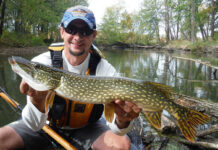
Northern pike are plentiful, big, hungry and hard to fight. That makes them a great sport fish. Since I started looking at pike as a target and not an obstacle, the snot rockets turned from a curse to a blessing.
One of the best things is northern pike are active all year long. Pike prefer cooler temperatures so spring and fall are the best seasons. Warm water during summer is a challenge, but I can still convince a pike to bite. In the winter, pike are more active than other fish. I’ve caught northern pike from my kayak 12 months of the year.
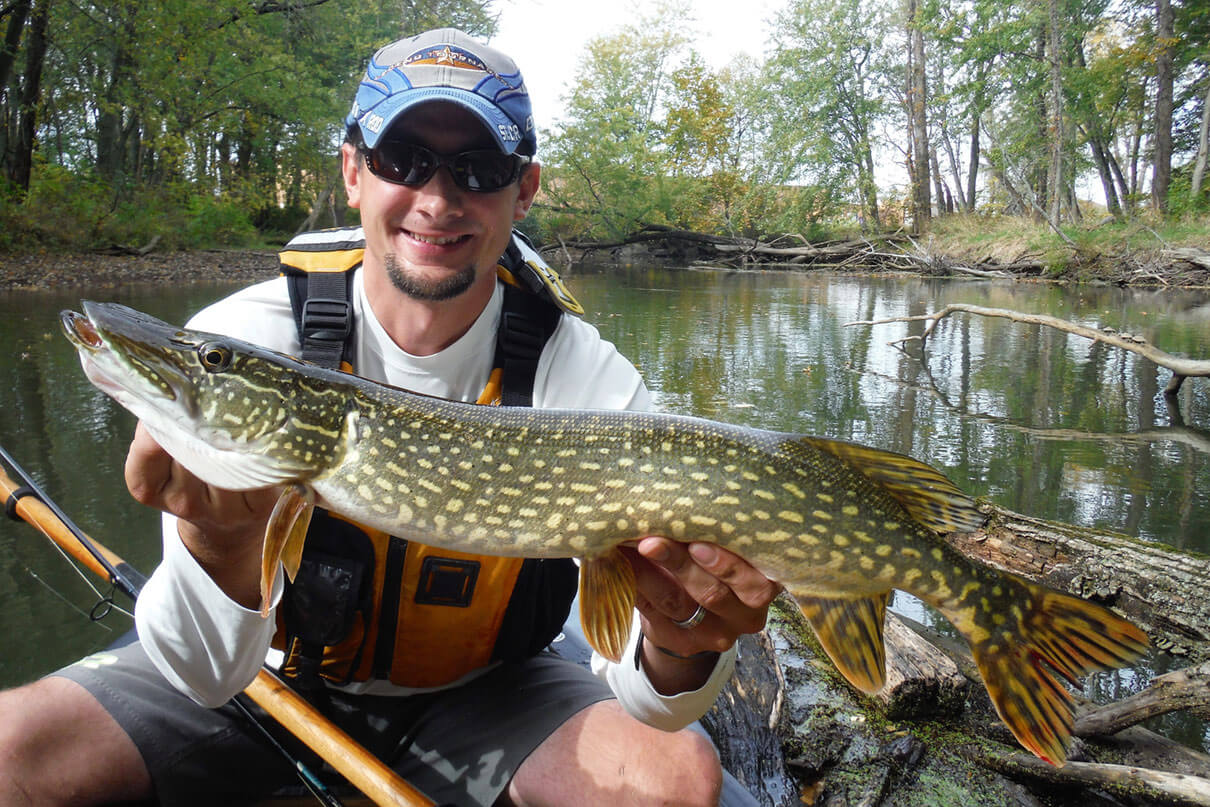
I’m a river rat and nothing beats stalking swift water looking for the biggest, baddest pike. River fishing takes a lot of the guesswork out of targeting pike. As an ambush predator, pike prefer to lie in wait out of the current for their next meal. To find pike in the river, I cast to slack water behind rocks or a logjam.
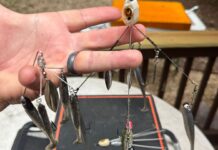
The lures and tactics vary with the seasons. During cold months, I use a slower presentation like a six-inch Lunker City Saltshaker swimbait and one-ounce Kalin’s Ultimate Swimbait Jig with an 8/0 hook or a suspended jerkbait such as a Rapala X-Rap. In warmer months, a fast lure, like a large double-bladed spinnerbait, is my favorite. I can pull a large spinnerbait through heavy cover without snagging and the flash and vibrations trigger pike to strike.
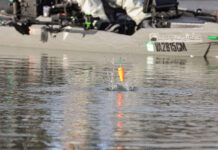
Topwater lures, especially the famed Whopper Plopper, draw exhilarating bites from fired up pike. The best plan is keeping several options ready to go. If a pike follows my topwater lure, I can quickly switch to the spinnerbait or jig.
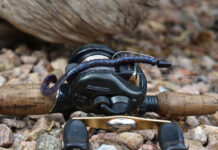
Pike grow to over 35 inches long, so I use a medium-heavy, fast-action St. Croix Premier spinning rod paired with a 2500 Shimano Ci4 reel spooled with 40-pound braided line and a two-foot section of 80-pound Seaguar fluorocarbon. The heavy rod is overkill on smaller pike, but when a full-size fish hits, the extra power keeps the pike out of the snags.
Handle northern pike with care. Their sharp teeth and slimy skin could cause harm to the fish or fisherman. I use a landing net with a 20- by 24-inch hoop and deep bag with rubber-coated netting. When I land a pike, the net allows me to leave the fish in the water until I remove the hooks using a jaw spreader and long handled pliers. If the hooks are deeply embedded, I use Knipex wire cutters to cut the hook. To handle the fish, I wear Musky Armor Release Gloves to protect my hands from teeth and sharp gill rakers and provide extra grip on the slippery fish.
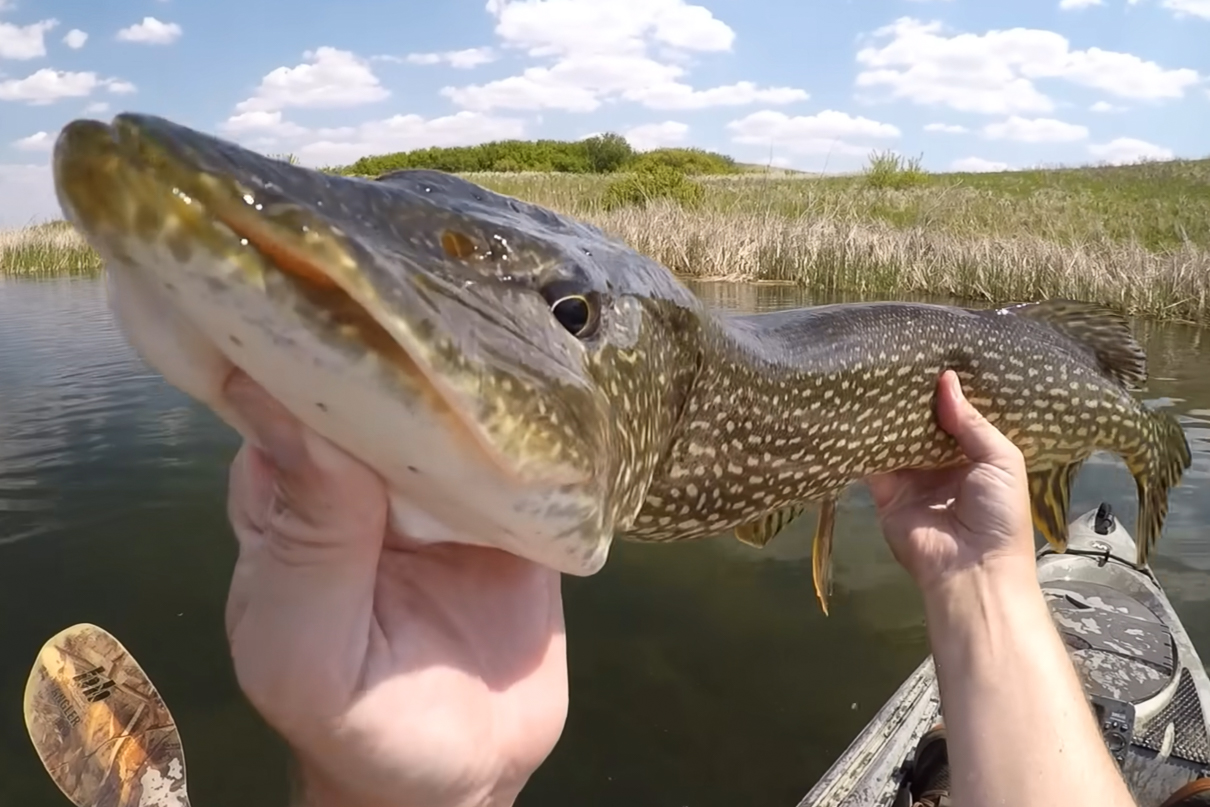
Northern pike are reviled among bass anglers, but I love them. They are easy to find and always willing to party. One of the biggest fish swimming freshwater rivers, lakes and ponds, the toothy pike puts up a good fight. What could be better?
Big, mean, strong and abundant, what’s not to love? | Feature photo: Kyle Hammond