
We asked industry leaders for their thoughts on tariffs, innovation, growing the sport and whether the kayak fishing arms race has gone too far. Here’s what some of you had to say.
13 Industry Leaders On the State of Kayak Fishing
KAB: Describe the kayak fishing industry in 2025
Fragmented. While many companies and anglers offer a collaborative approach, there seems to be an equal amount who prefer to only focus on their niche. I think the industry on the whole could use more collaboration.
— Matt Charette, Designer, Vibe Kayaks
Innovative. The kayak fishing craze is not slowing down. It’s not only brands and manufacturers that need to keep up with the times and create new exciting products to differentiate themselves from competition—guides, lodges and destinations are also creating new dynamic programs and adventures pushing boundaries to keep the sport and its addicted followers on edge and always wanting more.
— Keith Stevenson, Partnerships, Kayak Angler
Elitist. New kayaks drop but they all seem to be priced out of the average consumer’s range. They have great innovations, and are really fun and functional to use. But what does it matter if 75 percent of the available market can’t afford to get them, let alone rig them with all the bells and whistles? These brands need to consider creating some budget-friendly entry options for the average consumer.
— Jeffrey Burlingame, Aggressively Average Anglers
Changing. Retail has become more difficult but that means there are more opportunities to try and innovate new tactics and ideas. We have to be ever-changing and think outside the box.
— Chad M Gierlich, Owner, Hookup Baits
Expensive. It’s great having new and innovative options but it feels like we have way more than we need and prices are just skyrocketing.
— Paul Glass, Aggressively Average Anglers
The kayak fishing industry is still reeling from the after-effects of COVID. Our specialty dealers still have inventory and many are struggling. Some new products have seen a bump in sales, but nowhere near the sales that would be the norm for a new product launch or the industry as a whole. We are seeing some signs of consumers buying again, but in pockets, and with no consistency. With a massive increase in tariffs from overseas, we are also seeing the gear companies suffering. There were a lot of fishing manufacturers missing from ICAST this year and that was very telling.
— James McBeath, Marketing Director, Hobie
A word that comes to mind is divided. There’s a clear split in the community. On one side, you’ve got the traditionalists, anglers who love a simple throw-and-go kayak, minimal gear and no interest in these bigger, heavier models. They see something like the XTR130, essentially a better jon boat that can handle two motors, two graphs and two people, and they wonder, “Who’s buying that?” Both sides have their place and the opportunity for the industry is to innovate in ways that speak to both ends of the spectrum.
— Justin Floyd, Marketing & Product Development, BIG Adventures
Like a teenager, there’s growth, though at a slower pace. There’s excitement in new ideas and fresh opportunities. But there’s also volatility, plenty of learning mistakes and growing pains, and the need to find a path toward a steady, mature existence. Uncertainties in economic policies make this an even tougher teenage cycle.
— Houman Nikmanesh, Managing Director, Bixpy

KAB: Will you change your manufacturing location or supply chain in response to U.S. import tariffs?
Many of our products are manufactured in the U.S. but when we can deliver a better value for our customers by working with foreign factories and suppliers, we will continue to do that. At this point, we have not changed our supply chain in response to tariffs. A future decision to do so would factor in costs, quality of the product and meeting vigilant product safety standards. We do believe the tariffs are creating a burden on the outdoor industry and its consumers and support industry lobbying efforts.
— Beth Goodrich, Owner, Malone Auto Racks
No. However, we had an ample supply of inventory while the negotiations were at the peak. It did, however, cause us to investigate alternative locations and companies to be prepared for any longterm exorbitant cost changes, which we have completed and have in place.
— Michael Pisano, Owner, Dhukr
We have not, and it’s unlikely we will be able to do so in the near future. The reality is that for certain products, there is simply little to no U.S. supply chain—especially for higher-end electronics. As every business desires, we are doing everything in our power to produce as many components in-house and to assemble a good portion of our adapters and accessories at our San Diego location. As we grow our product line, we gain more opportunities to onshore and to expand our in-house manufacturing. As a product developer, there’s nothing simpler, more gratifying or more profitable than having greater control over your supply chain.
— Houman Nikmanesh, Managing Director, Bixpy
The next stage of kayak fishing history will see the return of industry health. I think that’ll happen in the next year. From there, you will see more investment in innovation with new materials, new technology and new opportunities in kayak fishing. I think that phase will be accompanied by an increase in participants, returning to the level of growth we experienced in the early days.
— James McBeath, Marketing Director, Hobie

KAB: Are you seeing sustained interest from participants who came to kayak fishing during COVID?
Sustained interest in fishing, but purchasing has dropped substantially. People have less disposable income now.
— Steve Owens, Bassmaster Kayak Series and Dugout Bait & Tackle
I think we hit a slump with kayaks from 2023-2024. 2025 feels like a slow revival of interest. Kayak companies could skyrocket their consumer buy-in, by offering more budget-friendly riggable kayaks alongside the fancy ones.
— Jeffrey Burlingame, Aggressively Average Anglers
I think there is great entry-level interest and we as a community need to do a better job with that segment instead of focusing on the more advanced stuff.
— Chad Hoover, Kayak Bass Fishing
From what I’ve recently observed in the kayak fishing community, numerous anglers are entering this activity with the most basic of affordable kayaks and adding gear as needed. Many of them just want to get out on the water and are not really interested in the competition that is available out there.
— Marty Hughes, KayakJak
KAB: What can the industry do to promote participation among young people and women?
Reaching young people in the sport starts with accessibility. The reality is, it’s hard to sell a $3,200 kayak to a kid especially if they’re relying on their parents to make that investment. I bought my first kayak for $400 from Academy when I was in college, and that’s what got me hooked. While the industry is doing a great job perfecting high-end models, we can’t lose sight of entry-level options. Those boats are the stepping stone for the next generation, and they deserve the same innovation and attention to detail as the flagship models.
— Justin Floyd, Marketing & Product Development, BIG Adventures
It’s simple, just promote young people and women doing it. We have to stop only promoting the super successful women and/or those that look like models and promote regular moms and dads enjoying the sport with their kids and each other. We should also encourage the more successful female anglers to take younger girls and older inexperienced females fishing to pay it forward.
— Chad Hoover, Kayak Bass Fishing
The kayak fishing community is strong and connected, but there are things we as an industry can work on. Anglers, brands and organizations need to come together more—through events, sponsorships and shared content—to create authentic, fun experiences and programs. Building trust, supporting grassroots initiatives and collaborating will grow our sport and continue to drive innovation.
— Keith Stevenson, Partnerships, Kayak Angler

KAB: Has the arms race in high-end boats and electronics gone too far?
No. From our perspective, the industry is continually growing and evolving to provide a full spectrum of products for a wide and growing consumer market that includes newcomers and experienced anglers.
— Beth Goodrich, Owner, Malone Auto Racks
I don’t think so. It’s exciting actually. There is even more innovation to be had as consumer needs evolve. I worry about the price as ‘electronics’ means overseas in most cases, but so far our consumers are gearing up and trying new things. That being said, the more manufacturers that get involved, the lower the price will get for consumers. I predict a switch where it’ll be kayak manufacturers leading the charge in new innovations for fishing versus the big bass boat companies.
— James McBeath, Marketing Director, Hobie
Like any growing hobby, there will always be people on the fringes who push the envelope and take things to the extreme. Most average users, however, know how to enjoy the sport without going overboard. Right now, there are simple, elegant and genuinely useful technologies that can make the sport more accessible and enjoyable—without over-glorifying what is meant to be a minimalist, rugged and hands-on experience.
— Houman Nikmanesh, Managing Director, Bixpy
KAB: What issue important to kayak anglers isn’t being talked about enough?
Safety. It’s important to be cognizant of the fact that, as the industry advances and enhances, new and even seasoned kayakers have access to multilevel education and training to meet their skill level and performance expectations and keep them safe on the water without total reliance on advanced technology.
— Michael Pisano, Owner, Dhukr
As kayak fishermen, it’s our responsibility to take care of the environment we’re in, sustainably harvesting and taking care of our waters.
— Matt Charette, Designer, Vibe Kayaks
Safety, safety, safety. Kayaks should essentially come with lights, flags and PFDs. At the very least, we need to draw more attention to them. Offer discounts at shops when you buy a kayak. Put together packages with them included. Wire the lights at the shop, offer wired versions before shipping, sell PFDs and safety equipment on websites or as a suggested offer. More influencers should be talking about this and wearing safety gear in all of their content as well.
— Jeffrey Burlingame, Aggressively Average Anglers

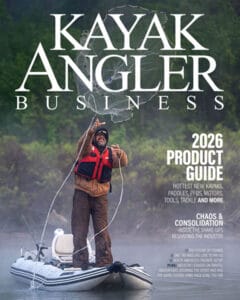 This article was first published in the 2025 issue of Kayak Angler Business.
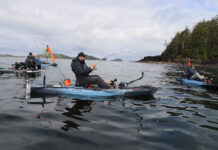
 “All men are equal before fish.” — Herbert Hoover, 31st U.S. President | Feature photo: Wade Clements/YakAttack

That dude on a SUP in the ocean looks like a badass!
Hahaha! What’s up Trev!!!