In the beginning, I had a classic Zebco 202 spin-cast combo, and it was good. At least, good enough for 5-year-old me.
But I’ve owned many types of fishing rods since I was a freckle-faced boy who frequented Iowa farm ponds. My quiver has not only included several spinning rods and baitcasting rods but also ice-fishing rods, my Grandpa’s old surf rod, and a growing collection of fly rods.
No, I’m not addicted to buying fishing rods (in spite of what my wife thinks). I’m just someone who’s targeted many species of fish. And I’m someone who’s moved all over the place.
So I’ve needed a range of rods to maintain my lifelong fishing habit, because different types of fishing rods are made for different types of fishing.
If you are trying to figure out which rods make the most sense for your local waters, or expand the boundaries of your angling, this guide introduces each of the main types of fishing rods with tips on how to choose.
The 3 Main Types of Fishing Rods
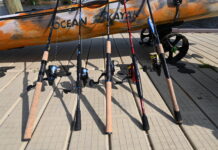
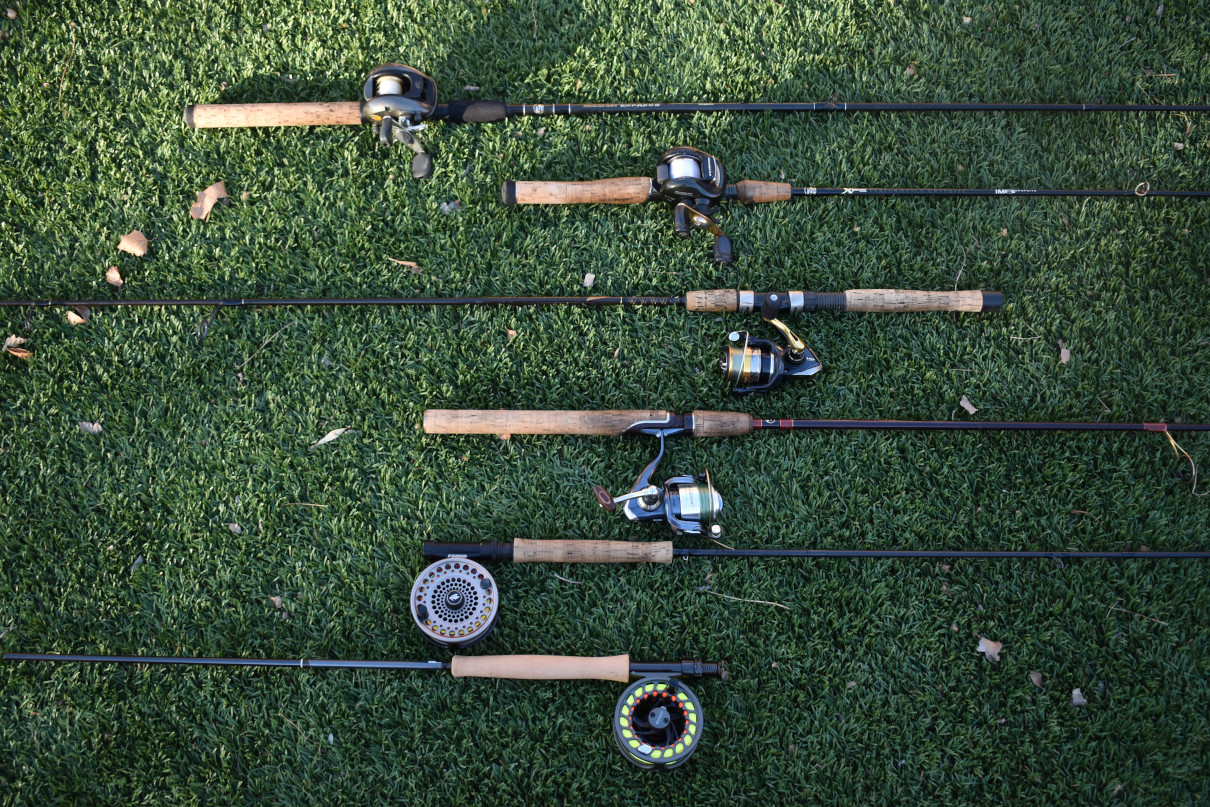
The three most common types of fishing rods are casting rods, spinning rods, and fly fishing rods. They’re named for the types of reels that fit them, so it’s not a bad idea to start by reading our guide to the different types of fishing reels.
Here’s how to identify these three types of rods and how to know which one makes sense for the species you’ll target and the tactics you’ll use to catch them.
Casting rods
A casting rod is a type of fishing rod designed for a baitcasting reel (or a simple, beginner-friendly spincasting reel).
On a casting rod, the reel sits upright on top of the rod. There’s usually a trigger beneath the rod grip, too. This helps anglers hold the rod securely with their hand in position to put their thumb on the spool of the baitcasting reel (or to press the push-button of the spincast reel).
For the most part, baitcasting rods are comparatively stiff and made to cast heavier lines and lures. Baitcasting reels give you more control over your casts, so casting rods are a great choice for presentations that require pinpoint accuracy.
For kayak anglers, casting rods make a ton of sense when you’re combing the shoreline with heavier spinner baits, buzzbaits, crankbaits, or topwater lures. If you can fish standing up, you can also use a baitcasting rod to flip or pitch bass jigs along weedlines, lily pads, docks, and downed trees.
Since casting rods are usually sturdier than other types of fishing rods, they provide more power and leverage to pull bigger fish out of heavy cover. Generally speaking, bass anglers love baitcasting rods. They’re also appropriate for some musky, pike, walleye, and saltwater presentations that use heavier lines, lures, and tackle.
Most people buy casting rods between 6’6” and 7’6” with a 7’ being the most versatile length. Shorter casting rods may be better for casting accuracy and for shorter users (especially kids). Longer casting rods increase your casting distance, power on hook sets, and leverage with big fish.
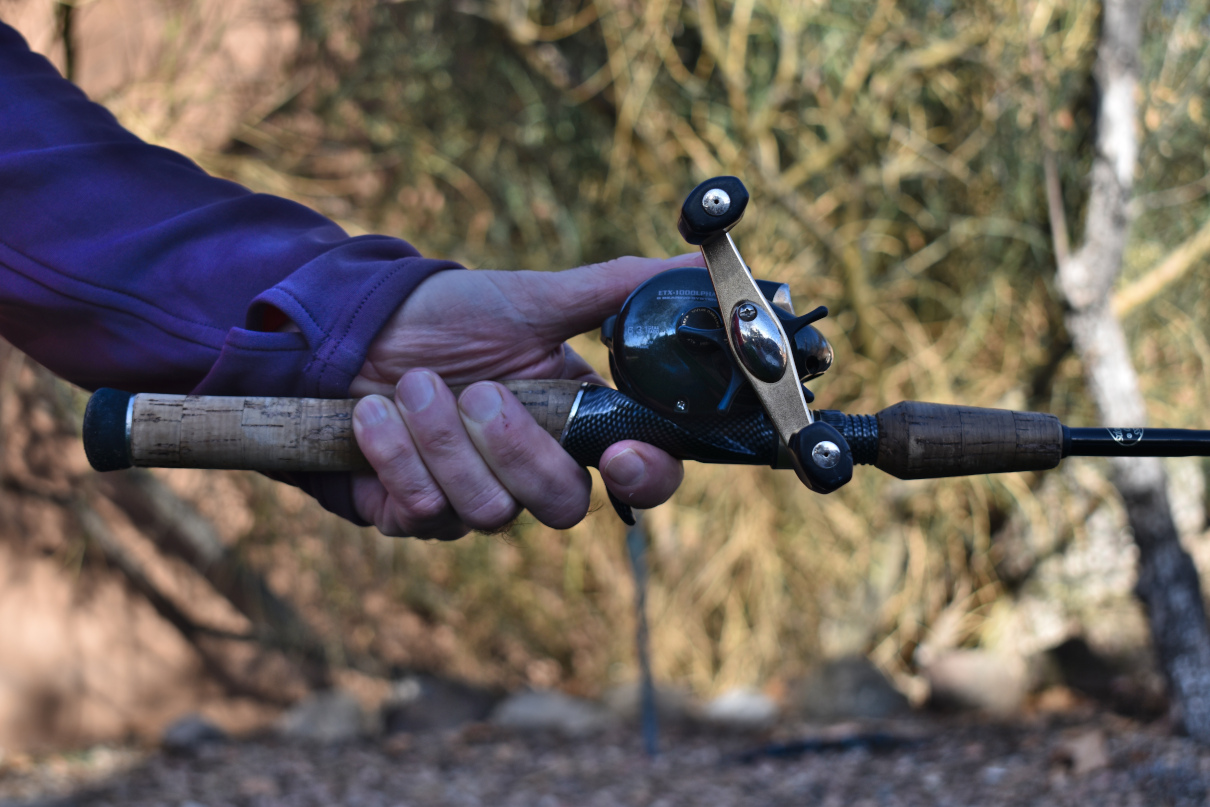
Who Should Choose a Casting Rod
Baitcasting rods are a favorite for targeting bass and other predators with heavier lures and presentations that require accurate casting, flipping, and pitching.
When I’m bass fishing, I’ll choose baitcasting rods for:
- Casting shoreline from my kayak
- Burning buzzbaits and spinner baits
- Working a Texas rig or Carolina rig
- Ripping rattlebaits through the weeds
- Throwing deep diving crankbaits
- Flipping a jig-and-pig into weed pockets
- Skipping jigs and other lures under docks and overhanging branches
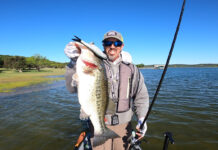
I’ve also caught plenty of northern pike, walleye, stripers, and white bass on crankbaits with my casting rods.
Most kids and beginners start out with a shorter casting rod paired with a simple spincast reel. This rod-and-reel combo is easy to use but limited to slower and less technical presentations, such as casting out live bait or slowly retrieving a plastic worm back to the boat or bank.
Spinning rods
Spinning rods are versatile rods that pair with a spinning reel for multi-species fishing.
On a spinning rod, the spinning reel sits beneath the rod. You hold a spinning rod with your thumb on top of the rod with the reel hanging down from your rod hand. There’s no trigger for your pointer finger.
As a general rule, spinning rods are more versatile than casting rods. You can buy them in a variety of lengths and builds—from ultralight to heavy-duty. They can handle lighter lines and lures than casting rods. At the same time, you can also buy beefier spinning rods with oversized spinning reels for bigger bass, catfish, and saltwater species.
Spinning rods work well for many species of fish and more finesse fishing presentations. That’s why they’re the most common type of fishing rod. The key is matching the length and build of a spinning rod to the size and species of fish you’re targeting and to the types of lures and fishing tactics you’re using.
Spinning rods are staples for kayak anglers who are targeting panfish, vertical jigging, casting lighter topwater lures, or fishing soft plastics for smallmouth and largemouth bass.
I’ve personally owned spinning rods as short as 5’6” (for panfish and small-stream trout) and as long as 10’6” (a “noodle rod” for salmon). Most people buy spinning rods in the 6’ to 7’ range.
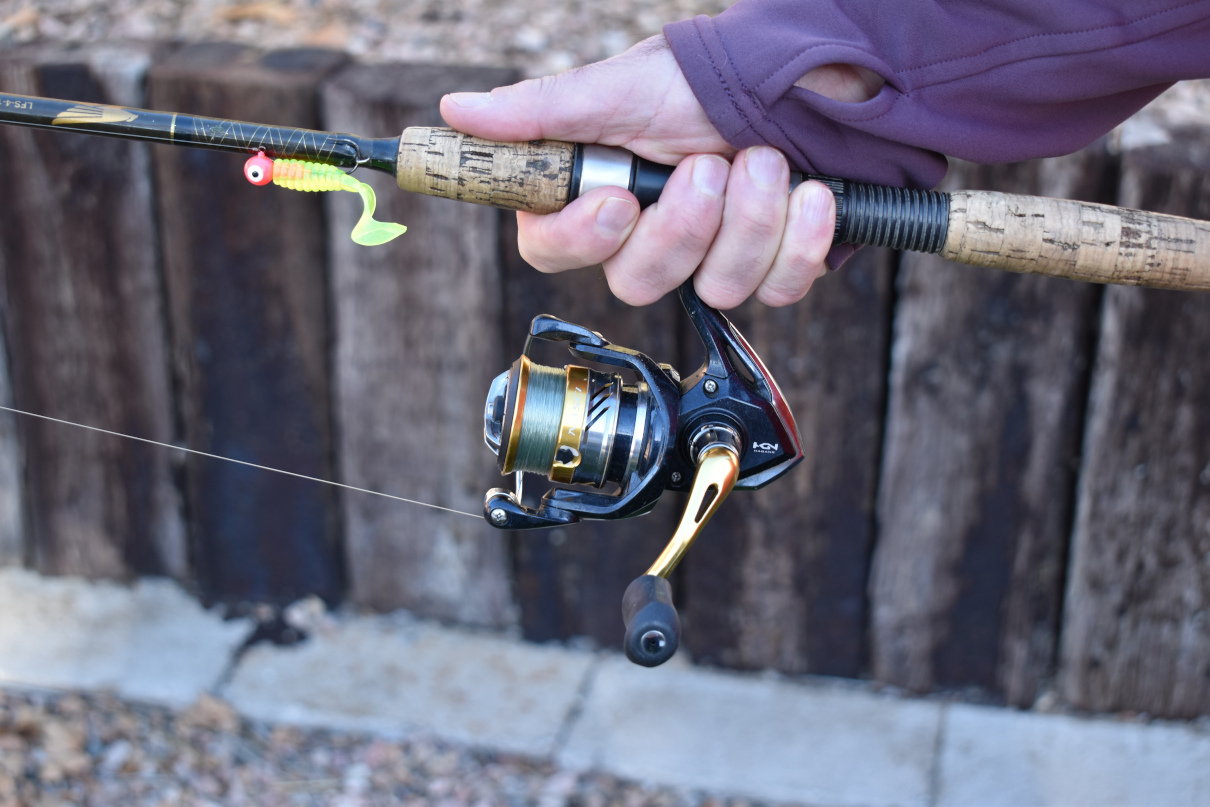
Who Should Choose a Spinning Rod
For lighter lures or finesse fishing techniques, spinning rods often outperform casting rods. They’re the most versatile type of fishing rod and appropriate for many species of fish. A spinning rod is usually the best choice for sunfish, crappie fishing, and walleye fishing. They’re also great for most trout lures and for bass tactics that call for lighter lines or lures.
My quiver of rods includes several spinning rods for multi-species fishing applications:
- An ultralight spinning rod for trout, bluegill, and crappie fishing
- A light spinning rod for crappie and finesse bass presentations with light lines and light lures
- Medium-light spinning rods for Ned rigs, drop shot rigs, and small plastics for smallmouth bass
- Medium spinning rods for walleye fishing and bass fishing with bigger tubes, lighter crankbaits and topwater lures, weightless senkos, and wacky rigs
- A medium-heavy spinning rod for fishing heavier walleye jigs, trolling, casting heavier lures, and targeting larger fish (bass, catfish, salmon, speckled trout, redfish, etc.)
Fly Rods
A fly rod is a specialized type of fishing rod that’s made to cast artificial flies that mimic insects, minnows, and other aquatic life.
Fly rods don’t work like conventional casting rods and spinning rods. In conventional fishing, it’s the weight of your lure or bait that catapults a thin line when you cast. In fly fishing, it’s the weight of the thick fly line that generates the energy to flip ultralight flies out to the water.
To generate enough energy to cast flies—most of which are practically weightless—anglers learn a specialized casting motion and use a dedicated fly rod. Fly rods are generally longer, thinner, and more tapered than spinning rods. Their circular fly reels sit below the rod (similar to a spinning reel) and hold a coil of thick, plastic-coated fly line.
Most people associate fly rods with trout. However, you can catch almost every fish imaginable in salt and freshwater on a fly. That’s because fly rods are made for line weights (wt) from 0/2 to 15, in lengths from 5’ to 12+’, and in slow, medium and fast actions.
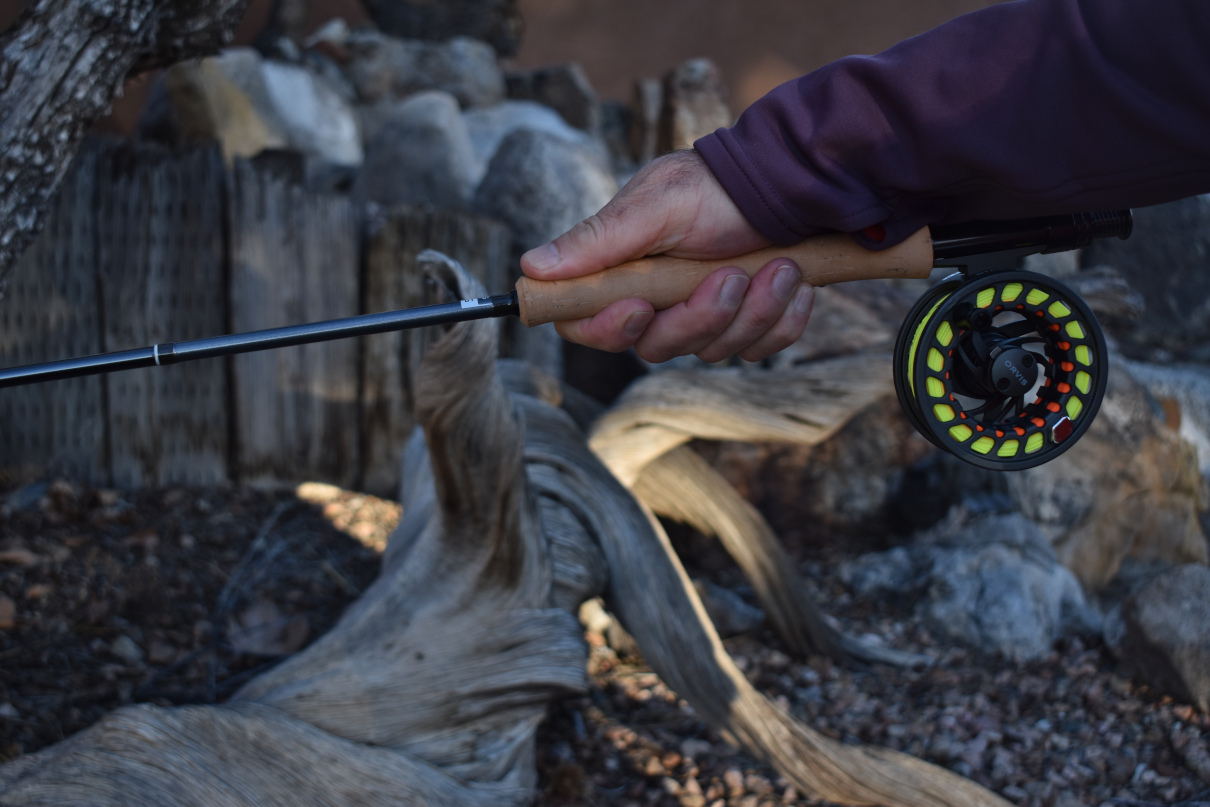
My fly rod arsenal includes:
- 9’ 5 wt for most trout applications
- 10’6” 4 wt for Euro-nymphing trout
- 9’ 6 wt for bass
- 9’ 8 wt for musky, pike, and striped bass
Truth to be told, it’s tougher to cast a fly rod from a kayak because of the lower seat position. The key is keeping your backcast high–or using more of a sidearm cast–to keep your fly line from hitting the water behind you. The other option is standing to cast if you have a fishing kayak stable enough to do so.
For most freshwater anglers, a 9’ 5 wt, medium action rod is the most versatile fly rod. Many saltwater anglers start out with a 9’ 8 wt or 9 wt fly rod.
Who Should Choose a Fly Rod
Fly fishing is a peaceful, effective, and addictive way to fish for trout, panfish, and larger predators. If you love to watch fish slurp dry flies off the surface, you should pair a fly rod with a floating fly line. If you’d like the challenge of drifting weighted flies down river runs and current seams to trigger subtle takes—or stripping line in with your hands to make a streamer fly mimic an erratic minnow—a fly rod is fun to fish.
Other Types of Fishing Rods
Beyond the big three, there are also more specialized types of fishing rods.
Trolling Rods
A trolling rod is made to drag live bait harnesses, trolling spoons, and crankbaits behind a moving boat or kayak—a fishing technique called “trolling.” Typically, trolling rods are stiffer and longer than the average fishing rod to prevent your rod from snapping in a rod holder and to help spread out your lines behind the boat.
Who Should Choose a Trolling Rod
If you do a lot of trolling—especially for bigger fish and saltwater fish—a dedicated trolling rod can help you land more fish. Personally, I’ve stuck to spinning rods and casting rods to troll lures behind my kayaks (because they’re shorter and easier to maneuver). However, if you fish bigger water or bigger species than me–think salmon, lake trout, and saltwater fish–trolling rods could be a big upgrade.
Telescoping Rods
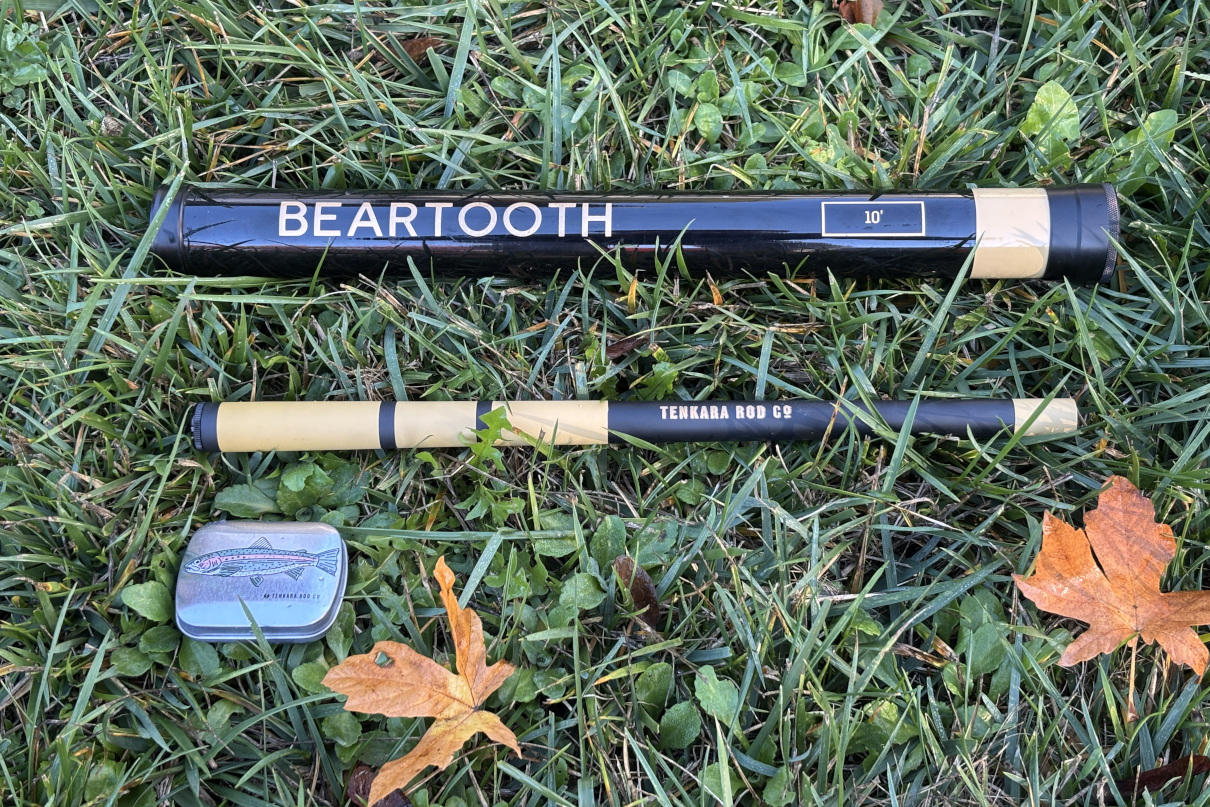
A telescoping fishing rod is a type of travel rod that collapses within itself to a shorter length to stow away. It is a one-piece rod designed with multiple segments that deploy and then tighten. Telescoping rods are made for just about every type of reel, including spinning, baitcasting, spin-casting and fly. Tenkara Rods are another type of telescoping rod growing in popularity, and, put in the simplest terms, are fly rods with a fixed length of line attached to the tip and no reel.
Who Should Consider a Telescoping Rod
Telescoping rods are nice to have stored away in a limited space, such as behind the seat of a pickup truck. They can also be great for saving space on backpacking or overnight river trips. They aren’t usually chosen as a daily workhorse, but as a complementary rod that is handy to have when others would be inconvenient.
Spey Rods
A spey rod is a special type of fly rod that you cast using two hands to shoot heavy fly lines longer distances. Typically, spey rods are extra-long (12-15+ feet) to allow for longer casts in bigger rivers that hold salmon, steelhead, and other big fish.
Due to the length of the rod and complexity of the cast, a spey rod isn’t the best option for kayak fishing. Wade fishing is generally the way to go with spey rods, and some people will work them from drift boats as well.
Who Should Choose a Spey Rod
Spey fishing is an old form of fly fishing that originated in Scotland. It’s a specialized and dedicated discipline to pull big fish out of big rivers with wet flies. My colleague Sam Rocha loves spey fishing in British Columbia, and says, “I love these double-handed rods for their practical utility—steelheading in the Pacific Northwest—and for their history.”
Surf Rods
A surf rod is a long and sturdy rod made for casting heavier lures and live bait rigs from shore, over waves, and into the ocean. Typically, surf rods have longer handles (to make it easier to fight big fish) and corrosion-resistant materials (to protect against salt water).
Who Should Choose a Surf Rod
Surf rods aren’t generally a choice for kayak anglers. But if you live near the coast–or Great Lakes–a surf rod opens opportunities to land big fish from shore or a pier.
Ice Rods
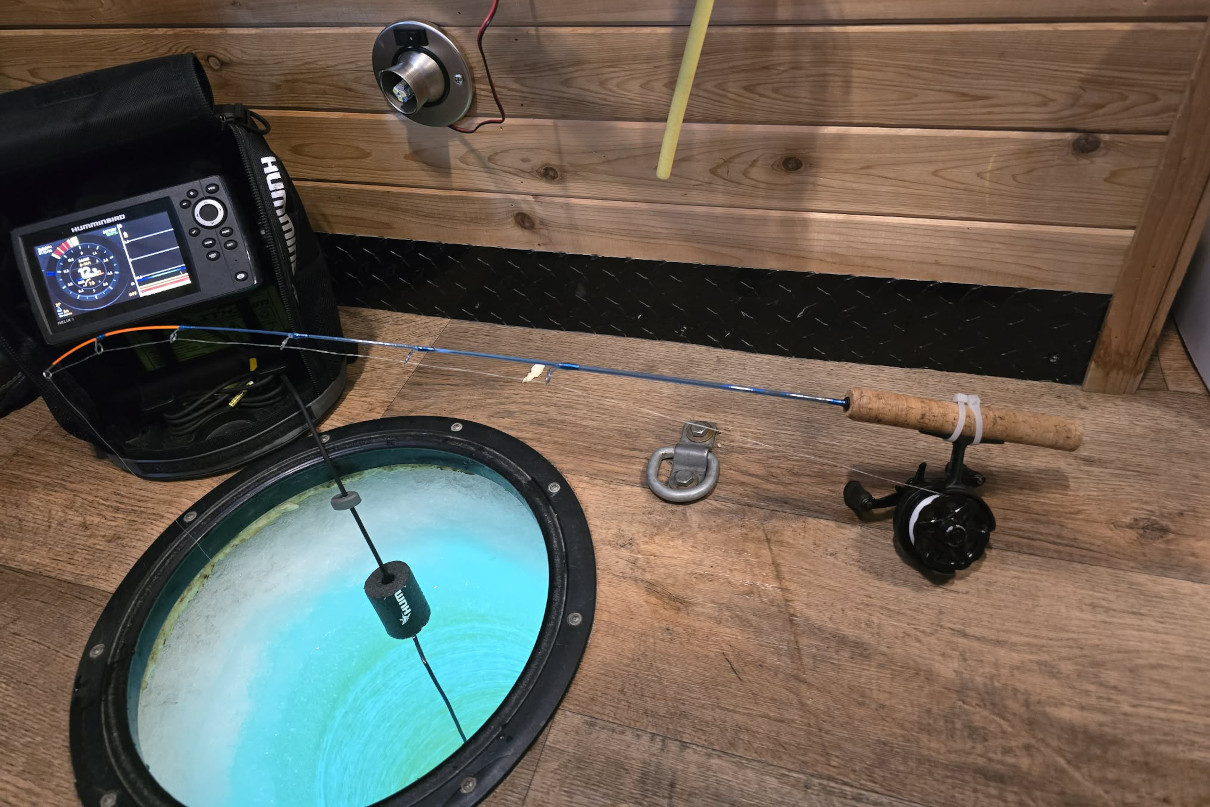
Ice-fishing rods are short, flexible rods designed to catch panfish, walleye, and larger fish (pike, lake trout, etc.) through holes in the ice on frozen lakes and large rivers. They’re made for dropping live bait and lures down holes in the ice—not for casting—with plenty of flex to fight fish without snapping light lines.
Who Should Choose an Ice Rod
In cold climates, picking up a couple of ice rods keeps the fishing going year-round. It also gets you out of the house to kick back with your buddies and catch a range of fish through the ice.