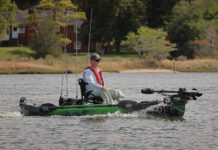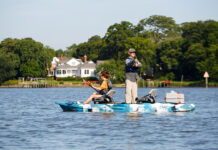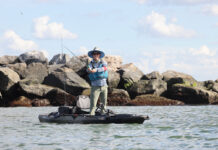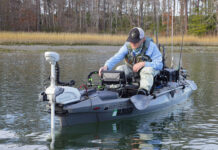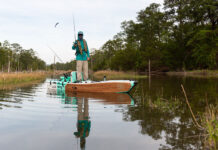
My version of this story begins more than 10 years ago when I bought my first fishing kayak. Here in Chesapeake Bay, the original Ocean Kayak Prowler 15 was a perfect choice. The long, lean and low touring kayak carried me many miles through unpredictable seas trolling for pelagics or casting to backwater ghosts.
The Trident 15 Specs
Length: 15’6″
Width: 28.5″
Weight: 91 lbs
Capacity: 455 lbs
Price: $1,499.99
Over the last decade, other kayaks have come down the creek. Many of them offering improved seats and better rigging, but I could never give up the slim, slick, sexy Prowler.
In the last 10 years, Ocean Kayak added a Prowler 13 and wider Big Game, then discontinued the Prowler 15. To keep up with modern conveniences, they released the first Tridents for improved stability and modern upgrades to the cockpit, like a large center hatch and space for electronics. The first Trident spawned the Trident Ultras combining the modern cockpit design with a sportier hull reminiscent of the Prowler. I wasn’t persuaded to trade-in my old Prowler until last year when Ocean Kayak rolled out a new Trident design.
To take the family name into the next generation, Ocean Kayak mixed hours of research and development with years of pro staff experience.
Ocean Kayak’s brand manager, David Hadden, assured me Ocean Kayak didn’t mess with the Trident below the waterline.
“We put 100 percent of our effort into redesigning the top of the kayak,” Hadden says. He points to the ACS2 Seat, ModPod II and gear tracks as the most significant improvements. “We wanted to modernize the boat without sacrificing open water performance,” Hadden says.

With a long family line setting the standard, Ocean Kayak wanted to give anglers a different and better boat for coastal fishing.
After testing the new Trident 13 in my home waters, fishing for everything from big red drum in the ocean to puppy drum in the creeks the boat became my daily driver. I was excited to test a Trident 15 for long hauls with loads of gear.
Features of the Trident 15
When I unwrapped the Trident 15, my heart skipped a beat imagining the possibilities.
The boat is two feet longer than the 13 but a half-inch narrower giving it an overall sleeker appearance. Don’t let the trim waistline fool you, the Trident 15 can carry 455 pounds and weighs only 91 pounds, just 12 pounds more than her little sister. The added volume comes above the waterline, but she sits only two inches higher than the 13.
My first outings on the Trident 15 I paddled with a relatively light load. Expecting the boat to get blown around and bogged down on the turns, I was surprised it performed much like the 13. Sure, it was a little more tippy and a smidge slower to turn, but the 15 is still snappy enough to paddle every day in any conditions.
Once the Trident 15 is loaded down, she really comes into her own. Kayak Kevin Whitley contributed to the design and tested the 15 on his tour of Florida, and the Trident 15 can carry gear, food and water for weeklong expeditions.
“The boat performs best with about 200 pounds of weight including the angler,” Whitley says. Even when he’s paddling for fun, he stuffs six gallons of water in the hull under the seat. He says the extra weight lowers the boat’s waterline, making it more stable and improving tracking.“Once it gets going, the 15 carries a lot of momentum,” he says. Three months paddling from the Ten Thousand Islands to Georgia is proof enough of the Trident 15’s touring performance.
With deadlines and a teenage daughter at home, I doubt I’ll be disappearing into the wilderness for a week anytime soon, but it’s good to know I can take everything with me on weekend kayak glamping trips and still have room for my fishing gear. The 15 will also be my boat on big game trips where I’ll be packing a cooler or livewell with fresh bait.
The tankwell and cockpit on the 15 is the same size as the 13, the boat adds about 10 inches to the bow and 16 inches behind the seat. The longer waterline makes the boat faster, but a higher gunwales puts it in the wind until it’s loaded with gear. Adding inches to the waterline also makes it track better but slower to turn.
The Achilles heel on every generation from the Prowler to the Trident has been a wet ass. Like almost all sit-on-top kayaks of the day the Prowler had a low seat pan. Water splashing over the boat would pool you know where. Rainwater would do the same. In my original Prowler, despite two scrubber drains the padded seat would never dry and I’d fish for hours in a shallow puddle of saltwater. Later models raised the seat pan, negatively affecting stability and only slightly improving drainage.
The new Trident features a compromise between a low-profile seat for stability and an elevated seat for a comfortably dry butt.
Borrowing from the Royal throne found in Old Town’s sit-inside Loon, the ACS2 seat sits less than an inch off the deck but above the water.
The big upgrade in the original Trident over the Prowler was the addition of the ModPod, a large, rectangular hatch in the center of the deck. I always like an easy place to store rods and fish, but I never liked the huge, flat lid taking up valuable floor space.
For the new Trident 15, Ocean Kayak tweaked the ModPod by making the center hatch watertight and peppering it with features including gear tracks, sealed smartphone compartment and a powerful magnet for holding hooks and pliers.
The cherry on top of the Trident 15 is the Lock-Seal hatch in the stern making it possible to fit tent, sleeping bag and more in the trunk. The hatch certifies the 15 as a touring sit-on-top, making it possible to distribute gear from bow to stern.
[ See the largest selection of boats and gear in the Kayak Angler Buyer’s Guide ]
Ocean Kayak also improved the transducer scupper from the original Tridents. Gone is the clunky Sonar Shield front compartment. Ocean Kayak replaced it with a transducer scupper covered with a removable plastic plate.
Many companies claim their kayaks do it all. Do-it-all kayaks, if they existed, would certainly appeal to a larger market. However, kayak anglers continue to become more specialized. In a world where more kayak fishermen are now on inland lakes, ponds, rivers and streams, Ocean Kayak takes the reigns in designing boats specifically for long distance, ocean fishing, where it all began. After all, it’s in their name. Combining the proven performance of the Trident’s long, lean hull with contemporary upgrades for comfortable, ergonomics and convenience, the new Tridents are here for the long haul and another decade of big-water fishing.