Fishing out of an inflatable kayak used to be about sacrifice. In order to store and transport an inflatable fishing kayak, anglers sacrificed performance and features found in hard-body kayaks. Many hopeful kayak anglers start their journey aboard a blow-up kayak, but end up disappointed by the boat’s limited durability and performance. With the latest inflatable kayaks, anglers don’t have to make sacrifices to take advantage of an air-filled boat.
Air Power: Fish-Ready Inflatable Kayaks
Transport and Storage
The biggest advantage to an inflatable kayak is easy storage and transport. Just deflate the kayak, fold it up, pack it in the carry case and the package fits in a broom closet or car trunk. Inflatables are considerably lighter than plastic kayaks making the boat easier to move on land.
On the other hand, inflatable boats struggle to perform as well as plastic kayaks. An inflatable sits on top of the water at the mercy of wind and current. And flexible air chambers absorb paddling energy and momentum. In a head-to-head race, a hard-bodied kayak will beat an inflatable.
To even the playing field, the latest inflatable kayaks and paddleboards are rigged with pedal and motor power. A pedal system produces more power and improves control despite the inflatable platform.

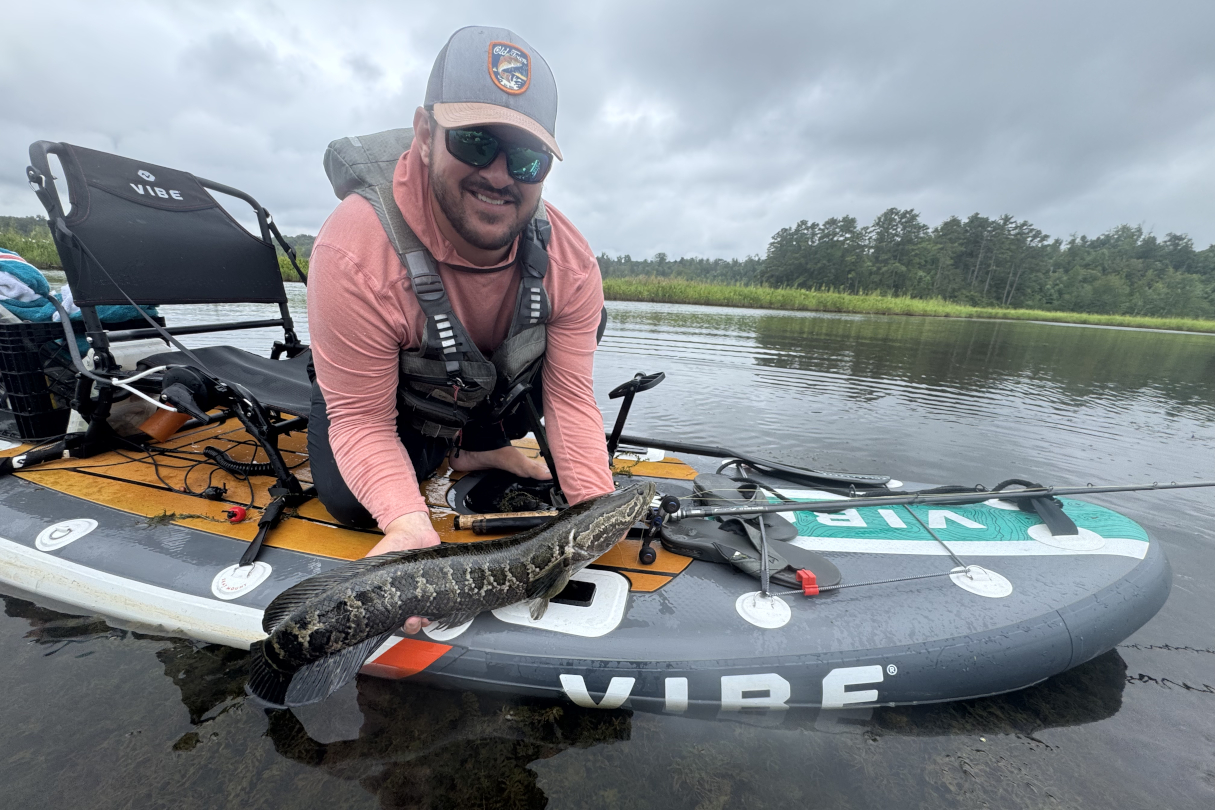
I recently tested Vibe’s Uptown 100 Lite and found it simple to own and easy to fish. The 10-foot inflatable only weighs 33 pounds and it fits in a backpack with wheels. The key to the Uptown’s success is the drop-stitch deck.
Inside a drop-stitch air chamber, hundreds of threads connect the top of the chamber with the bottom (the same concept behind a suspension bridge). The design creates a stiffer surface but limits the shape to a flat chamber. The Uptown’s deck is almost as stiff as a hard-body paddleboard with half the weight.
I can keep the Uptown 100 simple with a couple rod holders and a gear crate that doubles as a seat, or I can add Vibe’s frame seat and X-Drive pedal system. The pedals and seat extend the boat’s range and increase comfort.
Inflatable Fishability
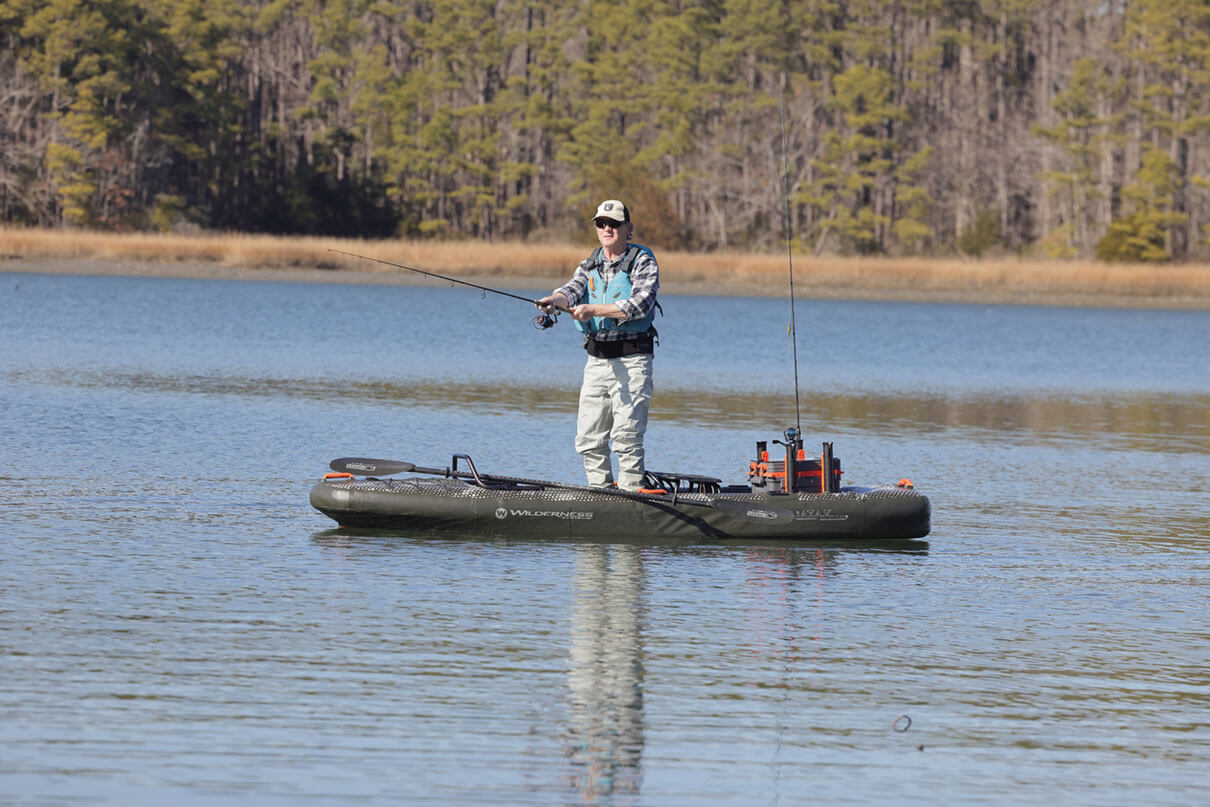
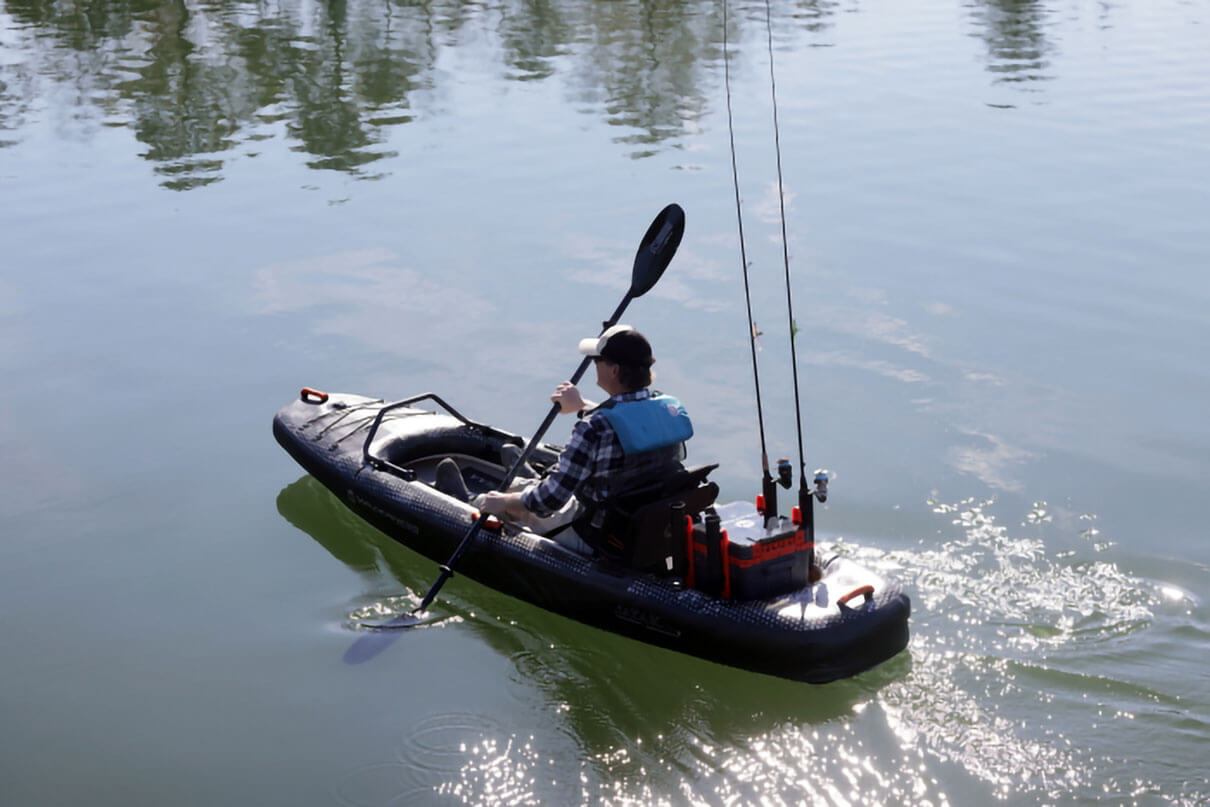
To increase rigidity and improve performance, the best inflatable fishing kayaks use multiple drop-stitch chambers. Wilderness Systems new iATAK inflatable kayak has a drop-stitch deck with a second drop-stitch chamber forming the gunwales. The two chambers are joined in a vinyl shell giving the boat a hydrodynamic shape.
The upper drop-stitch chamber also provides a solid surface to mount rod holders and accessories. And Wilderness adds a metal bar across the cockpit to hold more accessories and increase stiffness.
What’s the big deal about rigidity? Not only will a flimsy inflatable boat bend and fold under pressure, but a stiffer boat tracks better and is less susceptible to wind and current.
To further improve maneuverability and performance, the iATAK uses a skeg in the stern and molded plastic reinforcement in the bow and keel that increase the boat’s underwater profile.
Of course, the 11-foot-long iATAK requires a large storage bag and the double drop-stitch chambers take more effort to inflate, but the full-size, full-feature fishing inflatable with a frame seat is considerably lighter than a similar hard-body boat with similar features.
Bigger is Better
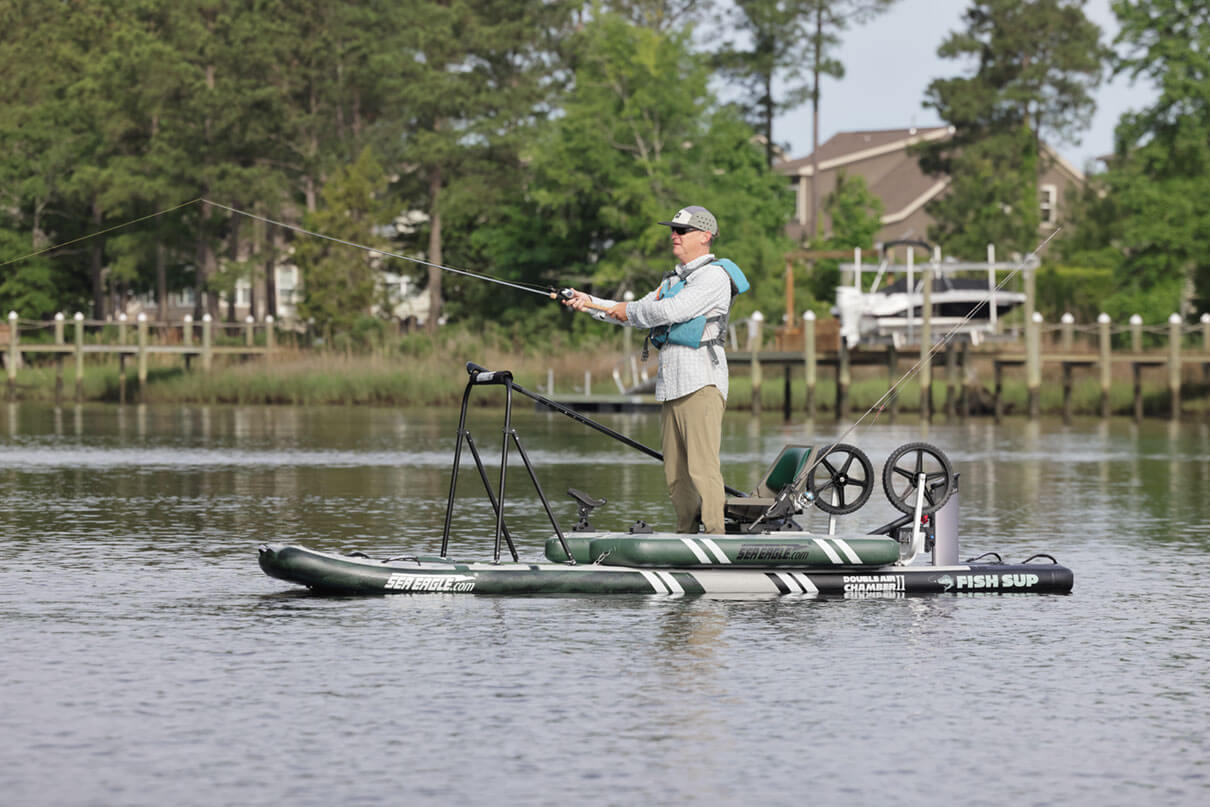
To eliminate the performance and rigging disadvantages of an inflatable while still maintaining storage and transport advantages, Sea Eagle’s mothership FishSUP FS1210 is the ultimate fishing inflatable.

At 12 feet and 10 inches long, the 40-inch wide SUP is more stable than a traditional kayak. Adding motor power cancels out the disadvantages of a big, wide inflatable board.
Motorizing the FS1210 turns the boat’s size into an advantage. I have more space to fish, more room for gear and almost unlimited range. Pundits on the internet are calling the FS1210 and similar extra-large SUPs the inflatables that killed the kayak. By propelling the boat with a motor, I get all the advantages of a full-size hard-body fishing kayak, and I can still pack up the FishSUP and transport it in a car trunk.
Granted, the size and capacity require extra time and effort to inflate and rig the boat before and after each trip, but the FishSUP is still lighter than a similar full-size hard-body kayak, making it easier to maneuver on and off the water. I can even add an electric trolling motor to the bow to create a mini-skiff that fits in the corner of my garage.
While the latest inflatable fishing kayaks have pundits announcing the death of the rotomolded fishing kayak, truth is a hard-body boat outperforms an inflatable and offers more options for features. But you can’t store a hard-plastic sit-on-top fishing kayak in an apartment or transport it on public transportation. The most recent advancements in materials and design improve performance and fishability making inflatables a reasonable option for serious anglers to have a great experience.
Leveling the playing field. | Feature photo: Patrick Hayes