Way back in the 1990s, engineers at Hobie outfitted a kayak with scissoring fins, and the first pedal-drive kayak was born. A decade later, Native Watercraft took the concept in a different direction by creating a pedal-driven propeller system. Since then, almost every major kayak manufacturer has developed a pedal-drive kayak.
For anglers, a pedal-drive kayak offers many advantages. First, propelling the kayak with your feet leaves your hands free for rigging your lure, casting, fighting a fish or drinking a coffee. Since legs are stronger than arms, pedal kayaks have a greater range and higher speed than a paddle kayak. Pedal kayaks are also wider and more stable with greater capacity and volume, so they are stable, comfortable and capable of carrying more gear and tackle. All these factors make pedal kayaks popular with kayak anglers, and here are seven of my favorites we have tested.
Best Pedal Fishing Kayaks: Our Top Picks
- Best overall: Old Town Sportsman PDL Pro
- Best fin drive: Hobie Pro Angler 360
- Best pedal drive: Bonafide P127
- Best for shallow water: Jackson Knarr
- Best budget pedal drive: 3 Waters Big Fish 120 V3
- Best budget fin drive: Pelican Kicker
- Best inflatable: BOTE Aero
Best Overall Pedal Kayak For Fishing
Old Town Sportsman 120 PDL Pro
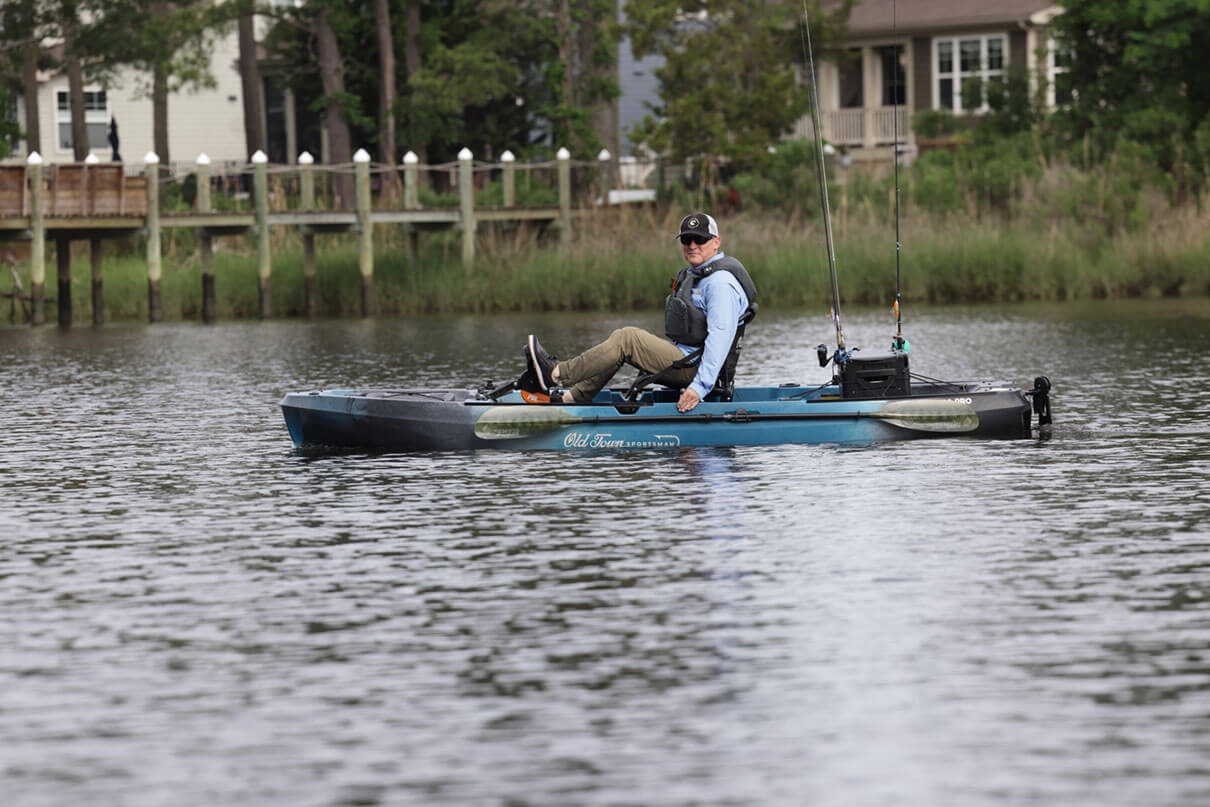
Old Town Sportsman 120 PDL Pro Specs
Length: 12′
Width: 36″
Weight: 131 lbs
Capacity: 420 lbs
MSRP: $3599.99
Buy from:
ECO FISHING DICK’S BACKCOUNTRY OLD TOWN
Why I love it
Imagine driving to work in NASCAR champion Chase Elliott’s No. 9 Chevrolet Camaro ZL1. What if you showed up to the next bike-club ride on five-time Tour de France Champion Tadej Pogacar’s Colagno Y1Rs road bike? Well, you probably don’t have access to pro-level cars and bikes, but you can have an Old Town Sportsman 120 PDL Pro fishing kayak. Anglers on the tournament trail chasing big fish and big checks demand every advantage from their kayak. Old Town’s engineers worked with their fishing team to update the Sportsman PDL with features to satisfy pro anglers. Acres of storage above and below deck, space for a trolling motor in the bow and anchor system in the stern, rigging for full electronics and one of the best pedal systems on the water make this do-it-all boat ready for any angler’s adventure.
Reasons to buy
- Reliable Old Town PDL pedal drive with five-year warranty
- 150 inches of gear track for accessories
- Proven seaworthy and stable Sportsman hull
Consider another if
- Are on a budget
- Need a smaller, lighter kayak
Who should buy
Designed by tournament pros, ready for any angler, the Old Town Sportsman PDL 120 Pro is one of the most versatile and capable kayaks I have tested. The PDL pedal system makes the Sportsman Pro a great choice for serious anglers looking for a reliable and convenient way to fish. When it’s time to upgrade, the boat is pre-rigged to run motor and electronic systems. The Old Town Sportsman PDL 120 Pro is the tournament kayak for the rest of us.
Best Fin Drive Pedal Kayak
Hobie Mirage Pro Angler 12 with 360 XR Drive

Hobie Mirage Pro Angler 12 with 360 XR Drive Specs
Length: 12′
Width: 36″
Weight: 132 lbs
Capacity: 500 lbs
MSRP: $5699
Buy from:
Why I love it
First came the Hobie MirageDrive, a pedal-driven fin system that propels a kayak forward. Then came the MirageDrive 180 with forward and reverse. Now Hobie fans have the Mirage Drive 360 XR drive with unlimited maneuverability. The Mirage Drive is one of the most efficient and comfortable pedal systems. By pushing one pedal forward, the fins flatten against the hull for instant shallow-water clearance. Matching the 360 drive to Hobie’s flagship Pro Angler line offers a capable fishing platform with tons of storage space, a stable and seaworthy hull and space for electronics and tackle.
Reasons to buy
- Hobie Mirage Drive 360 XR is efficient and maneuverable
- Instant shallow-water access
- Proven hull and cockpit layout
Consider another if
- Want to add a motor
- Are on a budget
- Prefer a propellor drive
Who should buy
Admittedly, anglers are a suspicious group. With so much at stake, and kayak performance directly tied to fishing success, it’s easy to cast doubt on a complicated system that promises to do it all. The sea-worthy Pro Angler is capable of covering miles of open water in the roughest conditions with every bell and whistle available to Hobie fans included our favorite H-rails, internal wiring for electronics, tackle storage, the top-of-the-line ultra-comfortable Vantage ST seat and a protective shield for the transducer. Vertical and horizontal rod storage and a do-anything layout make the ProAngler the best choice for offshore and tournament anglers.
Best Pedal Drive System
Bonafide P127

Bonafide P127 Specs
Length: 12′ 7″
Width: 34″
Weight: 120 lbs
Capacity: 425 lbs
MSRP: $2999
Buy from:
Why I love it
What happens when two legends of kayak fishing design combine talents to build the ultimate fishing kayak with pedals? The Bonafide P127. Luther Cifers is the former owner of YakAttack, and Hans Nutz designed some of the most iconic kayaks for fishing. They teamed up with Native Watercraft’s tried-and-true Propel drive to create one of the best-performing fishing kayaks. The Propel pedal drive system is the original propeller drive tested, improved and developed into one of the lightest, toughest and most reliable pedal systems.
The Bonafide P127 is one of the most well-thought-out fishing platforms with some of my favorite features. I love the huge, easy-to-remove bow hatch, protected horizontal rod storage, and the most comfortable seat for long days on the water. Most of all, I love the P127 looks. Low and sleek with sharp lines, the P127 looks like a sports car or stealth bomber.
Reasons to buy
- Light and tough Propel pedal drive
- Smart fishing features
- Looks cool
Consider another if
- Want more color choices
- Need instant shallow-water access
Who should buy
The Bonafide P127 is lighter and narrower than other full-feature pedal kayaks, making the boat a good choice for anglers with transportation and storage issues. The Propel pedal drive is reliable and efficient and also lighter and more compact than other propeller drives. Still, the P127 has space for gear and tackle with rigging to add electronics. The Bonafide P127 is for anglers who want a great fishing platform with a proven pedal system that is easier to store and transport.
Best Propeller System for Shallow Water
Jackson Knarr FD Pedal Kayak

Jackson Knarr FD Pedal Kayak Specs
Length: 13′ 9″
Width: 37″
Weight: 158 lbs
Capacity: 425 lbs
Buy from:
Why I love it
Designed by the Jackson pro staff for tournament competition, the Jackson Knarr hull is efficient and fast with stability and capacity to rig with electronics and a full assortment of tackle. Since pedal drives hang below the boat like a sailboat keel they play a big part in the boat’s stability. The Flex Drive Mark IV has a long shaft that provides increased surface area. When I enter shallow water, the flexible shaft folds into a channel in the bottom of the hull, reducing the boat’s draft. The hull is so stable I can stand on the seat, turn around, or stand on the bow. But the Knarr isn’t a flat-bottom barge—the 14-foot-long boat has a rounded hull and flared bow to cut through the water and roll over waves. The incredible stability combined with the efficient Flex Drive Mark IV pedal drive gives me the confidence to cover miles of water and fish all day.
Reasons to buy
- Durable Flex Drive Mark IV
- Ample storage
- Three-sided gear-tracks
Consider another if
- Prefer a fin-style pedal system
- Transport the kayak on a cartop
- Have limited storage
Who should buy
Stability is one of the biggest barriers to kayak fishing. For anglers who struggle in a smaller or narrower kayak, a big, wide boat like the Jackson Kayak Knarr is the best bet.
Best Budget Propeller Drive Pedal Kayak
3 Waters Big Fish 120 V3
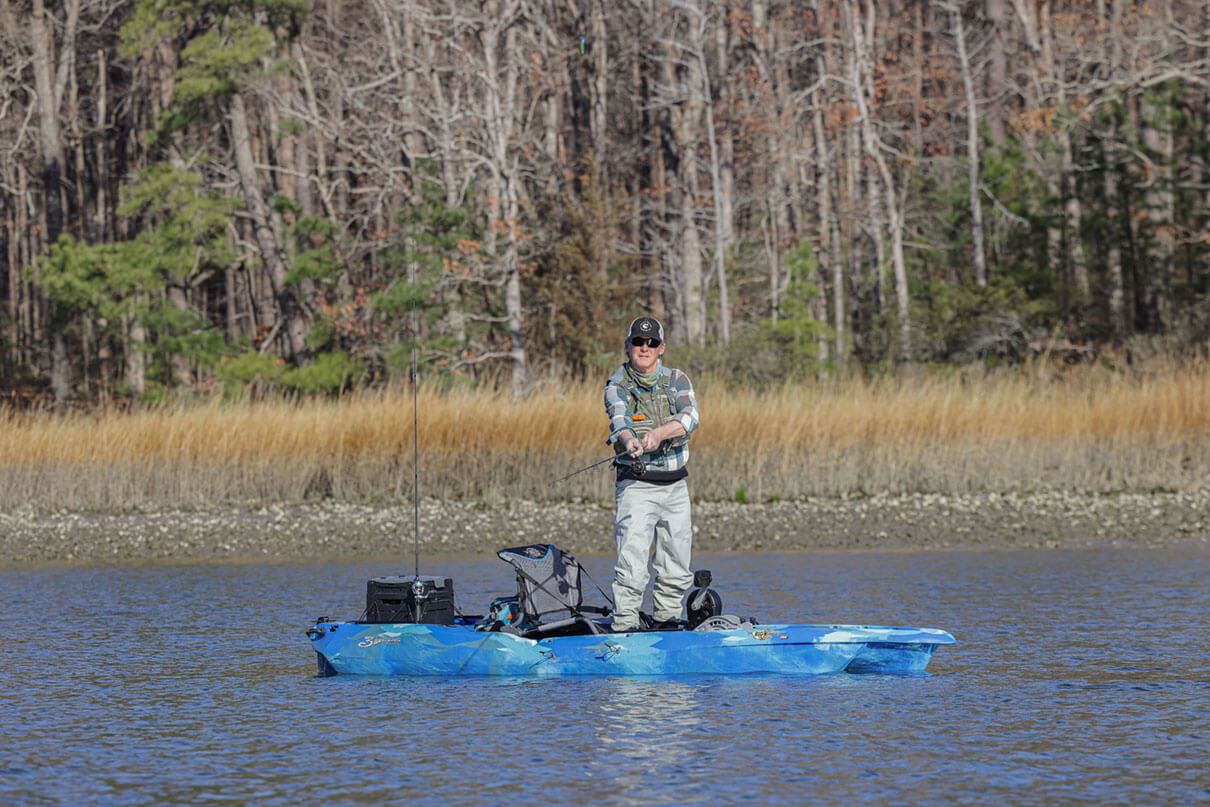
3 Waters Big Fish 120 V3 Specs
Length: 12′
Width: 35.4″
Weight 131 lbs
Capacity: 370 lbs
MSRP: $1599
Buy from:
Why I love it
Pedaling miles across open water, carrying a full arsenal of tackle and gear, spending hours on the water, standing and fishing with confidence: if I didn’t tell you the price of my fishing kayak, you’d never believe I was fishing in a bargain boat. The design and features of 3 Waters Kayaks Big Fish 120 PDL are on par with a premium pedal kayak, but the price is about $1000 less.
To accommodate anglers of all sizes, the EZ-Rider seat is extra wide with an ample backrest. The quick-dry mesh keeps the seat light while still providing support for long days on the water. The Profish Pedal Drive System is simple and easy to operate. I like the low-profile steering control knob that is low-profile and out of the way. The 3 Waters Big Fish 120 isn’t the fanciest pedal kayak, but it works well and is ready for fishing at an affordable price.
Reasons to buy
- Great Bargain
- Wide, padded seat
- Proven pedal system
Consider another if
- Need a full-feature kayak
- Expect to install electronics
Who should buy
After testing the Big Fish 120 PDL, I have a picture of the boat’s potential captain. While the Big Fish doesn’t have the rigging capacity for full electronics and motors to make it “tournament ready”, the boat is ready for serious fishing. The hull design coupled with the capable Profish pedal system and open top-side layout come together to make a versatile boat for big water fishing. An angler who is looking for a boat to confidently and comfortably travel to distant fishing spots will appreciate the speed and sea worthiness. When it comes time for fishing, the hull’s stability and the open cockpit make casting and retrieving second nature. If an angler has room in his life for a full size kayak, but doesn’t have room in his budget for a high-dollar premium fishing kayak, the Big Fish is a perfect fit.
Best Budget Fin Drive
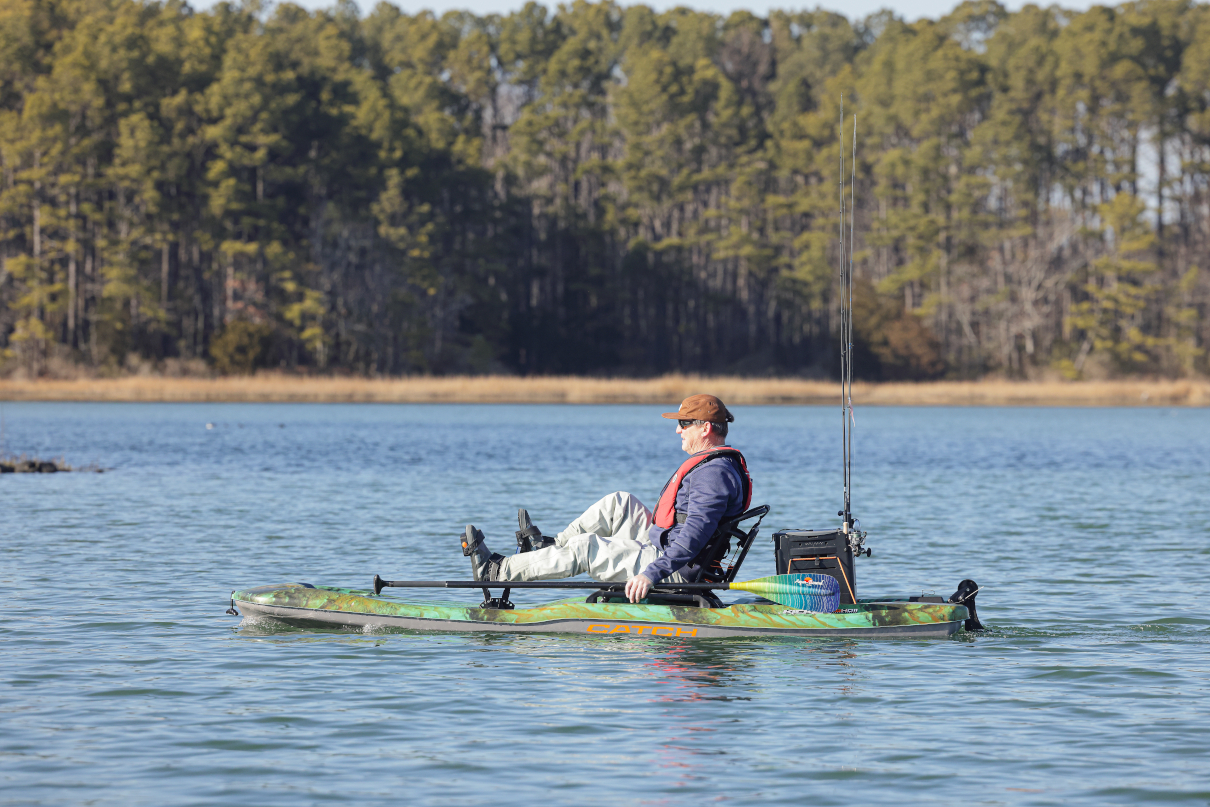
Pelican Catch Kicker 110 HDII
Pelican Catch Kicker 110 HDII Specs
Length: 10′ 3″
Width: 33″
Weight: 59 lbs
Capacity: 300 lbs
MSRP: $999
Buy from:
Why I love it
The Pelican Catch Kicker 110 HDII is a lightweight, simple, easy-to-own hybrid between a sit-on-top kayak and standup paddleboard.
The Kicker’s design and layout reflect an emphasis on easy operation and functionality. For example, the Catch Kicker is designed to maximize stability with a wide stern supported by a catamaran hull. The deep, sharp bow cuts through the water while the broad, 33-inch beam provides plenty of space for fishing.
Comfort is one of the big advantages of a sit-on-top SUP. The Catch Kicker adds an elevated frame seat with breathable, quick-drying mesh and lower-back-saving lumbar support. Fold the seatback down to expose a standing platform for standup fishing.
I easily car-top the Kicker and store the boat propped on its side in the yard. The hybrid weighs 59 pounds, considerably lighter than a full-size fishing kayak. I drag and carry the boat short distances or use a light kayak cart to move the boat from my car to the launch.
The Kicker has a pedal drive and hand-controlled rudder. Pelican installed a fin drive to reduce weight and keep the system simple. Combined with the matching rudder, the fin drive easily propels and maneuvers the kayak.
Reasons to buy
- Great value
- Pedal power
- Thermoformed hull
Consider another if
- Need more space for gear
- Want to add a motor
Who should buy
The Pelican Catch Kicker 110 HDII is perfect for beginner anglers looking for an easy entry into kayak fishing. The boat is also a great addition to an experienced angler’s kayak fleet, offering a grab-and-go option that allows me to fish more often by leaving my full-feature kayak at home. I use the Pelican Catch Kicker 110 HDII for quick trips after work to the local neighborhood pond. The shallow-draft kayak with fin drive and casting platform is the best choice for shallow-water fishing. I use it to sight fish for redfish and go deep into the vegetation to chase snakehead and bass. When I return to the launch, the light, compact boat is quicker to load and transport than my big boat, requiring less time to get on and off the water.
Best Inflatable Pedal Kayak
BOTE LONO with Apex Drive

BOTE LONO Apex Specs
Length: 12′ 6″
Width: 35.5″
Weight: Board, seat, deck 67 lbs; Apex pedal drive 20 lbs
Capacity: 400 lbs
MSRP: Board $1899; Pedal Drive $999
Buy from:
Why I love it
The BOTE LONO Aero with Apex pedal drive offers a full-size, full-feature inflatable fishing kayak with a pedal system. Using the LONO Aero Apex, I can go where other kayaks can’t go and still have a capable fishing platform when I get there. Normally, to reap the storage and transport advantages of an inflatable, I would give up the performance of a pedal boat and the rigging on a full-feature kayak. With the pedals, the LONO Aero turns into a formidable fishing kayak. The pedals work efficiently to turn the propeller and push the inflatable like any other pedal kayak. The LONO Apex includes an inflatable bench seat that can be moved forward and back to adjust pedal distance. The seat is comfortable and functional as a solid pedaling platform for short distances. While the LONO Aero can’t match the performance and fishability of a full-feature plastic kayak, the Apex pedal system makes the Bote Lono Aero one of the best inflatable pedal kayaks.
Reasons to buy
- Smooth and efficient pedal system
- Multiple air chambers provide rigidity
- Hybrid paddleboard and kayak
Consider another if
- Are looking for a smaller, lighter inflatable
- Need a high-performance pedal kayak
Who should buy
To be honest, the LONO Aero Apex probably wouldn’t work if it wasn’t for BOTE’s dedication to quality. The dropstitch chambers, heavy-duty vinyl and high-quality components make this boat possible. The LONO’s design combined with BOTE’s pedigree as skinny-water, flats-fishing enthusiasts is behind the boat’s out-of-the-box design that keeps its promises. If you’re looking to find new places to fish other anglers can’t reach, the BOTE LONO is one of the only inflatable kayaks to take you there.
Pedal Fishing Kayak Buying Advice
Pedal systems make it possible to go farther and faster with less energy. The propeller or fins hanging below the water also make the kayak more stable.
Fin drives compared to propeller drives
Pedal drives fall into two categories: fin drives and propeller drives. Fin drives, like Hobie’s MirageDrive, use pedals moving fore and aft to push and pull flexible fins below the boat. Prop drives, such as Old Town PDL and Native Propel, use a circular pedal stroke to spin a propeller. Both systems offer hands-free fishing, greater speed and range and improved stability.
The biggest advantage to a prop drive is instantly going into reverse by turning the pedals backwards. This makes it quicker to control the kayak while fishing and fighting a fish.
Not to say fin drives can’t go into reverse. Hobie’s MirageDrive 180 fins are shifted into reverse by pulling a cable on the drive. The MirageDrive 360 fins turn 360 degrees when the operator spins a dial. These systems improve maneuverability, but they require a few more seconds and a couple more steps to change direction compared to a propeller drive.
Another difference is a fin drive has to be removed from the boat before launching and returning to land. A prop drive is installed in the kayak and then lowered on the water. This makes it slightly quicker to take a prop drive from land to sea.
Fin drives, on the other hand, are easier to switch into shallow-water mode by simply flattening the fins against the hull. A prop drive must be pulled out of the water before it hits bottom.
Whether you choose prop or fins, test how long it takes to install and remove the pedals. You’ll have to perform this task every time you launch and land the kayak. The connection between the pedal unit and the hull should be sturdy and tight because any flex will sap pedaling power.
Fin drives tend to be lighter than prop drives. However, a fin drive’s exposed parts are subject to dirt and damage while most prop drives have sealed mechanisms.
Some anglers prefer the fin drive’s forward and back leg motion while other people are more comfortable spinning pedals. It’s best to try each system before settling on a pedal drive.
Pedal systems suffer a lot of abuse propelling the kayak through shallow water, vegetation and hard structure. Reliability has improved but pedal units occasionally break down and parts wear out. The pedal system requires regular maintenance like cleaning, lubrication and replacing parts such as propeller pins and pedals. Each manufacturer has a schedule and guidelines for pedal system care.
Rudder system
In addition to choosing a reliable pedal system, look for a rudder with a sturdy connection to the boat. Rudder cables should be robust with strong connection to the rudder and the control knob. The control knob should also be tough and easy to turn with the least play between the dial and base.
Once you’ve chosen a drive system, choose a kayak design that meets your needs. Pedal drives come on small and light pocket rockets and big, heavy, full-feature plastic yachts. The advice for choosing the best pedal kayak hull aligns with advice for choosing a sit-on-top kayak.
A great pedal kayak is tough, easy to operate and stable. New anglers who are nervous about paddling or falling overboard feel more confident in a stable and efficient pedal kayak. Experienced anglers looking to take their kayak farther and take their fishing to a higher level appreciate the extended range and speed of a pedal kayak.
Best Pedal Fishing Kayak Brands
- Old Town Watercraft
- Hobie
- Bonafide Fishing
- Native Watercraft
- Jackson Kayak
- Vibe Kayaks
- Wilderness Systems
- Perception Kayaks
- Feelfree
- BOTE
- Brooklyn Kayak Company
- VoyaX
- Pelican
- Ocean Kayak
How We Tested the Best Pedal Kayaks

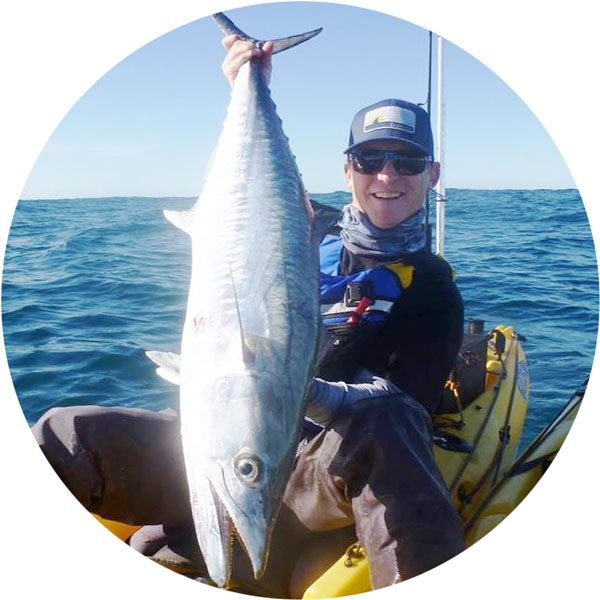
Look at the pictures in this review. Yup, that’s me in every photo, testing every pedal kayak and reporting the results to Kayak Angler magazine readers. The best way to test a pedal kayak is in real-world conditions, out on the water, casting and catching fish.Testing starts as soon as I receive the kayak. I evaluate how well the boat is built, installing the seat, steering, pedals and adding accessories.
My favorite part of the test is on the water. Pedal kayaks are fun to drive. I’m sure to test speed, endurance, turning performance, shallow-water capabilities and maneuverability.
Then, I go fishing. Casting, working lures, storing and accessing gear and tackle, standing up and sitting down, fighting and landing fish, I go through the motions.
Eventually, the pedal kayak is subjected to typical wear and tear, which usually includes dropping the drive, crashing into a dock, dragging through bushes and tons of mud, sand and saltwater.
Each angler has his preferences and loyalties. Some anglers love a fin drive, others swear by the propeller drive. Many anglers are loyal to a specific kayak brand or model. All the boats in this review are great pedal kayaks. And some great pedal kayaks did not make this roundup. In the end, the kayaks in this review are tested and approved to fit the way you fish.