Cold temperatures and short days make bass, and bass anglers, lethargic. But hardy souls who brave the elements are rewarded with the biggest bass of the year. During winter, bass are looking to eat as much as possible with the least effort. Large swimbaits, deep jigging blades and multi-lure contraptions are too good for a half-frozen fish to turn down. So dress in layers, fill pockets with hand warmers and pull on warm boots. Here are the lures and tactics three expert anglers turn to for success during the cold months.
Blade Baits
Why they work
One December day, I was fishing in 37-degree Fahrenheit water. After fishing for hours, I headed back to the launch ramp. On the way, I ran across some nice marks on my fish finder. I swung around and dropped a blade bait down on the fish mark and smashed a four-pound smallmouth bass. I continued to search out individual fish marks and drop the blade bait. I went on to catch a bunch of smallmouth. The blade bait saved my day.
In winter, bass move to deeper water. A blade bait sinks quickly, and I can work it in a variety of ways to imitate a baitfish.
I use blade baits when the water temperature drops into the lower 40s to upper 30s. It seems to work best on bright, sunny days.
I like to throw a blade bait on a spinning outfit. I cast out the lure, let it flutter to the bottom and do short, slow hops back to the kayak.
I also target fish marked with my electronics. I position myself directly over the fish and drop the blade bait until it hovers over the fish mark. Then I let the lure subtly shimmer and shake.
The secret to blade-bait success is working the lure slowly. Cold water makes bass lethargic, so a slow presentation gives the bass an easy target. —Derek Brundle
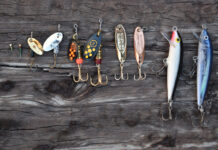
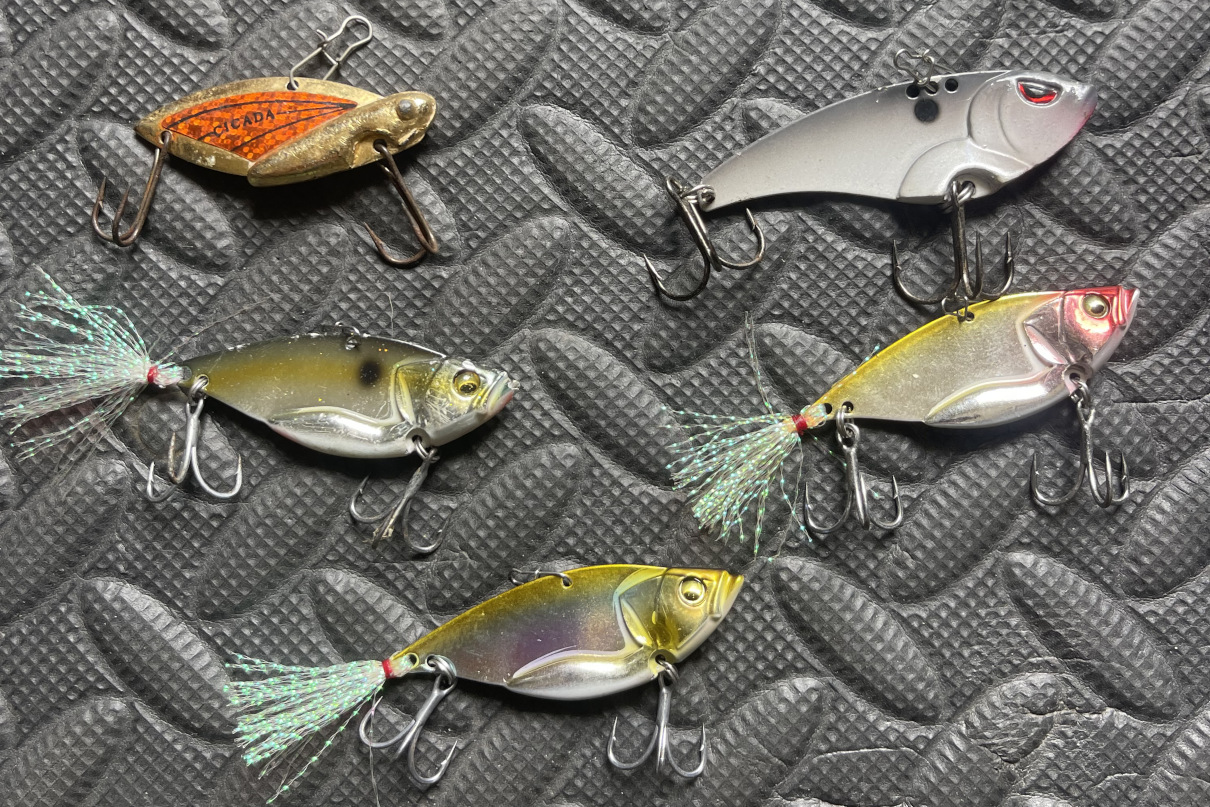
Favorite Blade Baits
Blade-Bait Tackle Box
- Rod: 6’6” Medium-power, fast-action YakRods Tethered
- Reel: Shimano Stradic 3000
- Line: 15lb Power Pro braid w/ 12lb Daiwa Samurai J-Fluro leader
Big Jigs and Swimbaits
Why they work
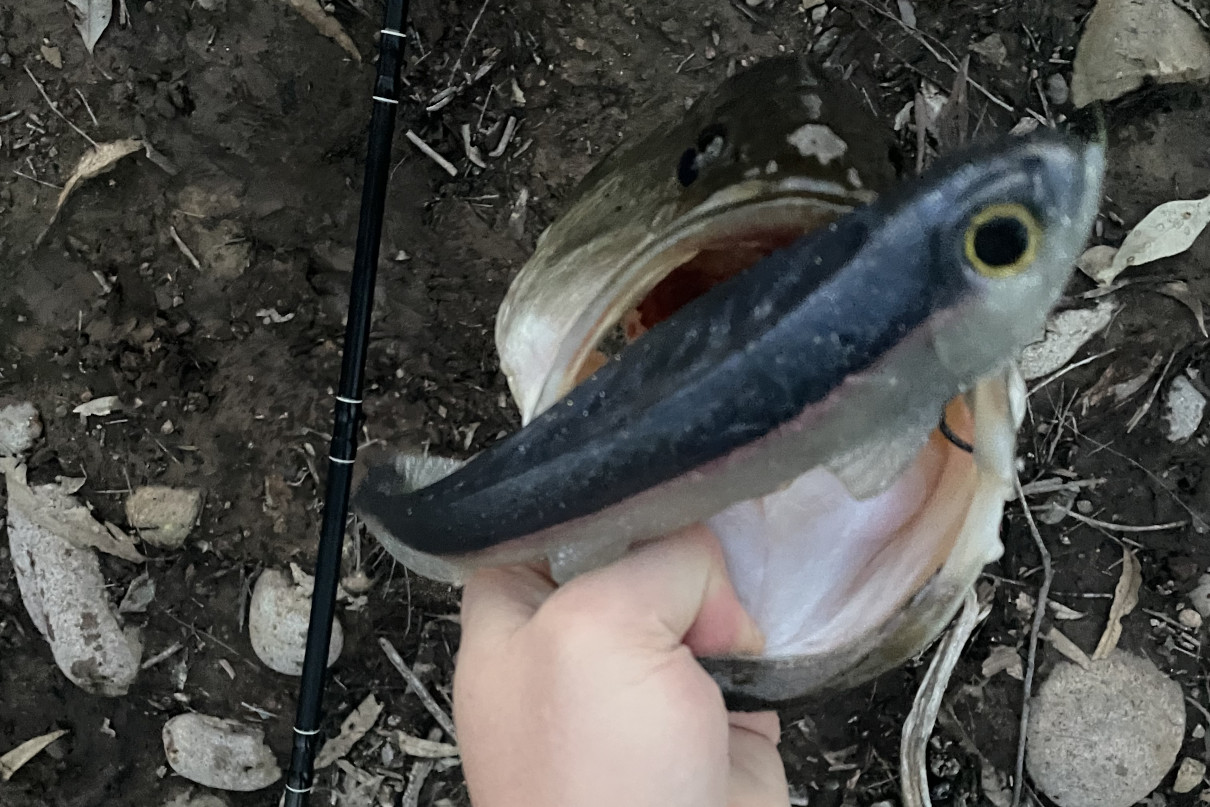
When winter arrives, trophy fish have one goal: eat as many calories as possible with the least amount of effort. In fisheries that have stocked trout, this means trophy largemouth are easy to fool as they pick off slow-moving prey.
Beginning in November and running through March, when the water temperature is below 70 degrees Fahrenheit, California stocks its lakes with trout. The best weather conditions combine low light and stiff wind to break up visibility in clear water. Rising water after a storm tends to push large fish shallow and ignites feeding behavior.
In ultra-clear water, I position my kayak to avoid casting my shadow where fish can see it. I also keep the bow pointing into the wind for optimal control of my kayak.
Slow fishing a big jig or swimbait on the bottom is best on rockpiles or bluff walls near 20-foot deep water. I also work the lures near dock edges and sea walls. A small point or divot along a straight shoreline forces the trout to swim around the obstruction. Bass hide behind the structure to intercept the trout.
When I’m fishing in open water, I often see stocked trout swimming nose down and tail-up, feeding on the bottom and oblivious to their surroundings. I creep the jig or work the swimbait as slow as possible and give the bass an easy, high-calorie meal.
To match the stocked trout, I go with a large jig and trailer or swimbait in a trout color pattern. The large lure stands out from the crowd to get the bass’s attention. I maintain a natural presence and color to match the slow-moving forage.
Power fishing in cold water can be a grind, but there is no match for coming tight on the fish of a lifetime and knowing your gear will hold up and winch that fish right to the boat. —Sam Strech
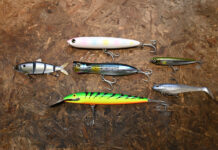
Favorite Swimbaits
Favorite Jigs
Favorite Trailers
Big Swimbait Tackle Box
- Rod: 8’ Extra-heavy, fast-action Daiwa DX Swimbait Casting Rod
- Reel: 6.3:1 Daiwa Lexa 300
- Line: 60lb Daiwa J-Braid Grand 8x w/ 25lb Fluorocarbon
Big Jig Tackle Box
- Rod: 7’3” Heavy, fast-action Daiwa Tatula XT
- Reel: 6.3:1 Daiwa Tatula 150
- Line: 40lb Daiwa J-Braid Grand 8x w/ 15lb Fluorocarbon
Alabama Rigs
Why they work
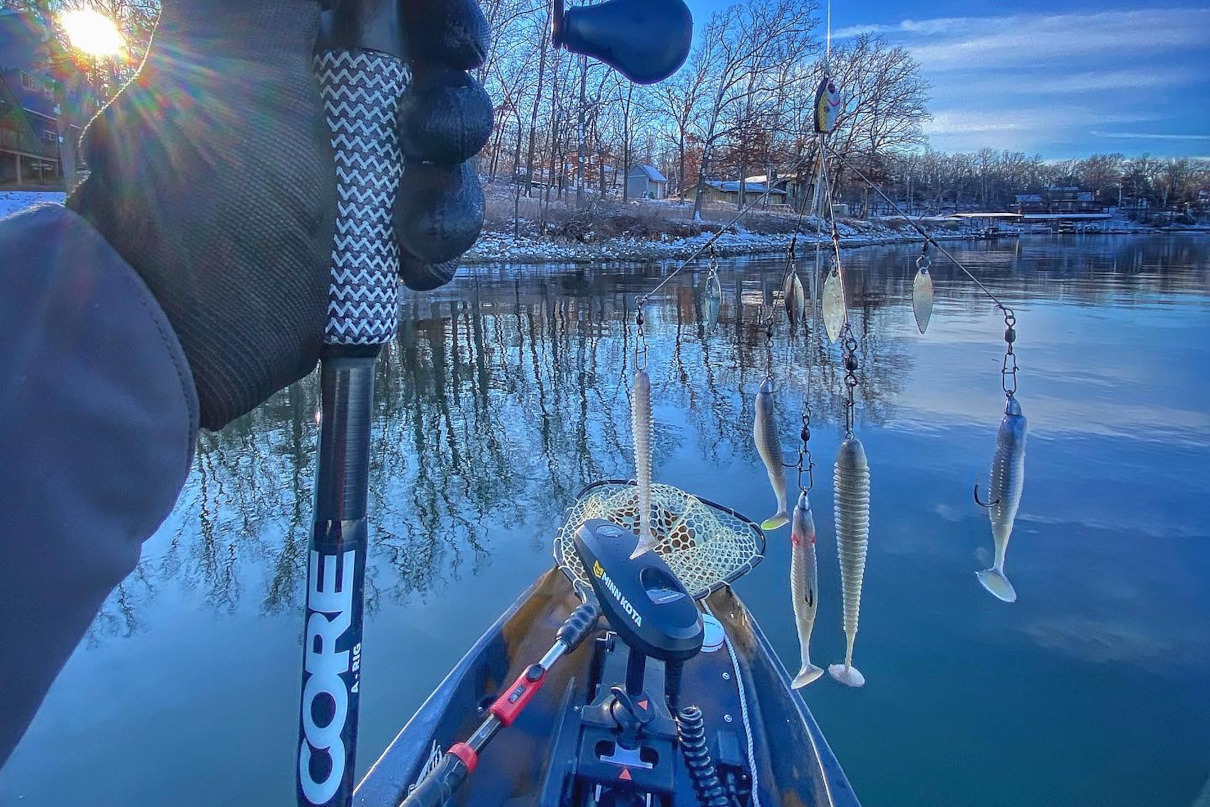
The Alabama Rig is a wire frame trailing multiple swimbaits to imitate a school of baitfish. The A-rig is effective in cold weather when bass are more likely to strike a school of baitfish. And it can be presented at various depths with a slow presentation.
The rig is so effective that it is illegal in some tournaments, and some states have laws limiting the number of hooks on them. Always check local regulations before fishing.
I typically use the A-Rig from late fall through the early pre-spawn. It elicits a visual reaction bite, so it excels in clear water.
In winter, I find bass on points, drop-offs, channel banks and deep cover. I often find fish suspended near boat docks with deep water, deep trees and brush piles. Bridge pilings and rip rap are also perfect for the A-rig.
Forward-facing sonar allows me to monitor the depth of my lure to work it over deep structure. The best days for fishing the setup features wind and cloud cover to disguise it.
The typical presentation for the A-Rig is to make a long cast, let the lure fall to the desired depth, and slowly retrieve the rig so it swims just overtop the cover or structure.
One helpful trick is twitching the A-Rig when it crosses the strike zone. I give the reel handle a quick turn or slightly jerk the rod tip. A slight twitch can often trigger a strike if a fish is following the bait but not committing.
I like to use a larger swimbait with red or chartreuse dye marker on the middle wire to help the fish zero in on the middle of the A-Rig.
When the fish are finicky, there is little wind, and the water is clear, I go with an A-rig frame without spinners.
To further slow my retrieve, I use a 1/16 ounce to ¼ ounce jighead with 3/0 to 4/0 hook. Slowing the retrieve helps trigger bites from lethargic cold-water bass. —Chad Davison
Favorite Alabama Rig Lures
Blade-bait Tackle Box
- Rod: 7’9” Medium-heavy, fast-action baitcasting rod
- Reel: 6:1 Baitcasting reel
- Line: 20 lb fluorocarbon line
Meet our Experts
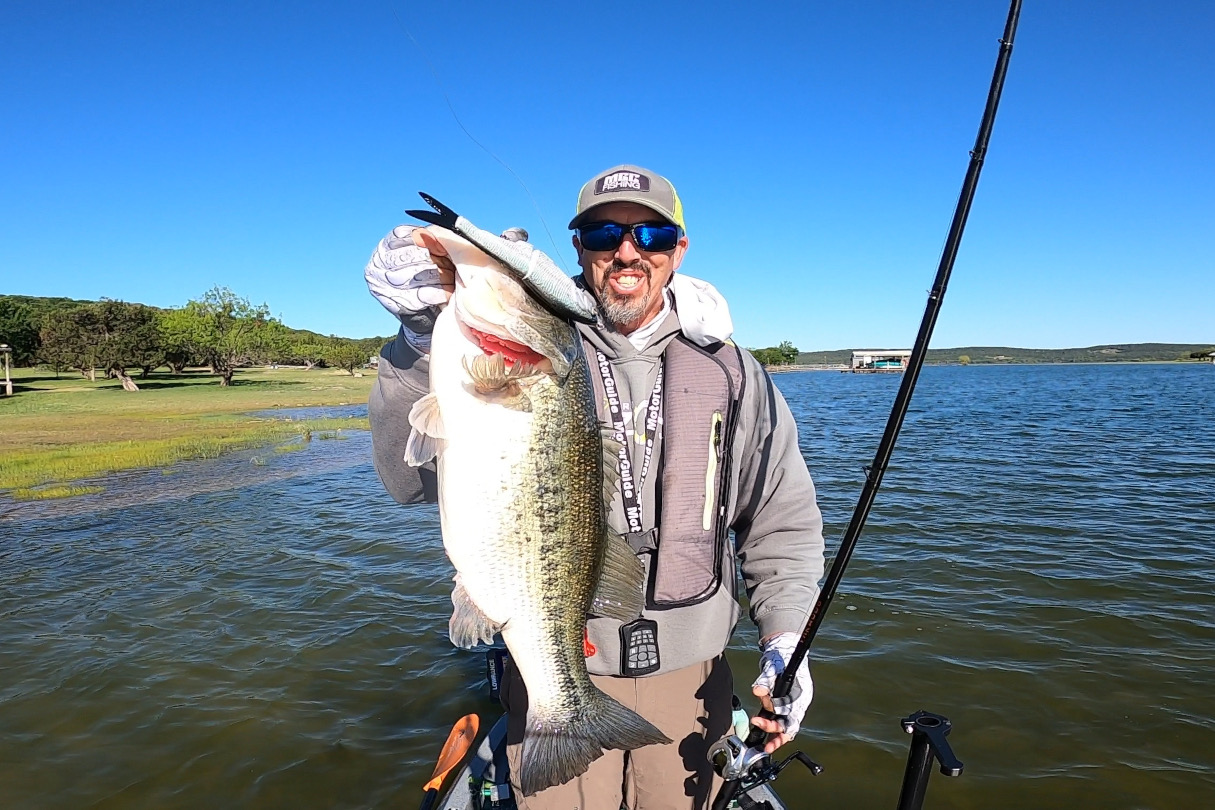
Derek Brundle | Cape Cod, Massachusetts
- KBF Rookie of the Year 2019
- KBF Northeast Angler of the Year 2019
- KBF Challenge Series Angler of the Year
- KBF The Ten Qualifier
Sponsors:
- Nucanoe
- Amped Outdoors
- Yakrods
- Lowrance Fishing
- DaBomb Anchor
- Devaney Energy
- Thrasher Sports Apparel
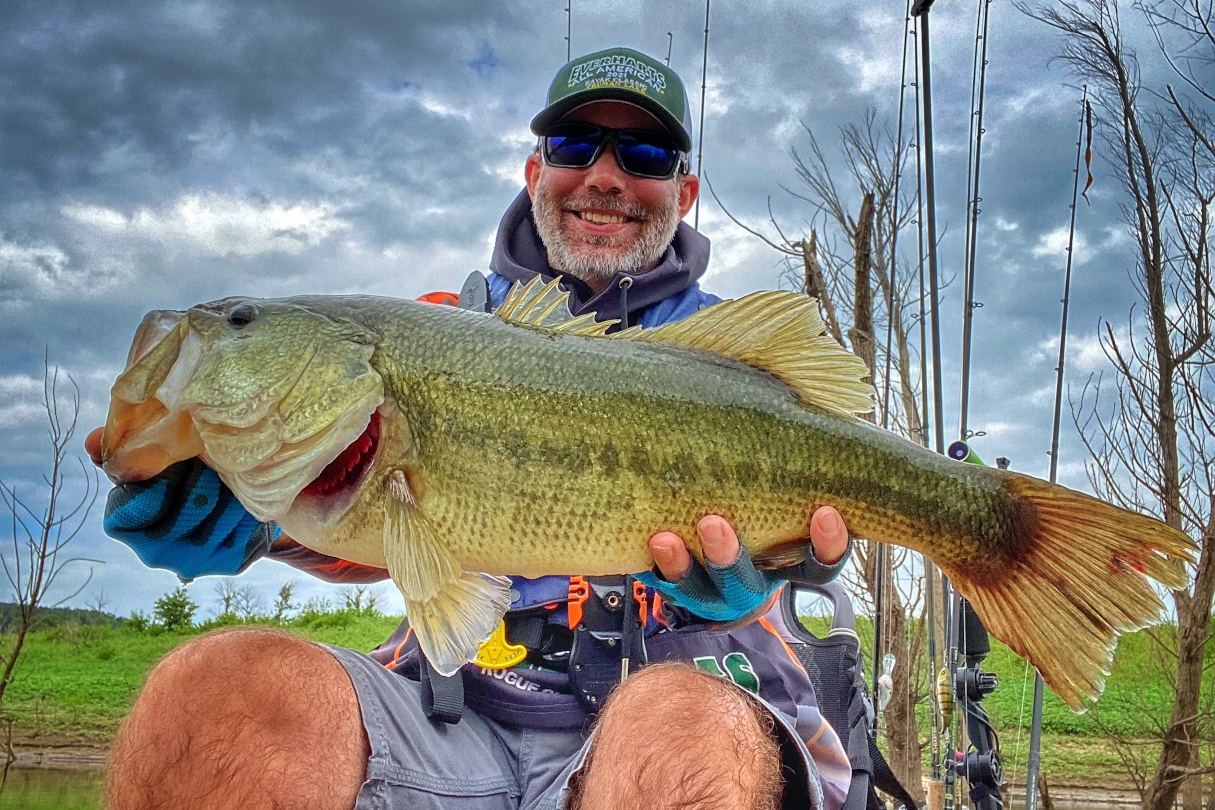
Chad Davison | Columbia, Missouri
- 8 Angler of the Year (AOY) Titles
- $10,000 Biggest Bass in 2022 Big Bass 250
- 3-time Bassmaster National Championship Qualifier
- 51 kayak tournament wins since 2021
- $75,000 in kayak tournament winnings
Sponsors:
- Old Town Fishing
- Crock-O-Gator Bait Company
- Dungarees Workwear and Boots
- H2 Bait Design and Manufacturing
- Everharts Outdoor Store
- Cashion Fishing Rods
- Max It Out LEDs
- Council Bluff Crankbaits
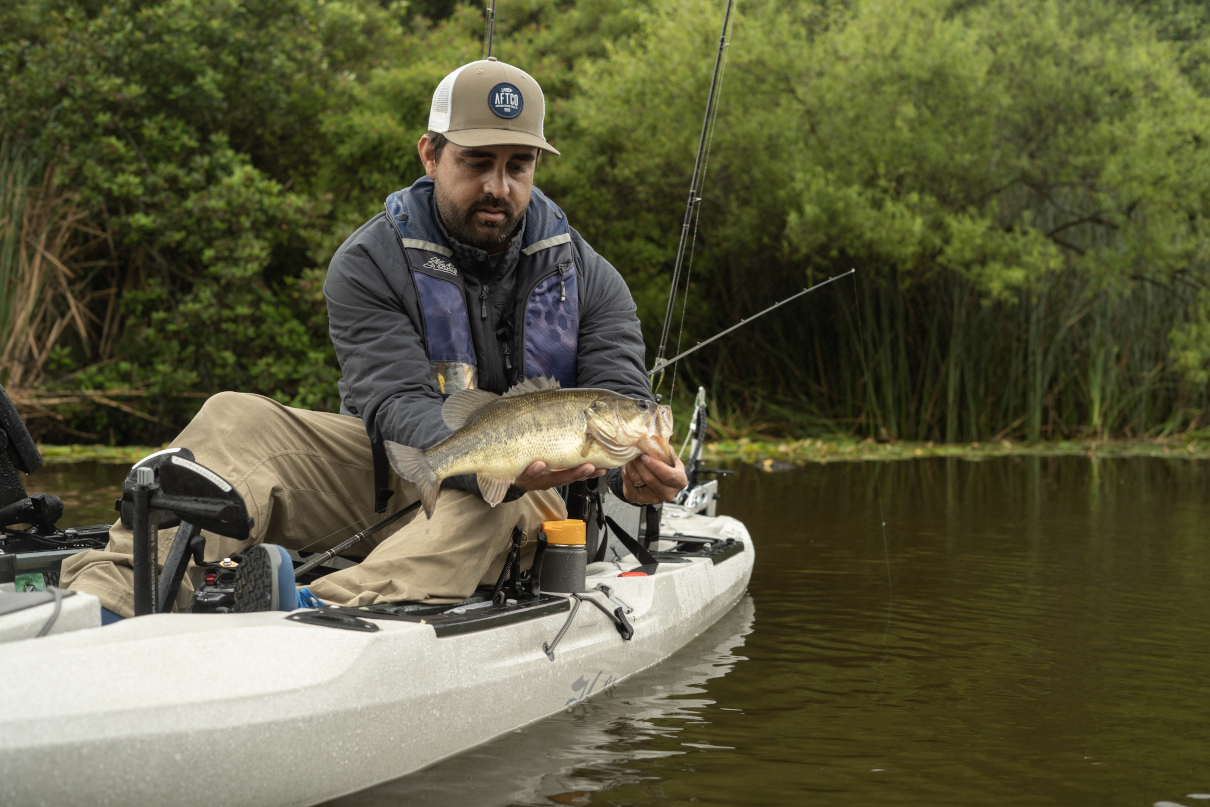
Sam Strech | Southern California
- Life-long, hard-core angler specializing in lakes and big baits