Catching fish is more fun than buying fishing lures…most of the time. But in all seriousness, owning several types of fishing lures opens up a world of tactics beyond the bobbers and live bait most of us start out with.
I don’t know how many tackle boxes I own these days (and thankfully, my wife doesn’t, either). But they’re crammed with different lures that I’ve personally used to catch sunfish, crappie, trout, largemouth and smallmouth bass, walleye, northern pike, musky, stripers, steelhead, and salmon.
All the choices can easily make anglers dizzy—especially if you’re new to fishing. The trick is picking the right type of fishing lure for the species you’re targeting—and the right presentation for the conditions. Once you learn what to choose, when, you can work fish into a tizzy. That’s why this guide walks you through the different lure types, the most popular ways to fish them, and which species to target with each.
9 Different Types of Fishing Lures
Jigs
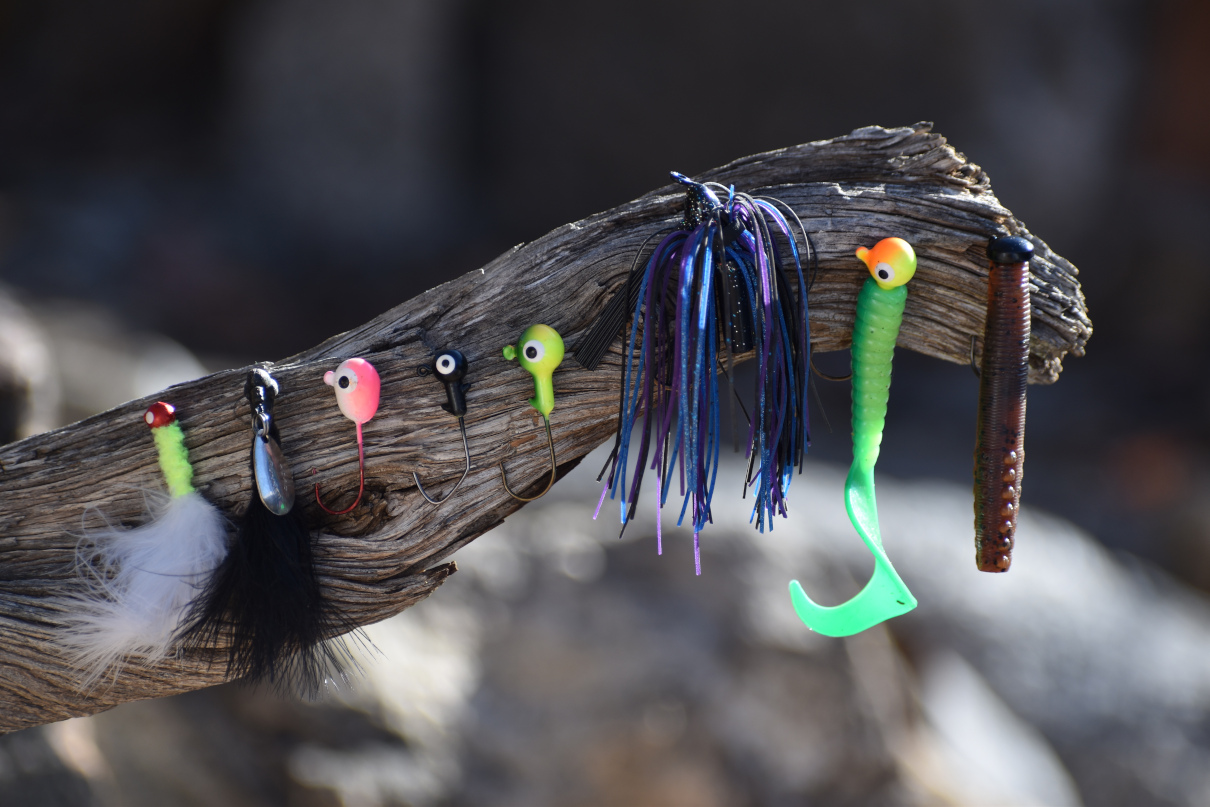
A jig is a type of fishing lure where the hook is molded to a weighted head. This weight—usually lead or tungsten—helps the jig sink to the bottom, where anglers “jig” it up and down to lure fish into strikes.
When and how to fish a jig
Jigs are versatile lures, but they generally work best for more vertical presentations or bottom-oriented fish.
Walleye anglers often fish a live minnow on a jig hook. However, you can also fish a jig with a soft plastic body or buy jigs already dressed with bucktail, feathers, or a rubber skirt. At least half of the fish I’ve caught from a kayak have come courtesy of the humble jig.
As their name suggests, most jigs are made to be jigged up and down. Once the jig hits bottom, raise your rod tip to lift the jig off the bottom. Then lower your top tip as you reel in the slack line to drop the jig back on the bottom.
Some jigs can also be swum through the water (see swimbaits). Bigger bass jigs are made to be flipped or pitched into pockets of water surrounded by weeds.
Types of jigs
- Round/Ball jig heads are the most popular jig, especially with walleye and panfish anglers.
- Stand up jigs keep your live bait or plastic lure upright on the bottom to catch bottom-oriented species.
- Floating jigs are fished behind sinkers to suspend live bait just off the bottom.
- Swimming jigs are designed to fish open water or weedlines with a steady retrieve.
- Marabou jigs are lightweight, feathered jigs that catch crappie, trout, and panfish.
- Bucktail jigs can be casted or jigged to catch many freshwater and saltwater fish.
- Flipping/Pitching jigs can catch bass in heavy cover.
Target species for jigs: walleye, bass, panfish
Soft Plastic Lures
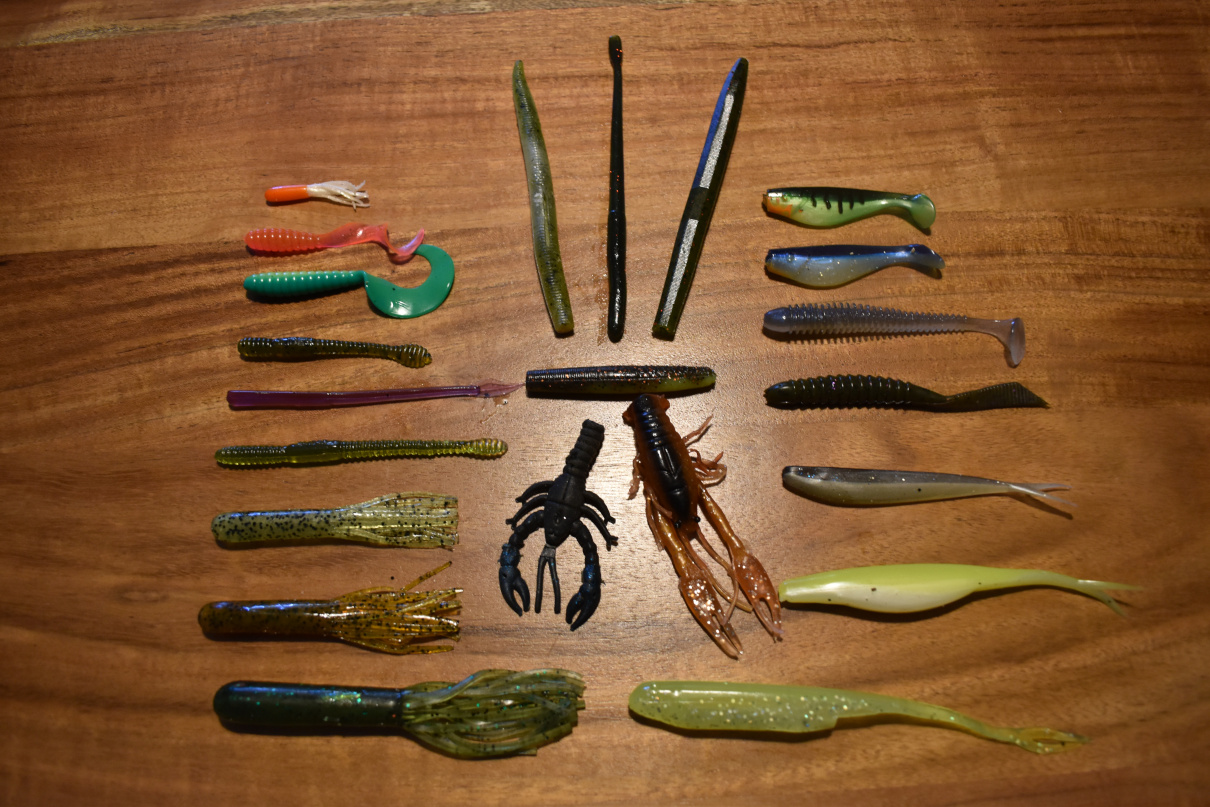
Another broad type of lure, soft plastics are plastic bodies that mimic natural prey, such as minnows, worms, crayfish, amphibians, and small reptiles.
When and how to fish soft plastics
Soft plastics are often a good choice when you need to use finesse tactics to catch less aggressive or wary fish.
Most anglers fish soft plastics slowly using finesse tactics, such as slowly dragging lures along the bottom, simply letting them sink slowly, or using lift-drop retrieves. Bass anglers use plastic worms, lizards, creature baits, and lizards for Texas rigs, Carolina Rigs, drop shot rigs, split-shot rigs, wacky rigs, and other bass rigs.
When I’m kayak fishing rivers, I often fish the shoreline with flukes, plunk tubes down to the bottom, and throw craws into shaded slack water for smallmouth bass. On flat water, I’m more likely to cast other soft plastics for bass, such as plastic worms or Ned Rigs.
Types of soft plastics
- Worms
- Twister tails
- Tubes
- Craws and Creature baits
- Lizards
- Stick baits/Ned rigs
- Flukes
Target species for soft plastics: bass, walleye, panfish
Swimbaits
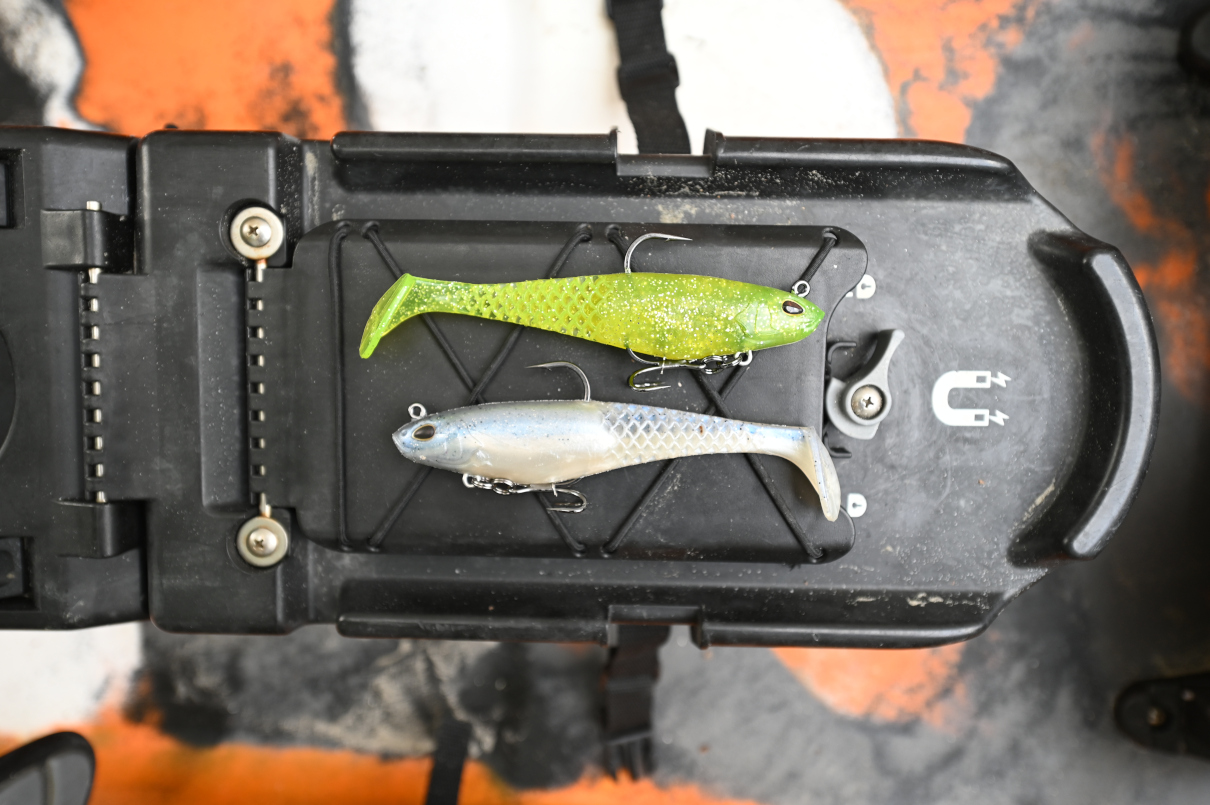
Swimbaits are hard-body or soft-body fishing lures that mimic the swimming motion of baitfish. Hard swimbaits usually have jointed tails, and soft plastic swimbaits use paddle tails to add more action.
When and how to fish swimbaits
Swimbaits work well when predators are keying in on shad and other baitfish.
Hardbody swimbaits are expensive, so I mostly use soft plastic paddle tails—from old-school Sassy Shad to more high-tech plastics like the Keitech FAT Swing Impact—to bring bass and walleye to the boat.
Swimbaits are made to be fished horizontally through the water column. Use a simple, steady retrieve or add subtle pauses and twitches to your retrieve to trigger strikes.
Types of swimbaits
- Gliding hard-bodies
- Jointed hard-bodies
- Molded soft-bodies
Target species for swimbaits: bass, walleye, inshore saltwater fish
Crankbaits
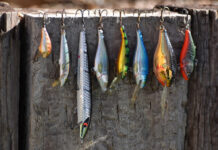
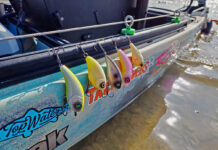
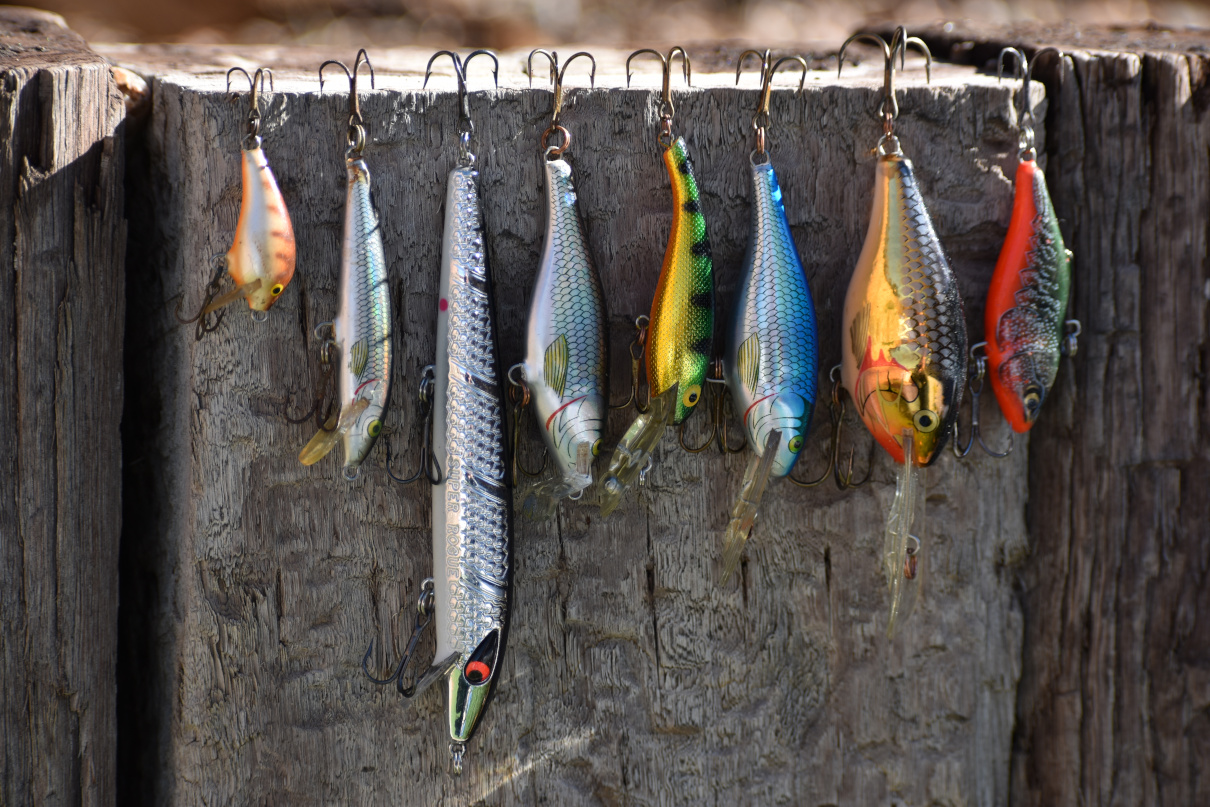
A crankbait is a hardbody lure made of plastic or balsa wood with a lip that lets it dive below the surface.
When and how to fish a crankbait
Most crankbaits mimic baitfish swimming through the water. They’re good lures for targeting aggressive fish and for covering a lot of water.
Crankbaits are easy to fish. Much of the time, you just need to crank them in with a steady retrieve and wait for obvious bites. Most crankbaits float on the surface until you start reeling—the harder you reel, the deeper they’ll dive. The length of the bill determines how deep they’ll swim when you start reeling your line. In some situations, fishing crankbaits slowly with more pauses can land less aggressive fish. You can also troll them behind a kayak.
Types of crankbaits
- Floating minnows fish on, or just under, the surface using a slow retrieve or varied twitch-pause cadences.
- Shallow-diving crankbaits have short and/or square bills to fish shallower water.
- Deep-diving crankbaits have a long bill to dive deeper when you crank them.
- Jerkbaits are long-bodied crankbaits that you fish by alternating short jerks of your rod trip with long pauses to mimic the erratic motions of dying minnows.
- Lipless crankbaits don’t have bills—their weight and shape lets you crank them through the water with a wobble (and often rattles) to trigger strikes from aggressive fish.
Target species for crankbaits: bass, walleye, stripers, pike, musky
Topwater Lures
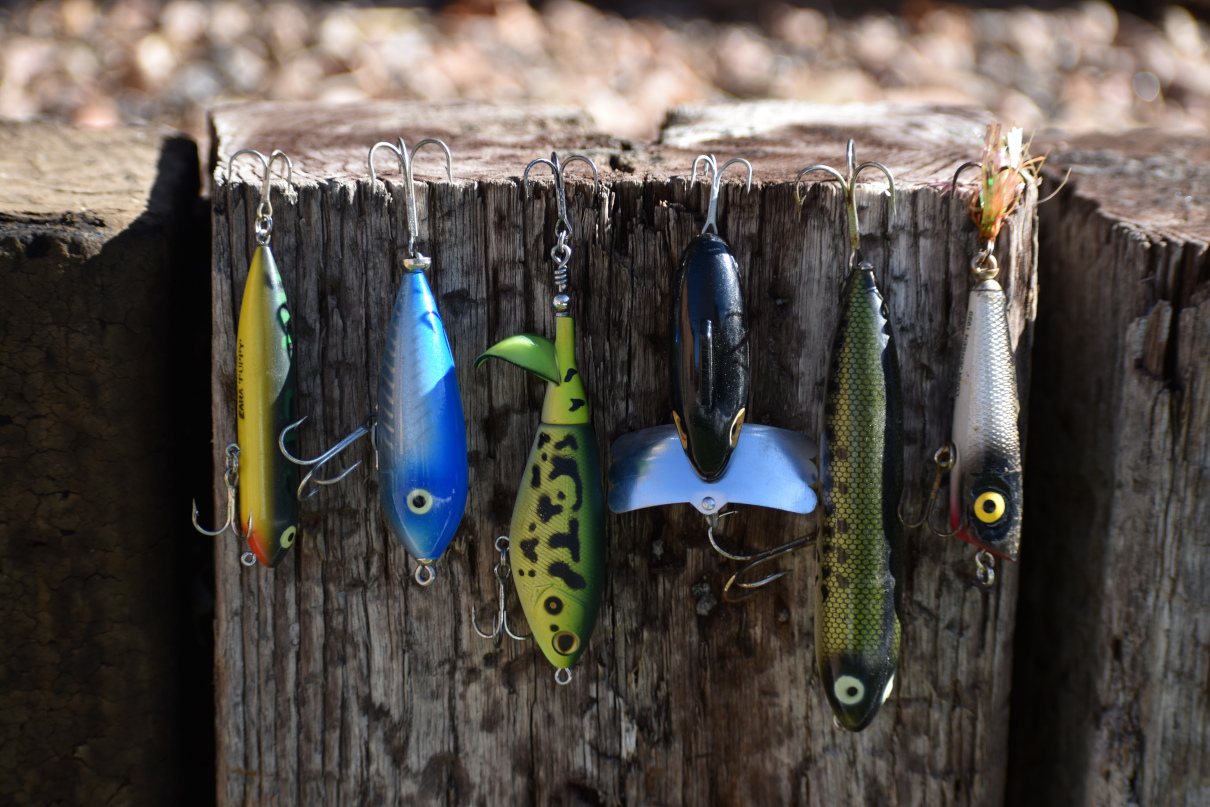
Topwater lures are made to be fished on the surface. Most have an annoying feature, such as a prop and/or an erratic action to capture a fish’s attention.
When and how to fish topwater lures
Topwaters work best in low-light conditions when anglers are targeting aggressive or territorial species of fish that are easily triggered. If I’m kayak fishing for bass around sunrise or sunset, I’m probably fishing a topwater lure.
The best topwater tactic depends on which topwater lure you choose. Some can be fished with a consistent retrieve, while others fish better with combinations of twitches and pauses.
Types of topwater lures
- Poppers have a cupped mouth that splashes and gurgles when you “pop” them on the water.
- Walk-the-Dog topwaters are cigar-shaped lures that swim erratically on the surface when you twitch your rod with some slack in your line.
- Prop lures feature one or two propellers that disturb the water’s surface when you reel them.
- Frogs are hard- or soft-body lures that imitate frogs floating and swimming on the surface.
- Buzz Baits look like a spinner bait with a propeller (instead of a spinner blade) that makes a commotion when it churns through the water.
Target species for topwater lures: bass, northern pike, musky, inshore saltwater fish
Spinnerbaits
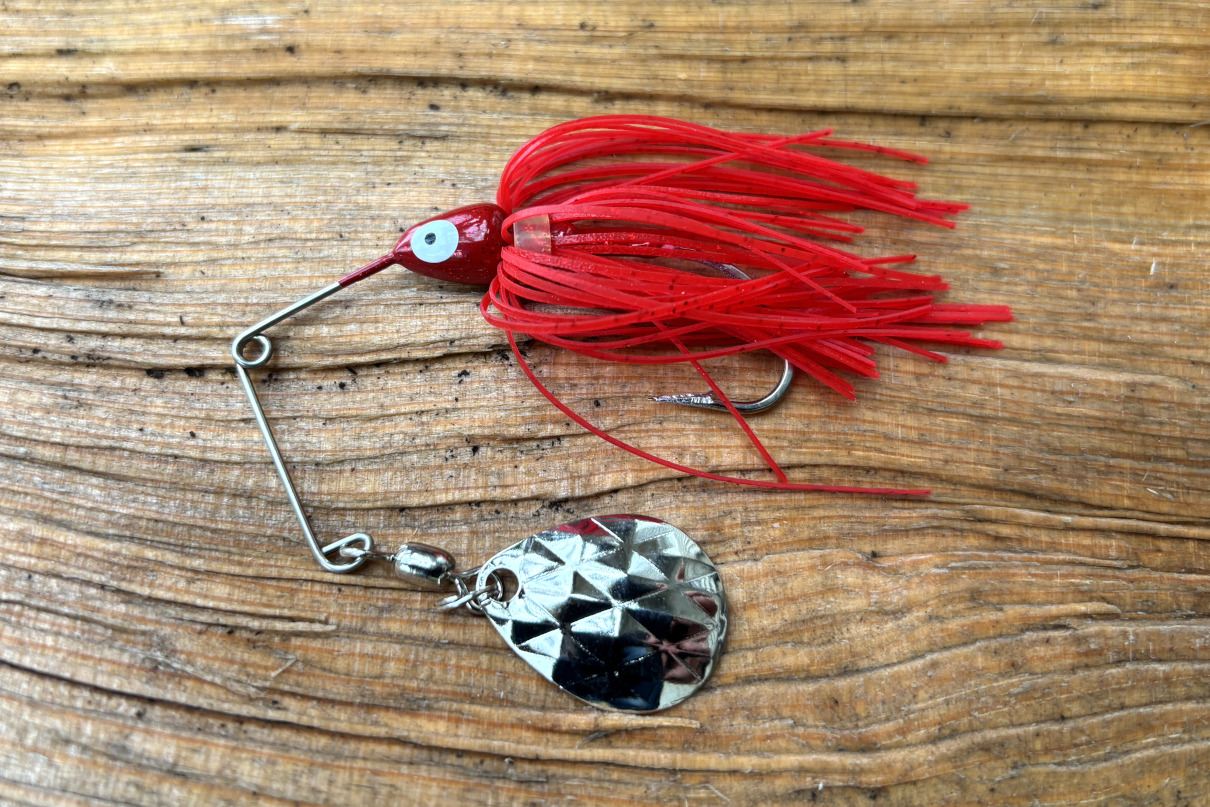
A spinnerbait is a V-shaped lure with wire arms that hold one to two flashy blades—the “spinner” part— and a weighted hook that’s dressed with a rubber skirt.
When and how to fish spinnerbaits
Another lure that resembles baitfish, spinnerbaits lure bass and other species with their flash and vibration.
I like casting spinnerbaits towards shore or visible cover when I’m kayak fishing. They’re somewhat snag-resistant, work shallow to mid-depth water well, and often lead to exciting visible strikes.
Most anglers fish spinnerbaits with a steady retrieve that keeps the lure just under the water’s surface. Some anglers “slow roll” heavier spinner baits (especially in cold water) by letting them sink and reeling them in slowly just above weeds or the bottom.
Types of spinnerbaits
- Single spinnerbaits (one blade)
- Tandem spinnerbaits (two spinner blades)
Target species for spinnerbaits: bass, pike
Inline Spinners
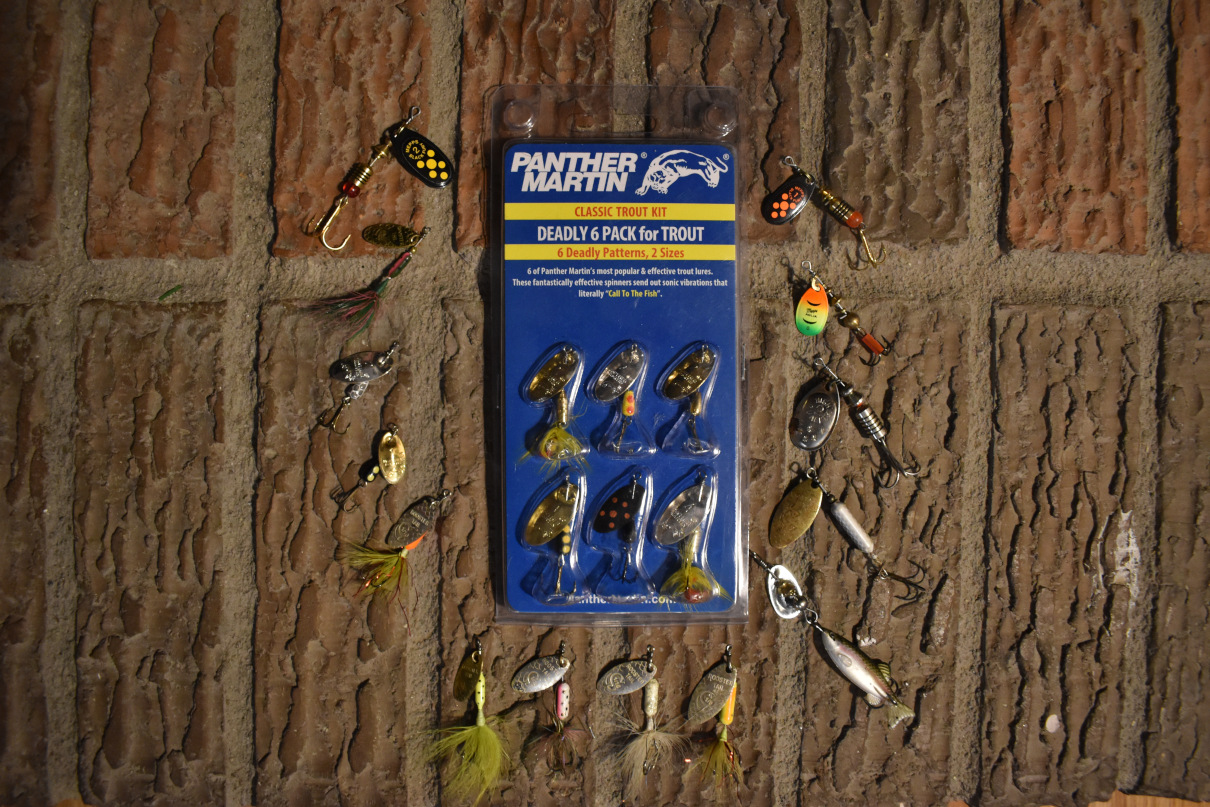
Smaller and more compact than spinner baits, inline spinners feature a small spinner blade that twirls around its central shaft.
When and how to fish inline spinners
Inline spinners can catch many species of fish with their vibrations and flash, but they’re best known as bass and trout lures. The last time I went kayak fishing, I caught both bass and trout on the same Mepps spinner.
Most people fish inline spinners with a straight retrieve, reeling just fast enough to engage the spinner blade to make it spin and flash.
Target species for inline spinners: bass, trout
Spoons
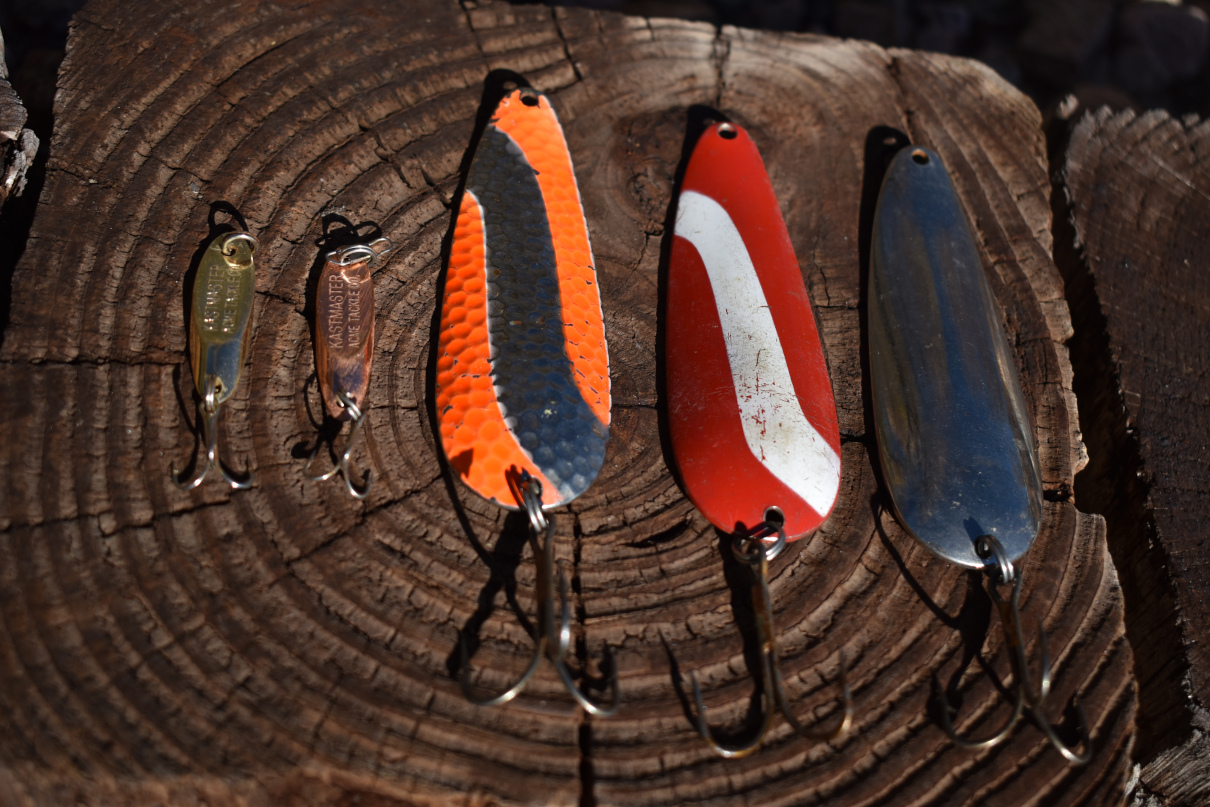
Spoons are metal fishing lures shaped like the bowl of a spoon. They attract larger predator fish with their wobble and flash.
When and how to fish spoons
If you kayak deep lakes with cold, clear water, you might have fun trolling a spoon or vertically jigging it below your boat.
Spoons can be fished a variety of ways. They can be casted and retrieved, trolled behind a motor boat or kayak, or jigged vertically while fishing from a boat or ice fishing.
Types of spoons
- Casting spoons
- Jigging spoons
- Weedless spoons
- Topwater Spoons
Target species for spoon lures: northern pike, musky, lake trout, walleye, salmon, saltwater gamefish
Flies
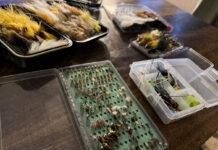
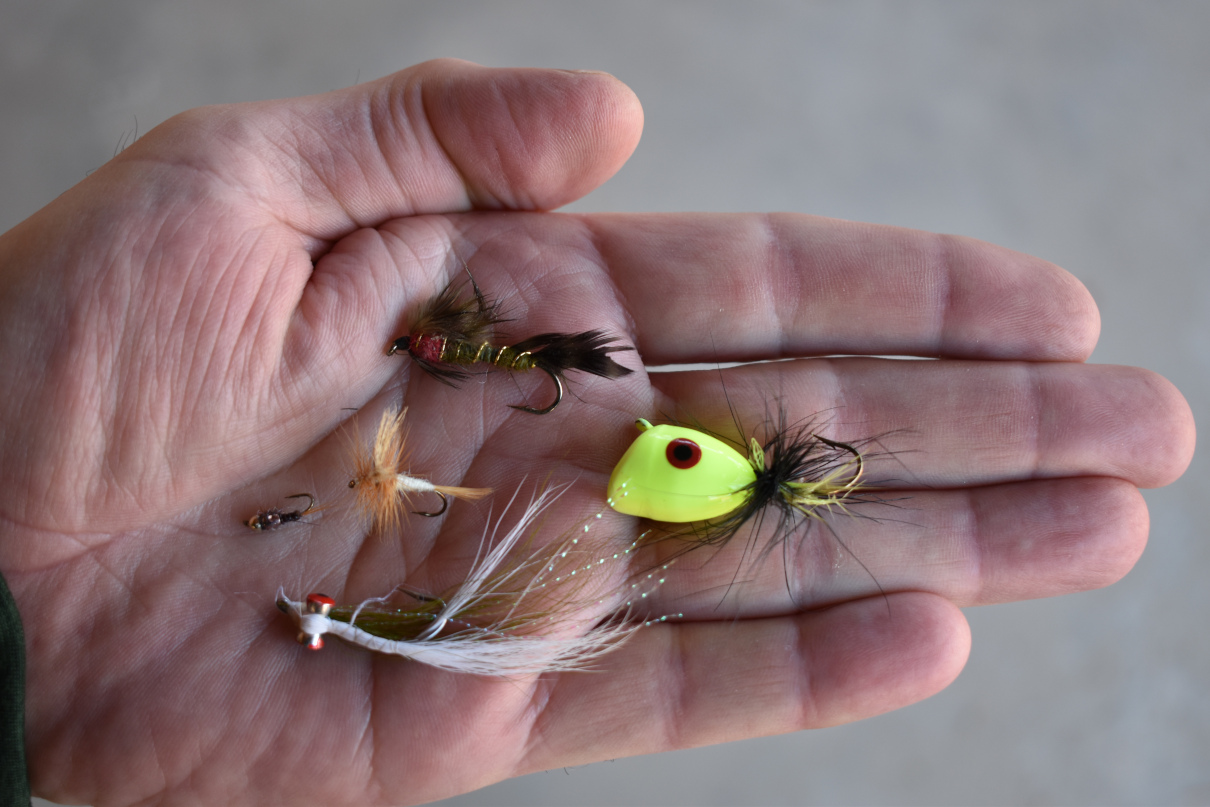
Flies are artificial lures created by tying natural and synthetic materials into patterns that mimic insects, minnows, and other aquatic food sources.
When and how to fish flies
Flies can provide delicate presentations to both fresh and saltwater fish to avoid spooking them.
Depending on the type of fly you’re fishing, flies can be floated on the surface (dry flies), twitched on the surface (poppers), swum across the current (wet flies), drifted downstream along the bottom (nymph), or actively retrieved with short strips of your fly line (streamer).
Fly fishing can be difficult from a kayak because it’s harder to cast a fly line when you’re sitting relatively low in the water. However, if you’ve got a higher seating position—or can safely stand and fish from your yak—you can have a ball spraying the bank with streamers or drifting dry flies over rising fish.
Types of flies
- Dry flies float on the surface to imitate adult insects that have either surfaced from underwater or fallen into the water.
- Wet flies sit underwater where they imitate emerging insects or small baitfish.
- Poppers are larger dry flies with a cork head and concave mouth that you “pop” on the surface like a topwater lure.
- Nymphs are (often weighted) flies you drift along the bottom, where they imitate small invertebrates and larval-stage insects that mature underwater.
- Streamers are larger flies you swim underwater to imitate baitfish, leeches, and larger prey.
Target species for flies: trout, bass, panfish, saltwater fish